


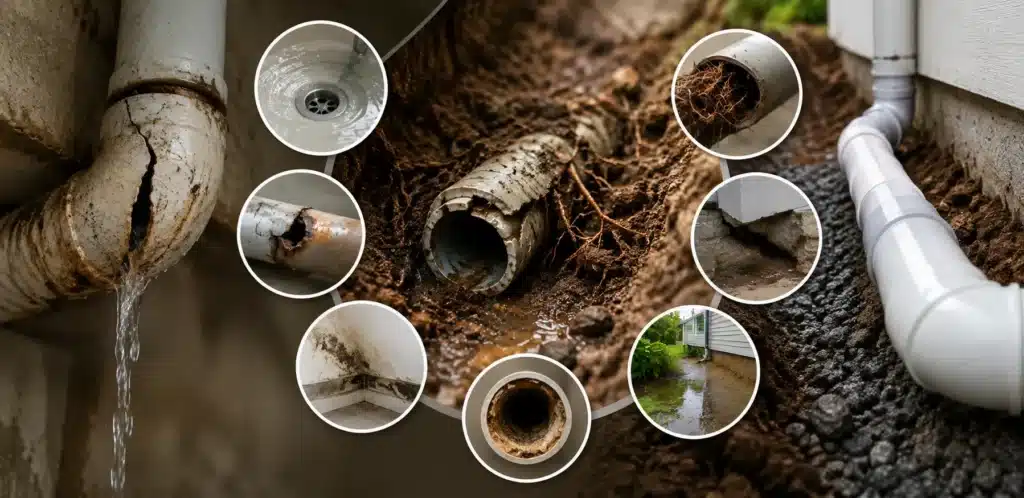

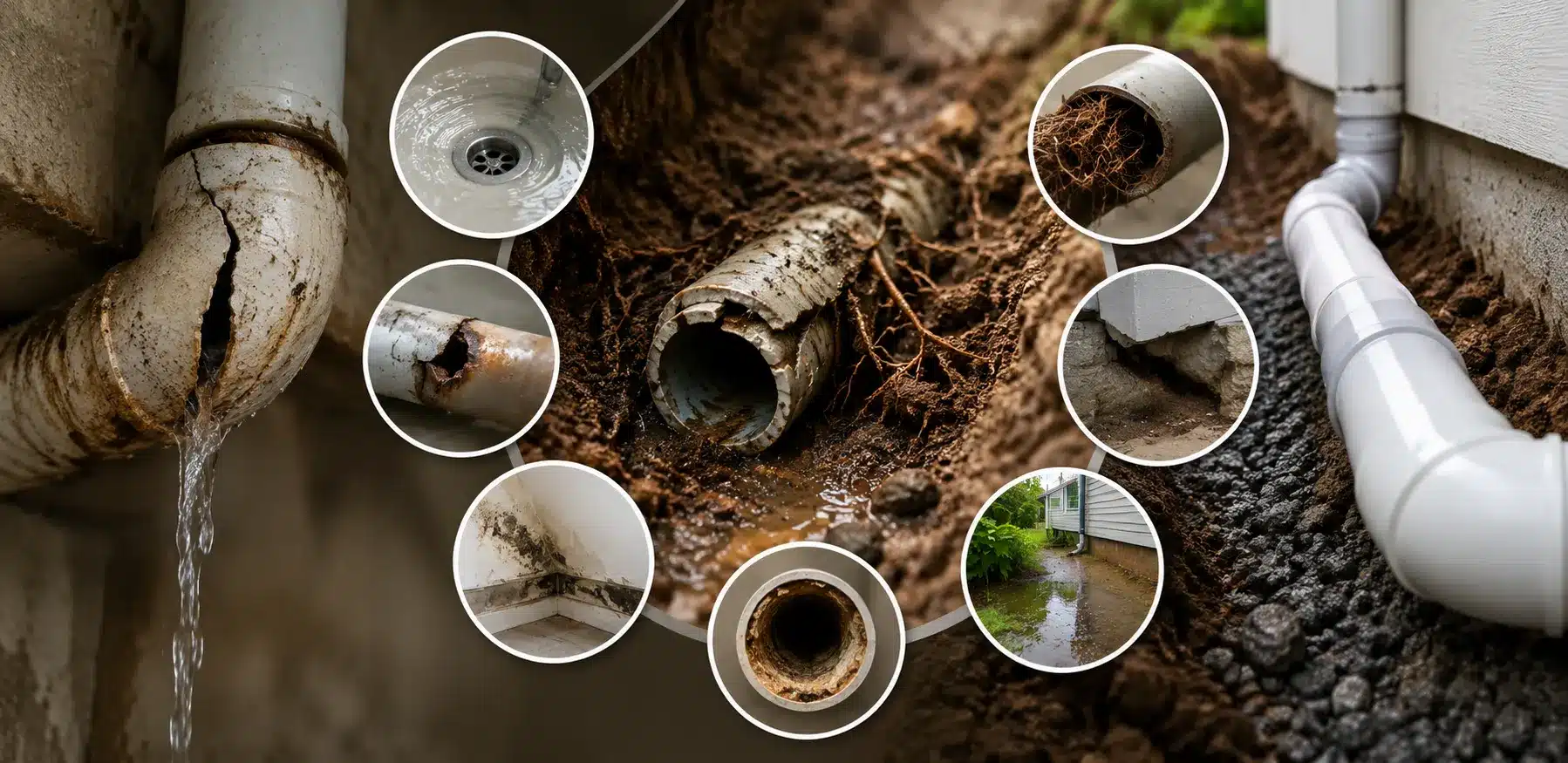
Drainage systems are built to last, but they’re not immune to wear and tear. As we age, underground pipework can deteriorate due to the materials used, ground movement, tree root growth, and continuous use. There are many drainage problems that can be solved with particular repairs, but sometimes the best and most reliable solution is drain pipe replacement.
Did you know? According to the Consumer Council for Water (CCW), homeowners are generally responsible for the upkeep of drains that only serve their property. CCW also recommends simple preventative measures that can help lower the risk of drainage problems, such as installing washbasin strainers, not pouring grease down drains, regularly flushing pipes with hot water and never disposing of wet wipes in the drainage system.
At Precise Drainage Solutions, we assist homeowners and business owners in determining whether damaged drainage systems can be properly repaired or if replacement is the most dependable long-term option. Early identification of warning signs enables you to make smarter decisions that can help reduce repair costs, minimise disruption and preserve the performance of your drainage system.
Key Takeaways
- Drain pipes can show warning signs before they completely fail.
- Some drainage problems can be repaired, while others will need to be replaced.
- CCTV inspections assist in finding the best solution.
- Replacing badly damaged pipework can avoid future disruption.
- Often early action can prevent you from having to do more extensive repairs.
1. The Same Drain Keeps Causing Problems
An isolated blockage is typically simple to repair. However, if this section of pipe keeps experiencing drainage problems, foul odours or restricted flow, it is often a sign that the problem lies inside the pipe and is not caused by temporary debris.
This is especially true if one or more of the following conditions are identified, as replacing the affected pipe may be a more effective and permanent solution than repeatedly clearing the same symptoms.
Common contributing factors include:
- Pipe deformation
- Root intrusion
- Collapsed sections
- Displaced joints
- Internal deterioration

2. The Pipe Has Suffered Extensive Damage
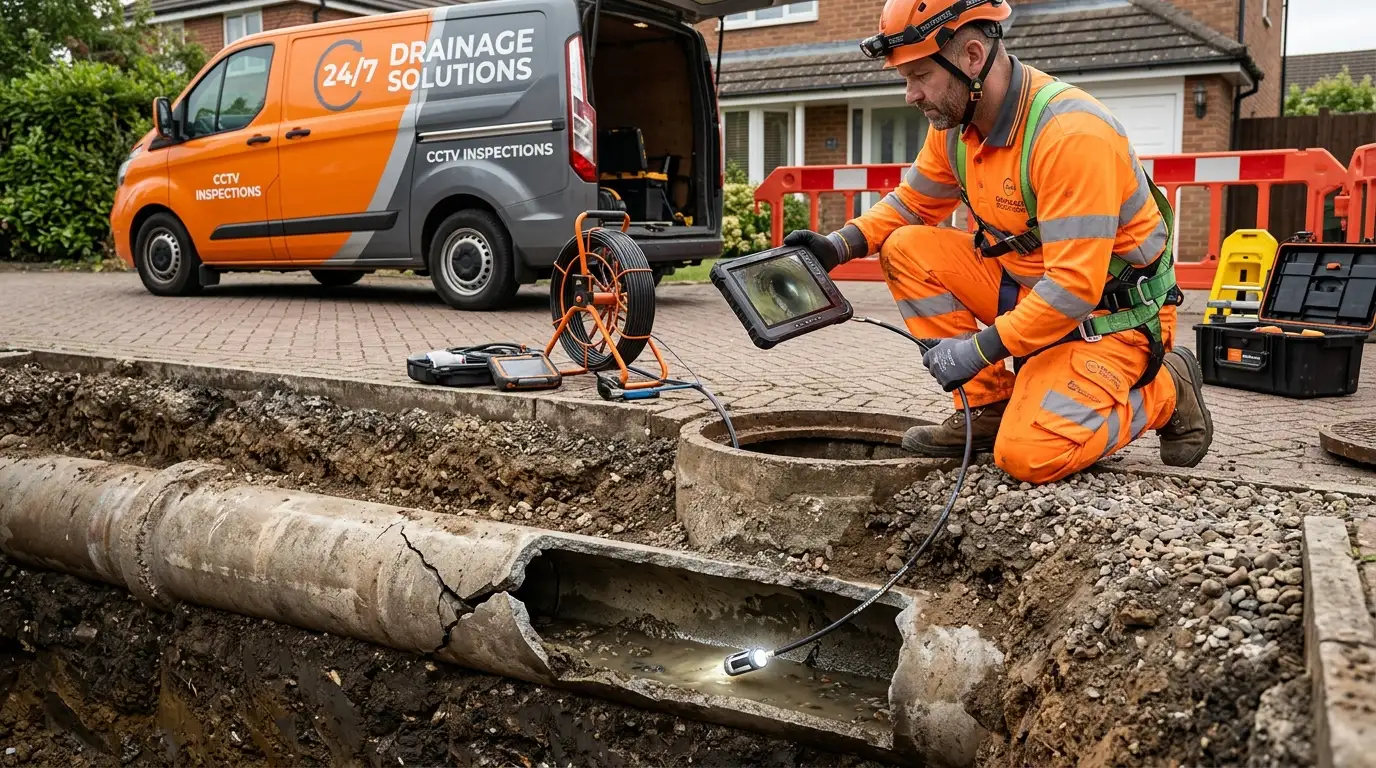
Underground drainage pipes can degrade over time. Sometimes ground movement, heavy loads or continuous use over time can affect the condition of the pipework.
Some localised defects can be repaired by sewer pipe repair, but widespread cracking, collapsed sections or severe deformation usually require replacement to restore reliable drainage performance.
This will solve existing problems and will also reduce the likelihood of further failures occurring in adjacent sections.
3. Tree Roots Have Compromised the Pipe
Damaged drains are especially vulnerable, as tree roots naturally gravitate towards moisture.
Even a small crack or a weakened joint can allow roots to enter the pipe. As they grow larger, they become more restrictive in the flow of waste water and increase the number of existing defects and put stress on the surrounding structure.
While removing the roots may eliminate the immediate obstruction, if inspections indicate that the pipe has been significantly weakened, replacing the damaged section is typically the most reliable approach.
4. Ageing Pipework Is Becoming Less Reliable
Every drainage system has a life expectancy. These older pipe materials may weaken over time, increasing the likelihood of fractures, joint failure, and other signs of deterioration.
In some cases, the continued work of plumbing drain repair and ageing infrastructure becomes increasingly inefficient, especially as defects continue to pop up in different places. You can improve the dependability of the drainage system by replacing worn sections and reduce ongoing maintenance needs.
5. Ground Movement Has Affected the Pipe Alignment
Drainage systems depend on the correct orientation of pipework to move waste water efficiently. Over time, natural ground settlement, nearby construction, or changes in soil conditions can lead to sections of pipe being out of their original position.
Any small movement can disrupt the flow of water and put additional pressure on joints and stress on the drains around it. If the alignment is badly affected, it is usually more reliable to replace the damaged section rather than to try to carry out repeated repairs.

6. Underground leaks damage the property
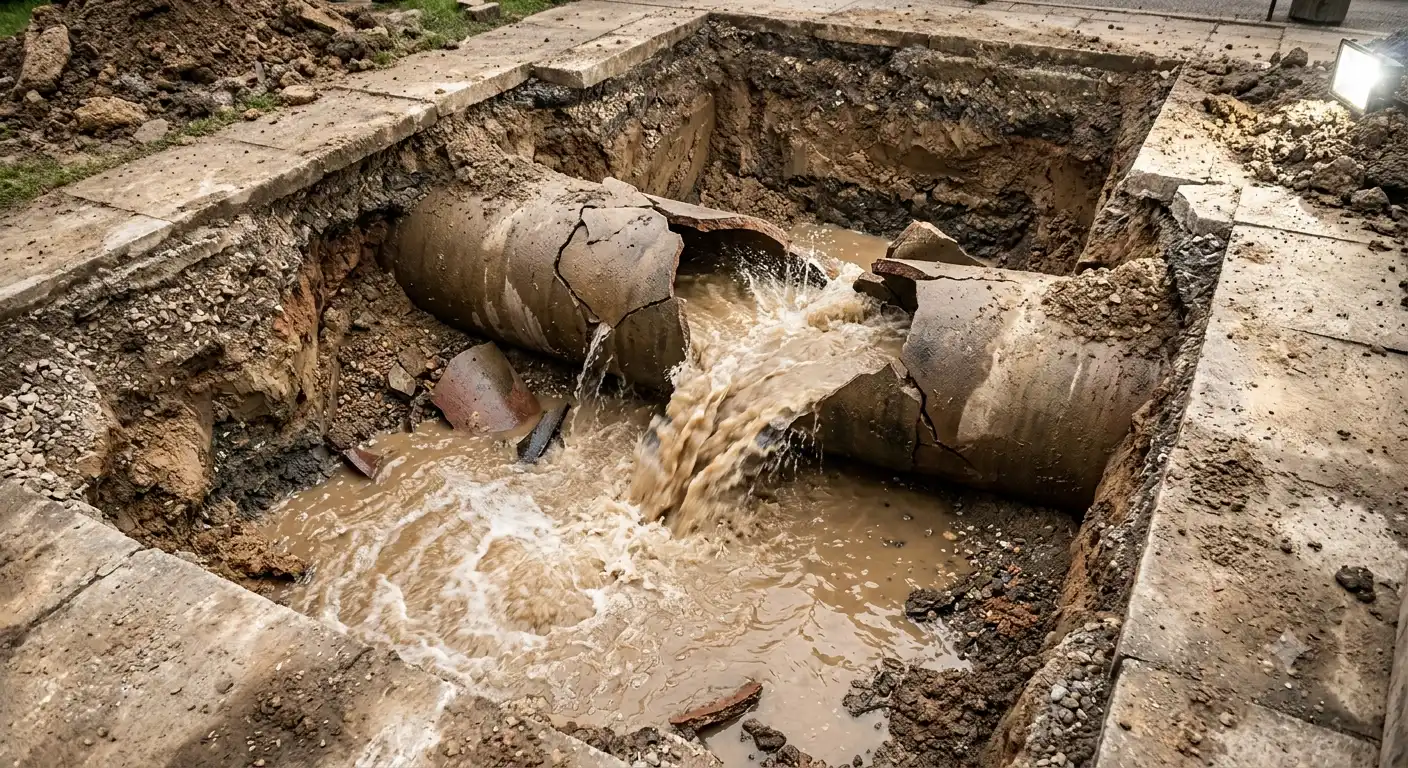
Blocked drain pipes are not always obvious. Small leaks often go unnoticed until they have spread through the surrounding soil, pavement, or even building foundations.
When people think about water pipe repair, supply pipe problems come to mind, but drainage leaks also need immediate attention. When inspections reveal a general deterioration rather than a single isolated defect, replacement is often the most practical way to restore the integrity of the drainage system.
Early detection of hidden leaks also prevents subsidence, erosion and unnecessary damage to surrounding structures.
7. Drainage Emergencies Are Becoming More Frequent
Drainage emergencies don’t often happen without warning. Many problems are brewing under the surface before they become overflowing drains, sewage backups or catastrophic system failures.
While emergency drain repair can restore functionality in urgent situations, repeated emergency callouts may indicate that the pipe has reached the stage where replacement is the more effective choice, although it can still be used to restore functionality in time-critical situations. Addressing the root cause and not just treating symptoms over and over will bring back consistent drainage performance and reduce future disruptions.
Repair or Replace? Here's How to Decide
Professional inspections provide the information you need to select the most appropriate solution, ensuring that work is based on the actual condition of the pipework and not assumptions.
Modern drainage technology allows you to repair many defects without replacing the entire pipe. However, replacement is often recommended when inspections identify:
- Severe corrosion of pipes
- Multiple failed sections
- Significant ground movement
- Repeated failures affecting the same area
- Damage beyond practical repair
Opt for a drainage solution that lasts longer with Precise Drainage Solutions
A cracked/damaged drain pipe can’t be just swept aside. Taking early corrective measures can save not only your property but also prevent unnecessary disruption while preventing a few drainage issues from evolving into an entirely complex drainage dilemma, all with the help of timely action. The main thing is to take smart decisions that are based on professional advice rather than waiting until things go worse.
Precise Drainage Solutions carries out a specialist examination, a thorough diagnostic check and drainage problem remedies that are customised to the state of your piping system. Should you need some minor repairs or perhaps your entire drain pipe replacement, our experts will advise on the method that would be most beneficial for your property.
Give us a call and let Precise Drainage Solutions bring a new level of assured reliability to your home or commercial property’s drainage operation.
Frequently Asked Questions
1. How can I tell if my drain pipe needs replacing?
Visible deterioration, persistent leaks, repeated drainage failures, or extensive underground defects may indicate that replacement is a more suitable option than further repairs.
2. How do professionals decide whether a drain should be repaired or replaced?
Drainage specialists assess the condition, location, and extent of the damage before recommending the solution most appropriate for the existing pipework.
3. Is replacing a drain pipe always necessary?
No. Many minor defects can be repaired successfully, while replacement is generally reserved for severely damaged or structurally compromised sections.
4. How long does drain pipe replacement usually take?
The timescale depends on accessibility, pipe condition, repair method, and the complexity of the drainage system being repaired.
5. Can replacing damaged pipework help prevent future drainage issues?
Yes. Installing new pipework can restore efficient drainage performance and reduce the likelihood of further structural defects developing in the affected area.