


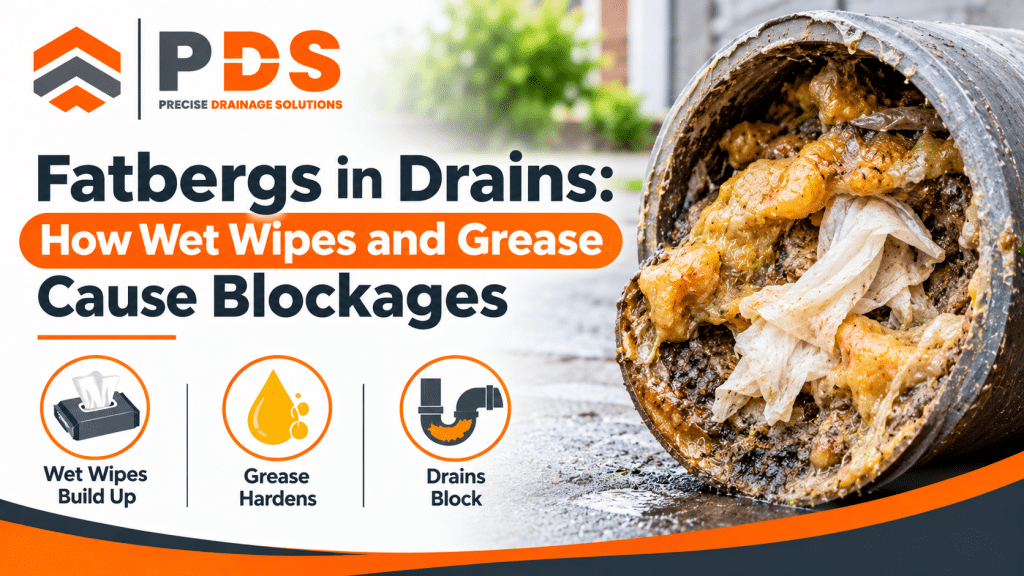

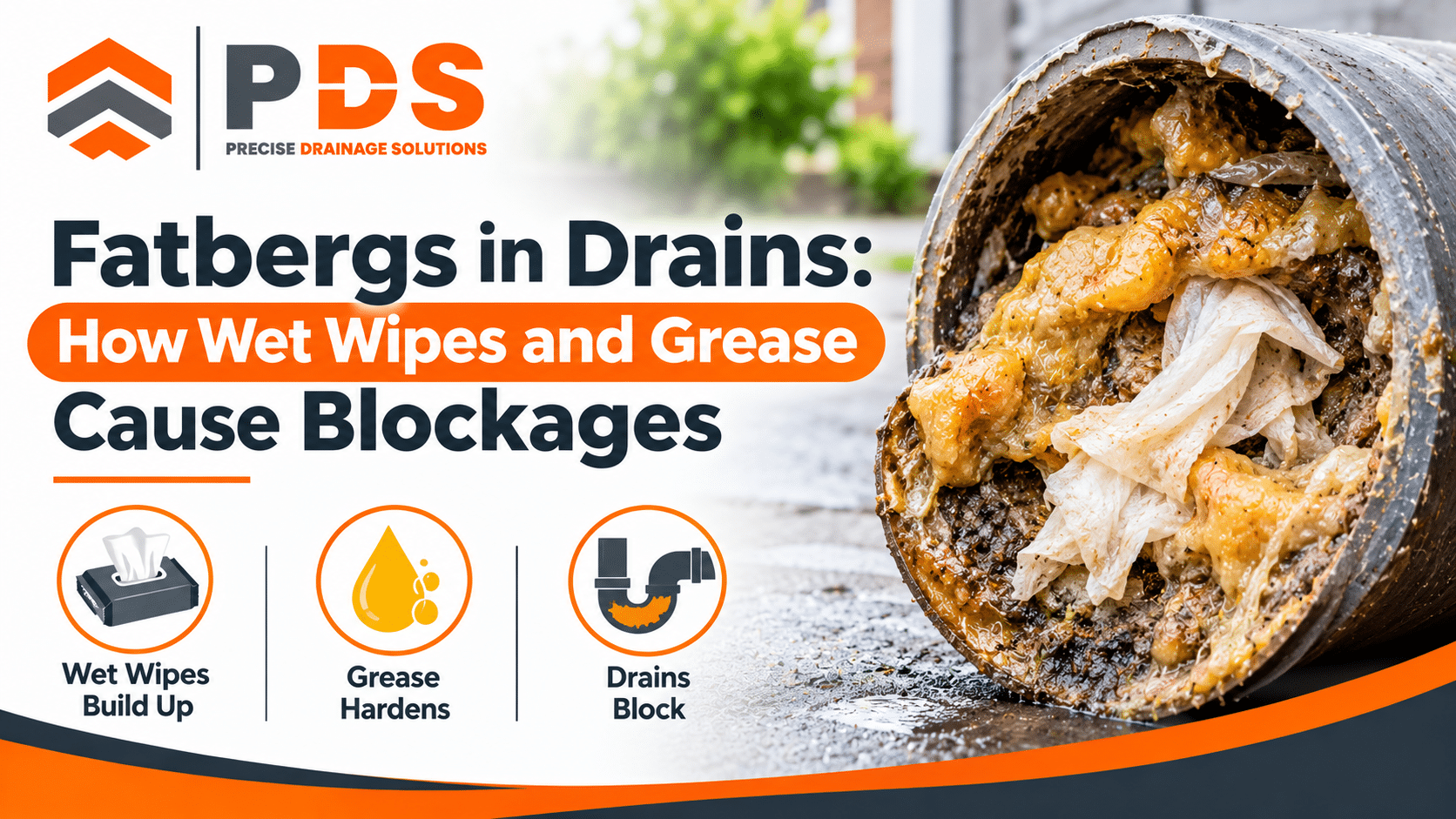
Did you know that wet wipes, cooking fats and other household waste can combine inside sewers to form huge blockages? If you have ever wondered what a fatberg is, it is a solid mass of fats, oils, grease and non-flushable waste that builds up inside drainage systems.These blockages can restrict wastewater flow, cause unpleasant smells and even lead to sewage backing up into homes. Professional drain fat removal can help clear stubborn grease build-ups and restore normal wastewater flow when deposits begin to restrict your pipes.
Understanding what belongs in your toilet and what belongs in your bin can help protect your plumbing and prevent avoidable drainage problems.
How Do Fatbergs Form in Drains?
Fatbergs develop when fats, oils and grease enter drains and mix with items that do not break down easily. As grease cools, it can stick to pipe walls and collect other waste passing through the system.
Wet wipes, sanitary products, cotton buds and similar items can become trapped in this sticky material. Over time, more waste accumulates, making the blockage larger and harder to remove.
Unlike toilet paper, which is designed to break down in water, many wipes remain intact. Even products labelled as flushable may not break down quickly enough to prevent problems in certain drainage systems.
The result can be restricted flow, overflowing drains and expensive repairs. In severe cases, fatbergs can affect public sewers and disrupt wastewater services across entire neighbourhoods.
What Should You Never Flush Down the Toilet?
Your toilet is designed to carry human waste and toilet paper. Other household rubbish should be disposed of separately, even when it seems small or harmless.
Common items to keep out of your toilet include:
- Wet wipes: These can remain intact and collect inside pipes, contributing to blockages.
- Sanitary products: Tampons and sanitary towels absorb moisture and may expand, restricting wastewater flow.
- Cotton buds and cotton wool: These can catch on rough pipe surfaces and collect other debris.
- Nappies: These expand when wet and can quickly obstruct pipes.
- Dental floss: Its strands can tangle around other waste and contribute to stubborn blockages.
- Kitchen roll and tissues: These may not break down like toilet paper and can accumulate in drains.
- Medicines and chemicals: These can contaminate wastewater and should be disposed of according to local guidance.
These are some of the main examples of what not to flush down the toilet. Keeping a small bathroom bin nearby makes it easier for everyone in the household to dispose of waste correctly.
Why Are Wet Wipes So Harmful to Drainage Systems?
Wet wipes are a major contributor to drainage problems because many are made from strong synthetic or blended fibres. They are designed to stay together during use, which means they may remain intact as they travel through pipes.
This makes wet wipes blocking drains a common problem in homes and public sewer networks. Wipes can catch on existing deposits, combine with grease and gradually restrict the flow of wastewater.
Even if a wipe disappears after flushing, it does not mean it has broken down. It may simply have moved further into the drainage system, where it can join other waste.
The safest option is to put used wipes in a household bin, regardless of whether they are labelled biodegradable or flushable. Follow local waste disposal guidance for products that require special handling.
Wondering how wet wipes and grease cause drain blockages? Contact our drainage experts today!
How Should You Dispose of Cooking Fat and Oil?
Pouring leftover cooking fat into the sink may seem convenient, particularly after preparing a meal. However, fats and oils can cool inside pipes, stick to their surfaces and trap food particles.
Avoid putting cooking oil down the sink, even when you run hot water afterwards. Hot water may move the oil further along the pipe, but it does not prevent the oil from cooling and sticking to surfaces later.
Instead, follow these simple steps:
- Allow leftover fat to cool before handling it.
- Wipe small amounts of grease from pans with kitchen roll and place it in the appropriate bin.
- Collect larger quantities of used cooking oil in a suitable sealed container.
- Check local council guidance for safe disposal or recycling options.
- Scrape food scraps into the bin or food waste collection rather than washing them into the sink.
If you are unsure how to dispose of cooking fat, check your local authority’s instructions, as accepted methods can vary. Never pour hot fat into a drain or directly onto the ground.
What Other Habits Help Prevent Fatbergs?
Small changes to your daily routine can reduce the amount of waste entering your drainage system.
- Keep a waste bin in the bathroom for wipes, cotton buds and sanitary products.
- Use sink strainers to catch food scraps before they enter the pipework.
- Wipe greasy cookware before washing it.
- Remind children and visitors not to treat the toilet as a general waste bin.
- Arrange routine checks if your property has a history of recurring drainage issues.
Need Help with Fatbergs and Blocked Drains? Call Our Drainage Experts Today!
Need help with a persistent blockage?
Precise Drainage Solutions can help homeowners identify drainage problems and determine the appropriate next steps. Acting early may prevent a minor restriction from developing into a more disruptive issue.
When Should You Call a Professional?
Look out for these warning signs.
- Water draining slowly from several sinks, baths or toilets.
- Gurgling sounds coming from plugholes or toilets.
- Persistent unpleasant smells around drains.
- Wastewater rising back into a toilet, bath or sink.
- Repeated blockages despite careful disposal habits.
If wastewater is backing up or several fixtures are affected, stop using the affected drains where possible and contact a drainage professional. Avoid repeated flushing or using harsh chemical cleaners, as these may worsen the situation or create additional risks.
Keep Your Drains Clear with Better Everyday Habits
Fatbergs often develop because small amounts of unsuitable waste enter drains repeatedly. Wet wipes, sanitary products, cooking grease and other non-flushable items can gradually combine into stubborn blockages.
Knowing what a fatberg is helps homeowners understand why correct waste disposal matters. Put wipes in the bin, keep fats out of sinks and watch for early signs of restricted flow. If a blockage persists, contact Precise Drainage Solutions for professional advice and help keeping your drainage system working properly.
Frequently Asked Questions
1. Can one wet wipe cause a blockage?
One wipe may pass through without causing an immediate problem, but it can become trapped in existing debris. Repeated flushing increases the risk of blockages over time.
2. Are flushable wipes safe for toilets?
Not necessarily. Some wipes labelled flushable may not break down quickly enough in real drainage conditions. Putting them in the bin is the safer choice.
3. How can I tell if a fatberg is forming in my drains?
Slow drainage, recurring blockages, gurgling sounds and unpleasant smells may indicate a drainage problem. These signs do not confirm a fatberg, so that a professional inspection may be needed.
4. Can boiling water clear fat from pipes?
Boiling water is not a reliable solution. It may move grease further into the drainage system, where it can cool and build up again. Avoid pouring boiling water into pipes, particularly if they may be vulnerable to heat damage.
5. Who should I contact for recurring drain blockages?
If blockages keep returning, contact a drainage specialist. Precise Drainage Solutions can help assess the problem and advise on suitable next steps.