


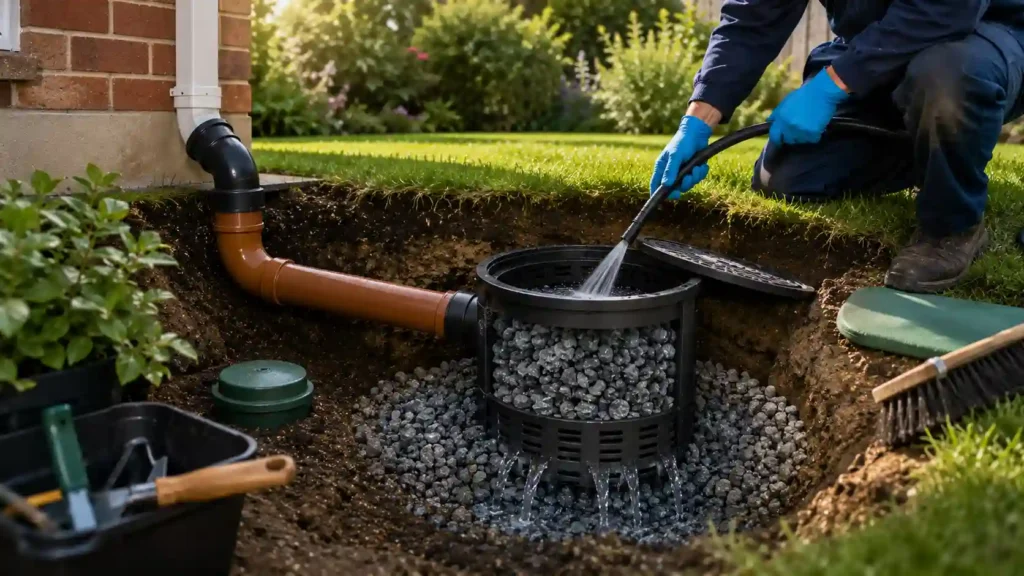

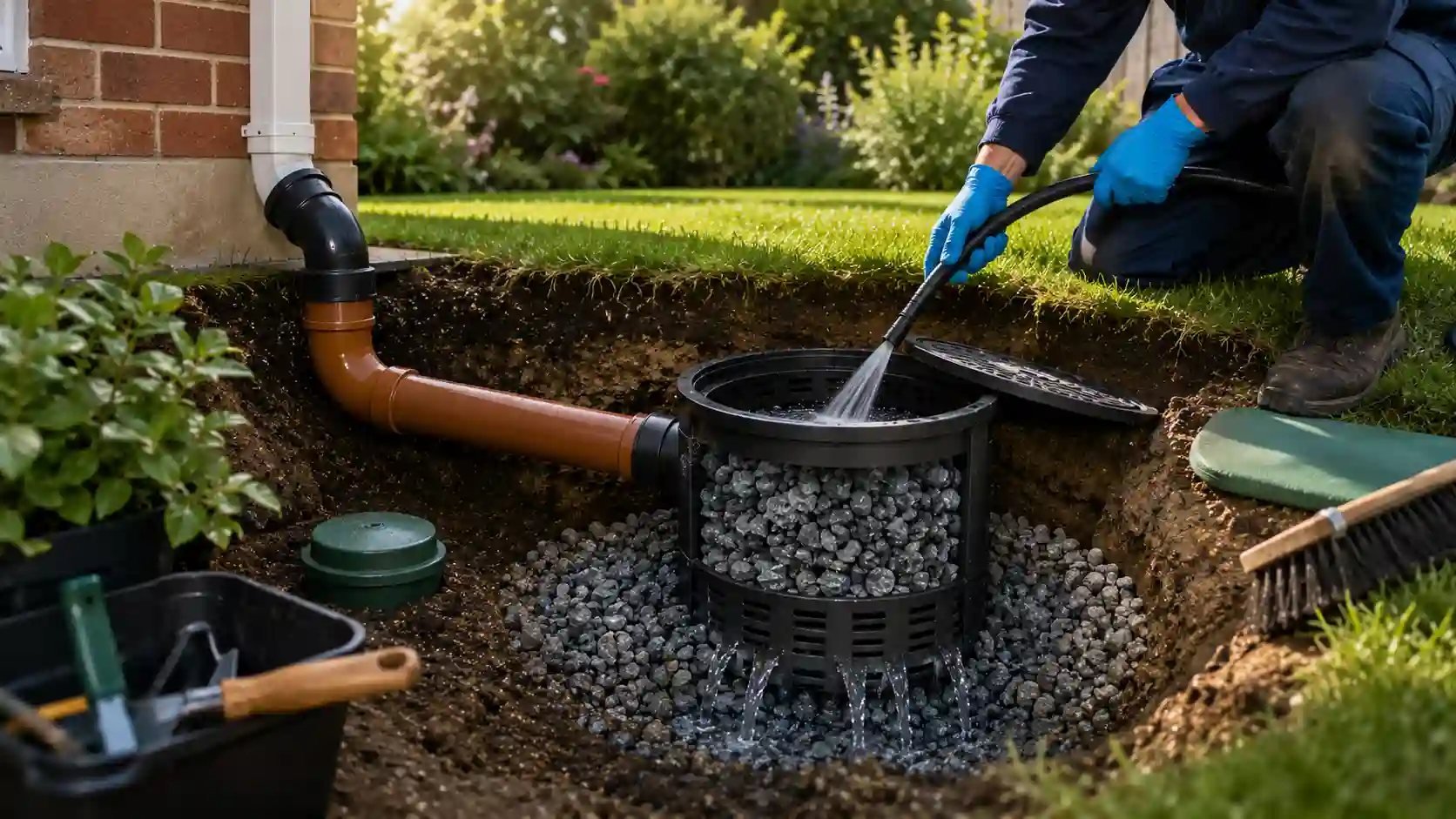
A soakaway is an important part of managing rainwater around your property, and if it’s well-maintained, the system helps relieve the risk of flooding, standing water and unnecessary pressure on drainage systems by allowing surface water to drain naturally into the ground. But even the best soakaway drainage system needs regular maintenance to keep it working efficiently.
“Did you know? The UK Environment Agency encourages sustainable drainage practices that help manage surface water naturally, reducing flood risks while protecting local watercourses and the environment.”
Soakaways are designed to operate with little maintenance, but regular care can significantly extend their life and improve long-term drainage performance. At Precise Drainage Solutions we want property owners to look for early warning signs and undertake preventative maintenance before small issues lead to expensive repairs.
Key Takeaways
- Regular inspections help keep soakaway systems working efficiently.
- Leaves, silt and other debris must be cleared before they reach the soakaway.
- Standing water can be a sign of a developing drainage issue.
- Over time, tree roots and soil compaction can reduce the effectiveness of soakaways.
- Professional inspections can uncover hidden problems before they turn into costly repairs.
What is a soakaway drainage system?
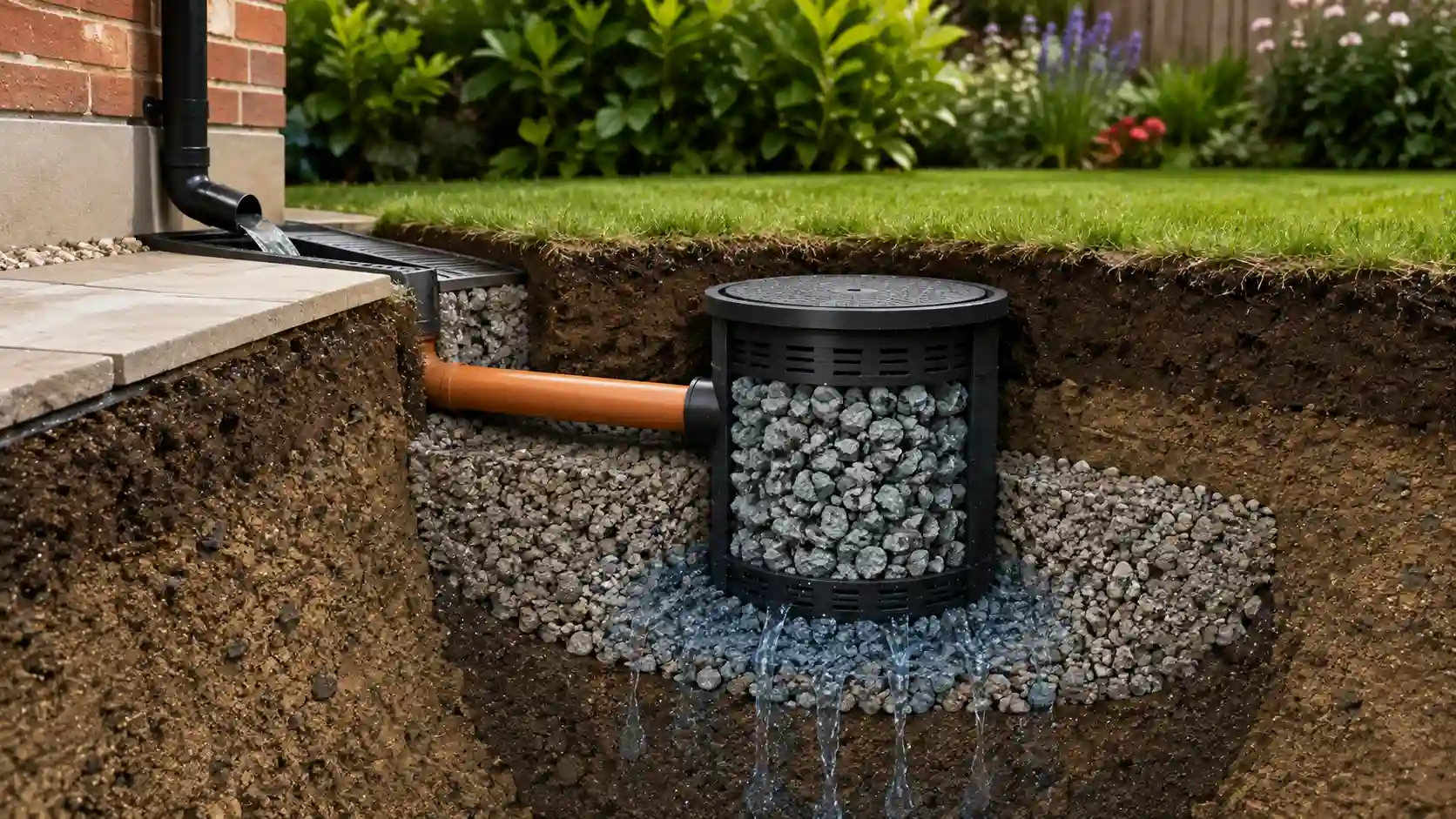
A soakaway is an underground structure that allows rainwater to percolate away slowly into the surrounding soil rather than overloading surface drainage systems.
Drainage pipes usually lead to a soakaway where the water naturally disperses into the ground.
Water from the following is often dealt with using soakaway systems:
- Roof gutters
- Driveways
- Patios
- Garden drainage
- Surface water drainage systems
Their effectiveness depends on both proper installation and ongoing maintenance.
Why does regular maintenance matter?
Even the best installed soakaways will become filled with sediment and debris in time.
This build-up may reduce the system’s ability to disperse water efficiently without maintenance.
Routine inspections identify issues such as the following:
- Blocked inlets
- Excess silt
- Surface debris
- Standing water
- Restricted water flow
Catching these problems early can help you avoid major drainage problems in the future.
Why Wait for a Drainage Problem? Speak to Our Experts Today!
Keep gutters and drainage channels clear
One of the simplest ways to safeguard your soakaway is to prevent needless debris from entering the system.
Remove regularly:
- Leaves
- Moss
- Twigs
- Mud
- Roof debris
Clear gutters decrease sediment flows to underground drainage and contribute to better water flow in general.
Homeowners researching how to build a soakaway should remember that even a well-designed system performs best when debris is prevented from entering in the first place.
Don't leave water standing
If there is still water sitting on the surface after rain, this can be a sign that the soakaway is not dispersing water effectively.
Some possible causes include:
- Soil compaction
- Sediment build-up
- Blocked drainage connections
- Tree root intrusion
Persistent standing water should be investigated before further drainage issues develop.
Don’t Let Standing Water Turn Into a Bigger Drainage Problem!
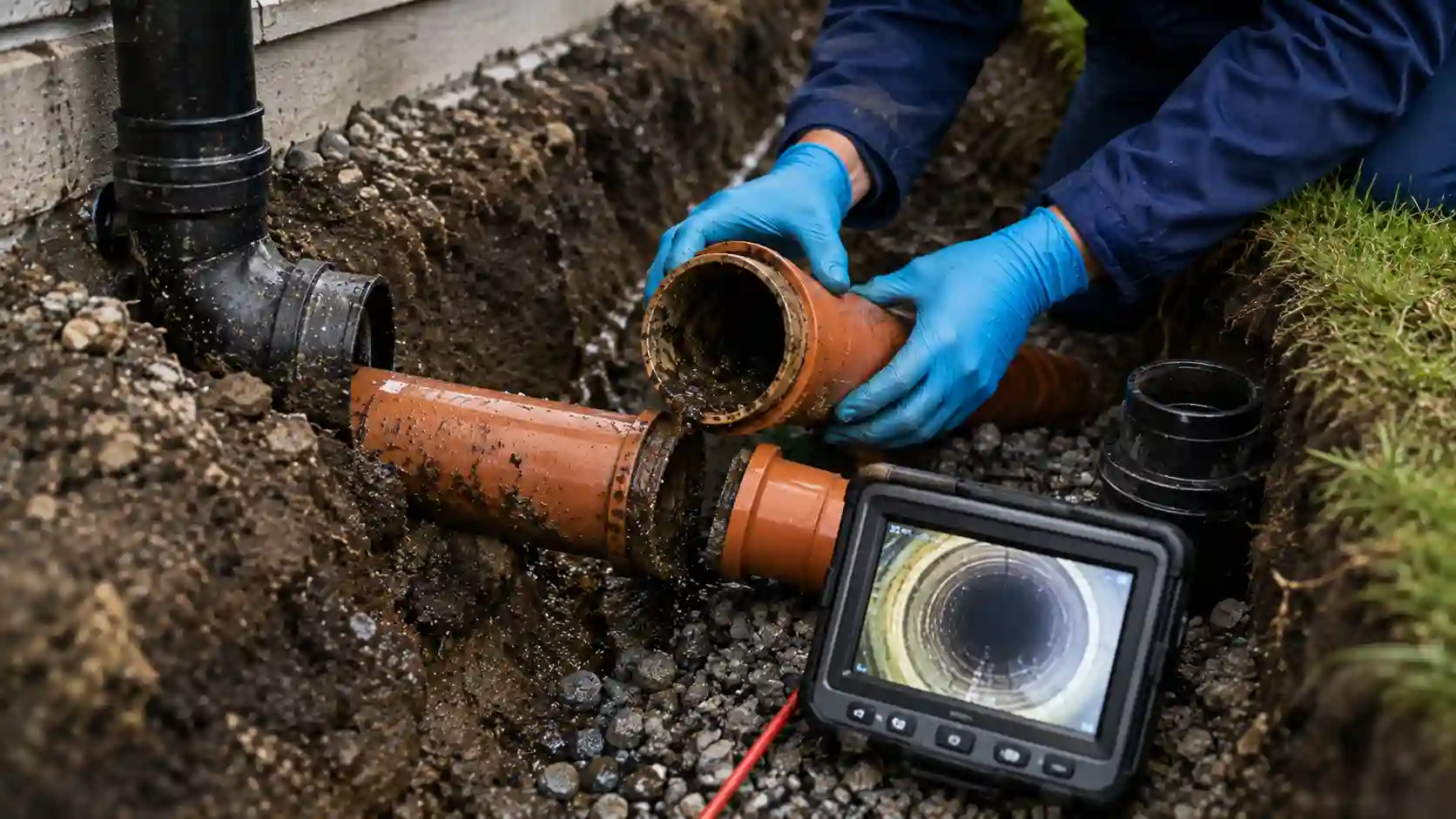
Check the condition of the connecting pipework
The soakaway pipe plays a key role in transporting rainwater to the underground drainage system.
If this pipe is blocked, cracked or partly blocked, water may not get away to the soakaway efficiently.
Watch for warning signs like the following:
- Slow surface drainage
- Overflowing gutters
- Damp patches
- Water pooling near downpipes
Early inspections can prevent serious damage by identifying problems early.
Protect your garden from unnecessary damage
Many of the soakaways are beneath landscaped areas.
Don’t overload your garden soakaway with things like this:
- Heavy vehicles
- Large storage units
- Construction materials
Too much weight on the ground can compress the soil around the soakaway and lessen its ability to drain water effectively.
Don’t plant large trees too close to the system for the same reason: roots can interfere with the drainage components over time.
Why professional inspections can make a difference
Soakaway problems are not always visible from above ground.
Professional drainage experts can evaluate
- Water flow
- Pipe condition
- Sediment accumulation
- Structural integrity
- Signs of root intrusion
These indicators can help you find maintenance problems before they turn into more difficult repairs.
Property owners are considering installing a soakaway. should also ensure that future maintenance remains part of their long-term drainage planning.
Simple habits that improve soakaway performance
Good maintenance is simple.
Helpful practices include:
- Clean gutters regularly.
- Remove debris from drainage channels.
- Monitor standing water after rainfall.
- Keep heavy loads away from soakaway areas.
- Arrange inspections if drainage performance changes.
These simple steps help maintain efficient surface water management throughout the year.
Protect Your Soakaway Investment with Precise Drainage Solutions
A well-maintained soakaway will protect your property from surface water problems, but even the most reliable drainage systems benefit from regular inspections and preventative care. If you ignore early warning signs of trouble, such as standing water, blocked inlets, or slow drainage, small problems can turn into much more expensive repairs down the road.
At Precise Drainage Solutions, we pride ourselves on our careful assessment of drainage systems and our ability to recommend practical maintenance solutions that help ensure long-term performance without unnecessary disruption. Whatever your needs, whether maintaining an existing system or planning future improvements, contact us today and let our experienced team help keep your soakaway drainage system performing efficiently for years to come.
Frequently Asked Questions
1. How often should a soakaway be inspected?
Inspect soakaway systems at least annually and after periods of heavy rainfall to identify debris, standing water, or developing drainage problems early.
2. What causes a soakaway to stop working properly?
Sediment accumulation, blocked pipes, compacted soil, tree roots, and poor maintenance can all reduce the effectiveness of a soakaway drainage system.
3. Can a blocked soakaway cause flooding?
Yes. If rainwater cannot disperse properly into the surrounding ground, surface water may accumulate, increasing the risk of localised flooding.
4. Do soakaways require regular cleaning?
While the underground structure itself requires little routine cleaning, gutters, inlets, and connecting drainage should be maintained to prevent sediment build-up.
5. When should I contact a drainage specialist?
Seek professional advice if standing water persists, drainage performance declines, or you suspect hidden pipework or soakaway defects affecting your property.