


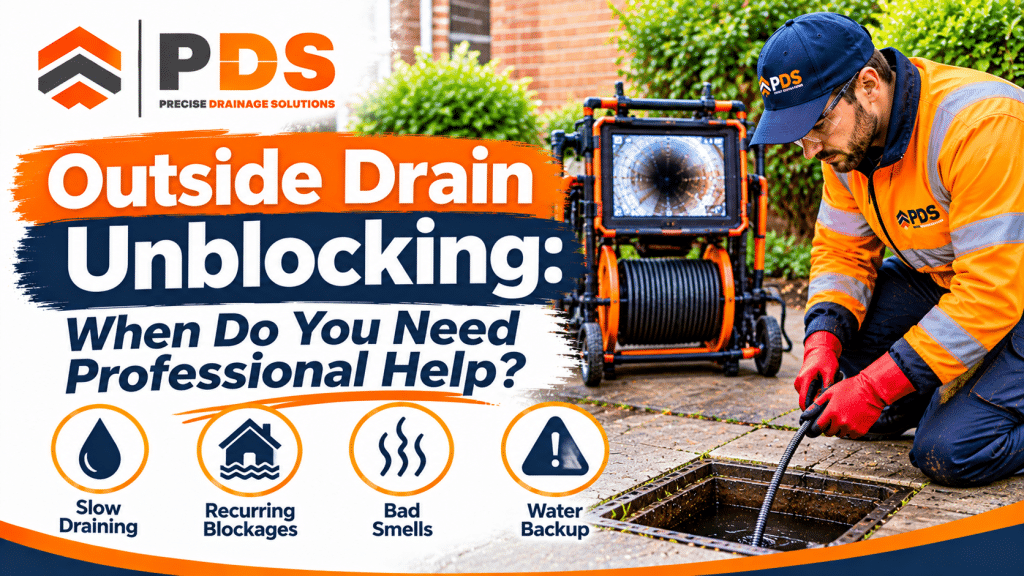

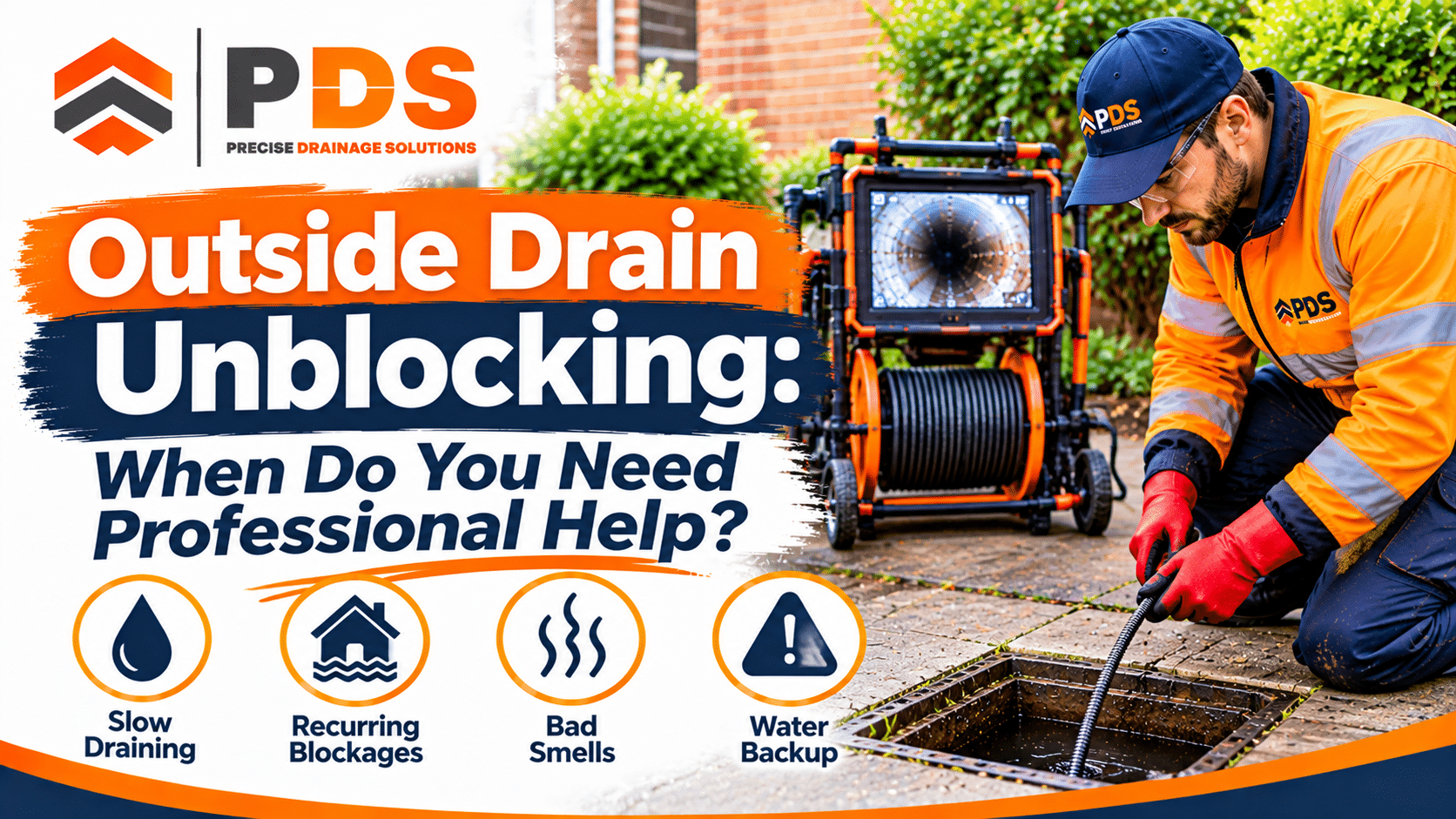
A blocked outdoor drain can cause standing water, unpleasant smells and problems around your property. While some minor blockages can be checked safely, deeper issues may need professional attention. Knowing when to arrange outside drain unblocking can help prevent bigger drainage problems.
What Causes Outside Drains to Become Blocked?
Outdoor drains carry wastewater and rainwater away from your property. However, different materials can build up inside pipes and restrict water flow. Understanding the common causes of outside drain blockages helps you spot problems early.
Leaves and garden waste, along with mud and soil washed in by rain, can collect inside drains. Grease and fat from kitchen sinks can stick to pipe walls and trap waste. Tree roots may enter through cracks or loose joints, while foreign objects like wet wipes, sanitary products and plastic can cause stubborn blockages.
Damaged pipes, including cracked or collapsed sections, can also interrupt water flow. Identifying the cause helps determine whether professional attention is needed.
What Warning Signs Should You Look Out For?
Outdoor drain problems are not always easy to spot at first. However, a few noticeable changes around your property can indicate that something is wrong.
Look out for these signs of blocked external drains:
- Standing water: Water remains around the drain opening even after rainfall has stopped.
- Unpleasant smells: Foul odours coming from outdoor drains may indicate trapped waste or stagnant water.
- Slow drainage: Water takes longer than usual to disappear from sinks, baths or other connected outlets.
- Overflowing inspection chambers: Wastewater rises inside the chamber or spills onto the surrounding ground.
- Gurgling sounds: Bubbling or unusual noises may suggest trapped air caused by restricted water flow.
If you notice more than one of these signs, the problem may be deeper inside the drainage system. An outside drain overflowing should be dealt with promptly, particularly if wastewater is spreading across your garden or driveway.
What Can You Safely Check Before Calling a Professional?
Not every drainage problem needs immediate professional help. Homeowners can carry out a few simple checks to identify possible issues. However, avoid opening sealed chambers, reaching inside pipes or attempting repairs yourself.
Check the drain opening for leaves, twigs or garden waste. Also, look for standing water, broken covers, visible cracks or signs of ground movement. Notice whether connected sinks or other outlets are draining slowly.
You can remove loose debris from an accessible drain opening, but avoid dangerous chemicals or pushing objects into pipes. If you are unsure how to unblock an outside drain, arrange a professional inspection.
Wondering when you need professional outside drain unblocking? Contact our drainage experts today!
When Should You Call a Professional Drainage Specialist?
Some blockages are too deep or stubborn to clear with basic checks. In such cases, professional outside drain unblocking can help restore normal water flow.
Seek professional help if water continues collecting, the same blockage keeps returning, or wastewater starts overflowing. Problems affecting multiple drains may also indicate a deeper obstruction. Cracks, ground movement and unusual water pooling can suggest damaged pipes.
Knowing when to call a drainage specialist can prevent further damage, especially when blocked outside drains affect your property’s drainage system.
How Do Professionals Clear an Outside Drain?
Professional drainage specialists use different methods depending on the blockage, pipe condition and location. They first assess the problem before selecting a suitable clearance method.
Some commonly used methods include:
- Drain Rodding
Drain rodding uses flexible rods fitted with suitable attachments to break up or remove blockages. It can help clear certain obstructions caused by waste, debris and other materials inside accessible pipes.
- High-Pressure Water Jetting
High-pressure drain jetting uses controlled water pressure to break down stubborn deposits and wash debris out of the drainage system. It can also remove grease and other build-ups from pipe walls.
- CCTV Drain Inspection
A CCTV drain survey uses a specialist camera to inspect the inside of drainage pipes. It helps identify hidden blockages, cracks, root intrusion, displaced joints and other defects without unnecessary excavation.
- Professional Drain Clearance
Depending on the condition of the drainage system, specialists may recommend outside drain clearance to remove accumulated waste and restore normal water flow.
The right method depends on the type and severity of the blockage. A professional inspection helps ensure that the work addresses the actual problem rather than just its visible symptoms.
Need Professional Outside Drain Unblocking? Call Our Drainage Experts Today!
Why Do Some Outside Drain Blockages Keep Coming Back?
A drain that becomes blocked repeatedly may have an underlying problem that simple clearance cannot resolve.
For example, tree roots can continue growing through small openings in damaged pipes. Similarly, cracks, collapsed sections and uneven pipe joints can trap waste and debris, allowing another blockage to develop.
In these situations, external drain cleaning may provide temporary relief, but it will not fix structural damage.
A specialist may recommend a CCTV inspection to understand what is happening inside the pipe. If damage is confirmed, suitable drain repair work may be needed to restore the drainage system.
Identifying the actual cause is important because repeatedly clearing the same blockage can lead to unnecessary costs and further disruption.
How Can You Reduce the Risk of Future Drain Problems?
Although not every blockage can be prevented, regular care can help keep outdoor drains in better condition.
Follow these simple habits:
- Remove fallen leaves and garden waste from drain openings regularly.
- Avoid pouring cooking oil, fat or grease down kitchen sinks.
- Never flush wet wipes, sanitary products or other unsuitable items.
- Keep nearby trees and shrubs under observation, particularly where roots are close to drainage pipes.
- Arrange professional inspections if your drains become blocked repeatedly.
- Address unusual smells, slow drainage and standing water before the problem gets worse.
Taking these precautions can reduce the chances of sudden drainage problems and help you spot early warning signs.
Get Professional Help Before a Small Blockage Gets Worse
Knowing when to arrange outside drain unblocking can help protect your property from overflowing water, unpleasant smells and further pipe damage. While simple surface checks can be useful, deeper or recurring problems need professional attention.
Precise Drainage Solutions can help identify drainage issues and recommend suitable clearance or repair work. Contact our team for reliable drainage support and keep your outdoor drains working as they should.
Key Takeaways:
- Leaves, mud, grease, tree roots and damaged pipes are common causes of outdoor drain blockages.
- Standing water, foul smells and overflowing chambers are important warning signs.
- Homeowners can carry out basic visual checks but should avoid unsafe DIY repairs.
- Professional methods include drain rodding, water jetting and CCTV inspections.
- Repeated blockages may indicate an underlying pipe defect that needs repair.
- Regular maintenance can help reduce the risk of future drainage problems.
Frequently Asked Questions
1. What are the most common causes of outside drain blockages?
Leaves, mud, grease, tree roots, foreign objects and damaged pipes are among the most common causes.
2. Can I unblock an outside drain myself?
You can remove loose debris from a safe, accessible surface. However, deeper blockages should be handled by a professional.
3. How do I know if my outside drain needs professional attention?
Repeated blockages, overflowing inspection chambers, foul smells and slow drainage are signs that specialist help may be needed.
4. How do professionals find hidden drain blockages?
They may use CCTV drain inspections to check inside pipes and identify blockages, cracks, root intrusion and other defects.
5. How often should outside drains be inspected?
There is no fixed schedule for every property. However, regular checks and professional inspections when problems appear can help maintain good drainage.