


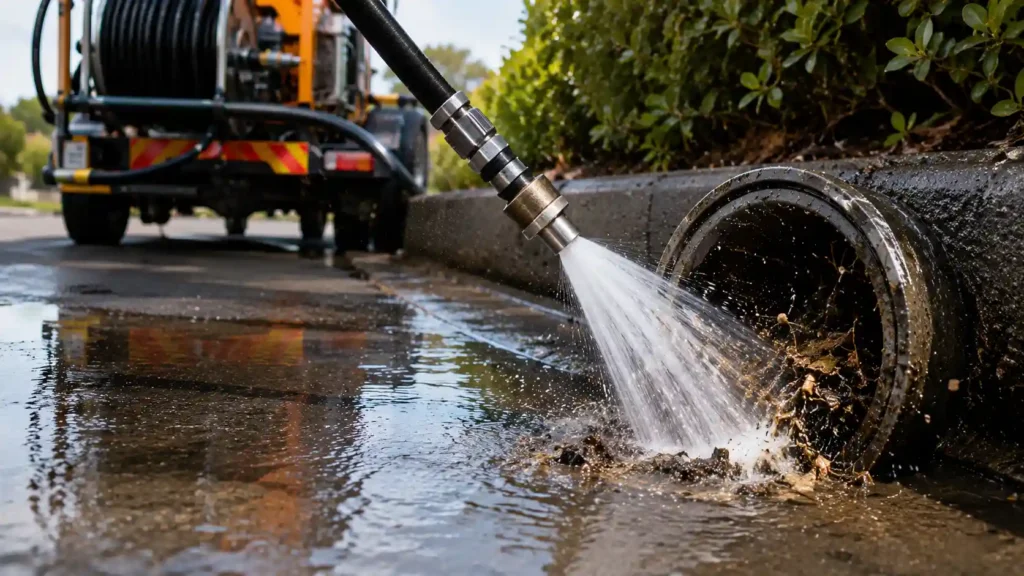

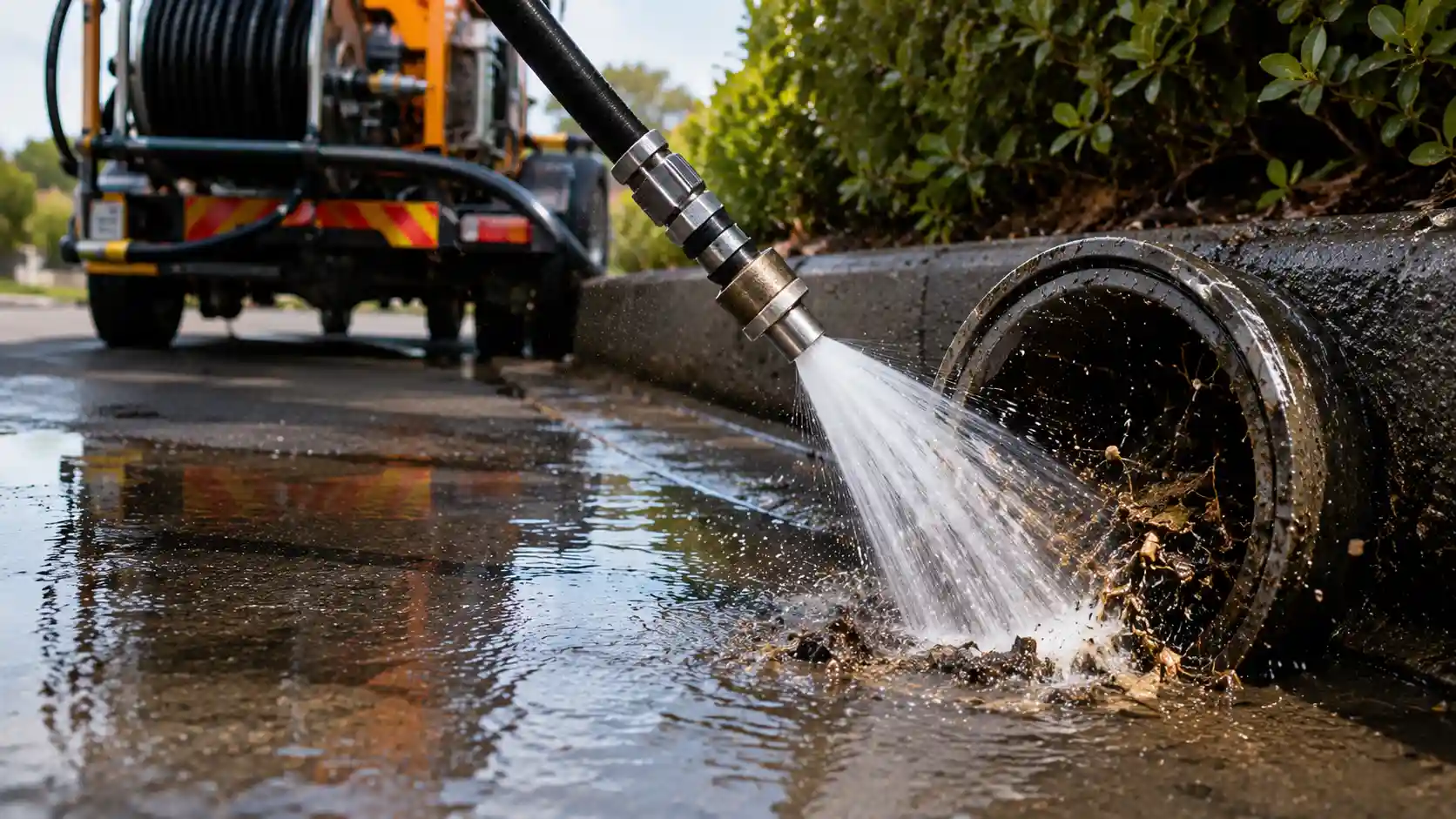
A blocked drain can be a nuisance in your home or business, causing slow water flow, unpleasant odours, and even flooding if left unattended. For minor blockages, plunger and chemical cleaners can work, but they often fail with heavy grease, packed debris or tree roots. This is where blocked drain jetting comes in as a solution. This method utilises powerful high pressure water to clean the inside of the pipe while removing stubborn deposits.
“Did you know? CREW advises that fats, oils, grease, and other waste materials are major contributors to sewer blockages and pollution incidents. Preventing build-up and maintaining drains helps reduce flooding risks.”
Understanding how drain jetting works can help property owners decide when professional drainage services are the best solution. Here at Precise Drainage Solutions we believe that you need to identify the cause of the blockage, not just treat the symptoms, to select the right drainage method.
Key Takeaways
- Drain jetting uses high-pressure water to remove stubborn blockages.
- It is more effective at clearing grease, sludge, roots and debris than many simple methods.
- Normal water flow can be restored with jetting; no excavation is necessary.
- Any persistent blockages should be investigated professionally prior to treatment.
- Routine drain maintenance helps prevent future blockages.
What is blocked drain jetting?
Blocked drain jetting is a professional drainage service that uses high pressure water to remove blockages and clean the inside of drain pipes.
Jetting, on the other hand, is unlike temporary methods that just create a small opening through a clog. Jetting works to remove accumulated deposits throughout the affected section of pipe.
This process relies only on water and does not require harsh chemicals for most drainage blockages.
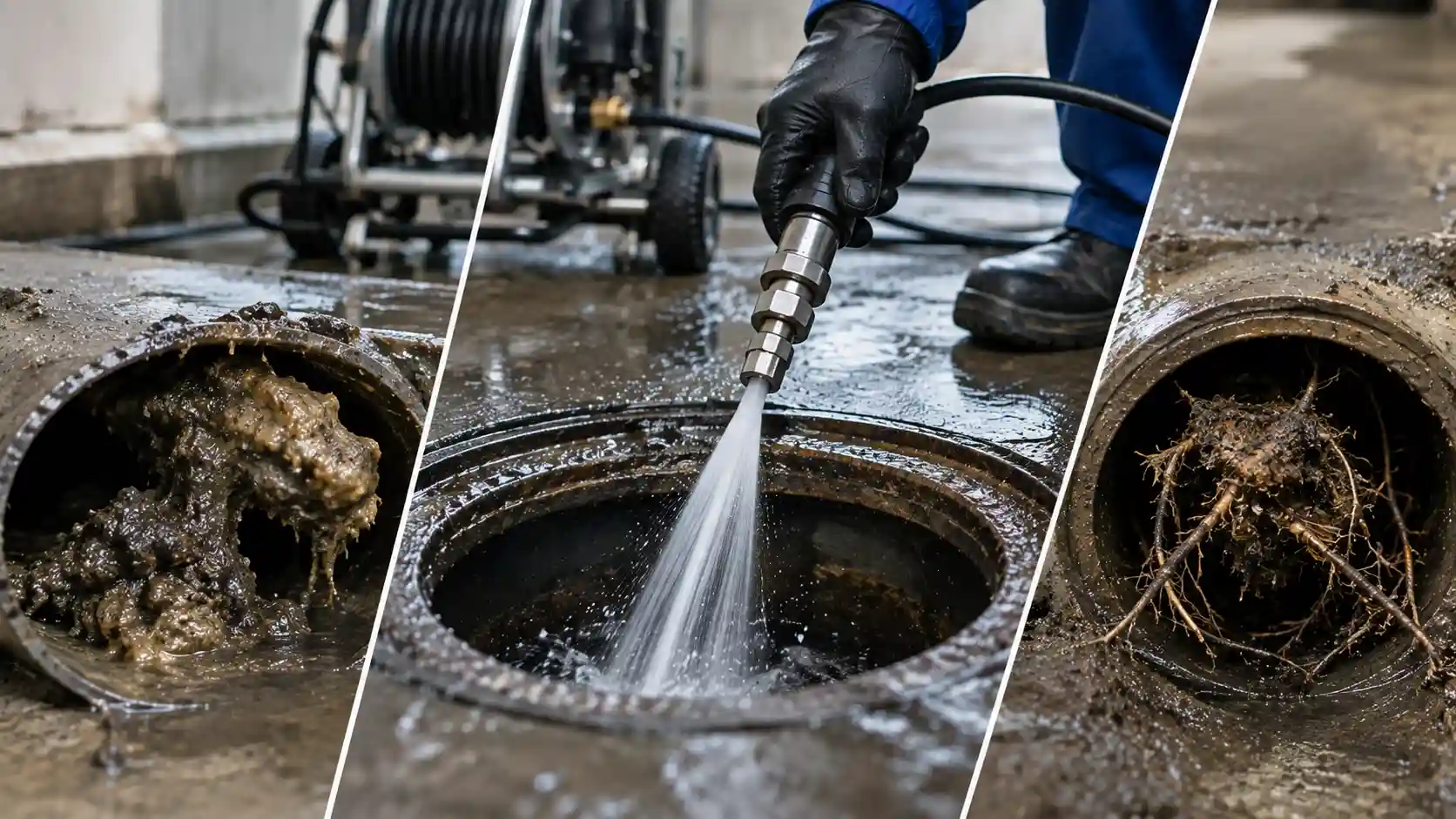
It is often used to clear the following:
- Grease build-up
- Mud and silt
- Food waste
- Soap residue
- Leaves
- Small root intrusions
- General debris
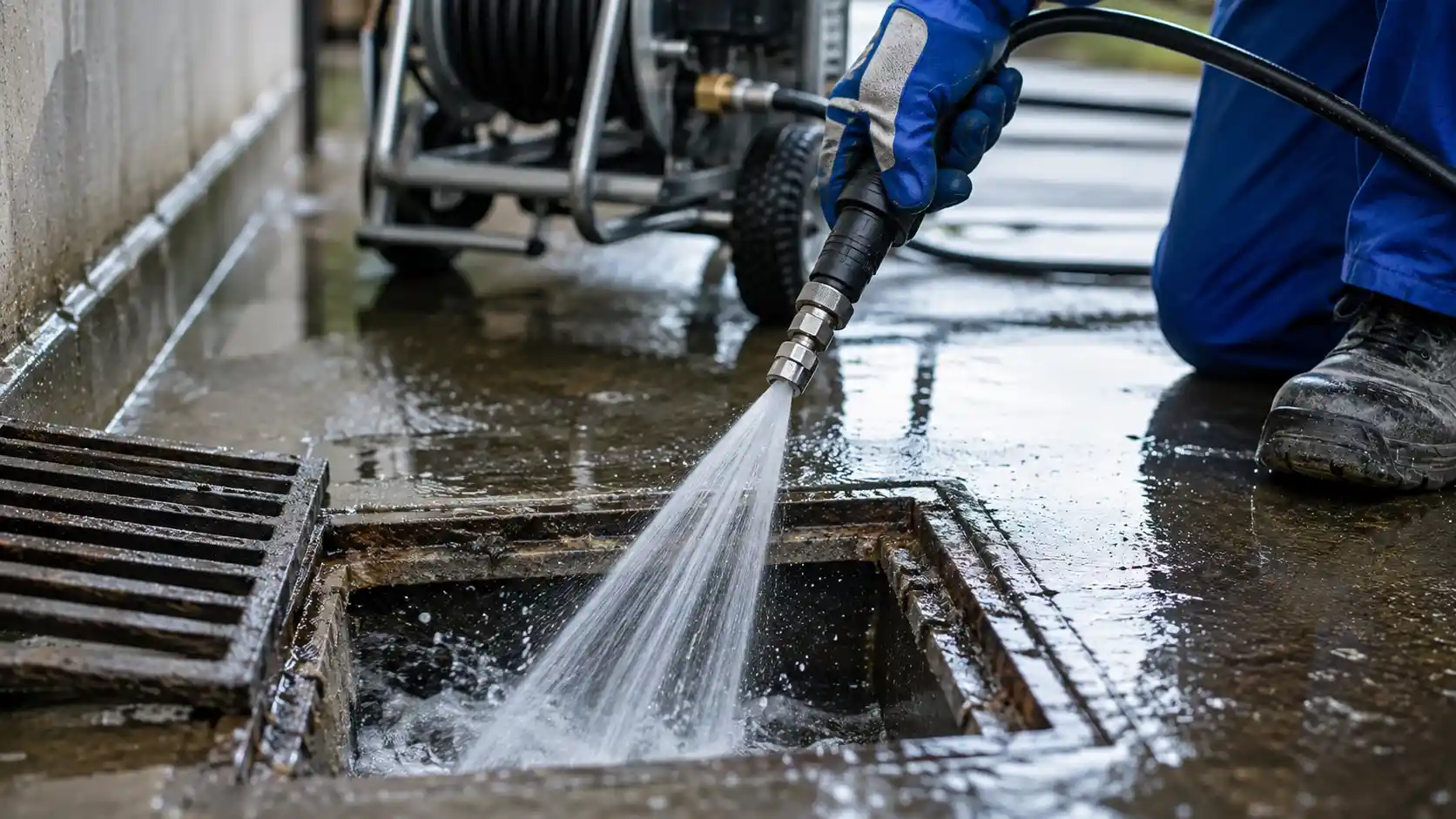
Why is jetting more effective than basic drain clearing?
Many of the old procedures only partially remove the obstruction.
The high-pressure water cleans much more of the pipe surface, leaving less residue that could contribute to future blockages.
This is why jetting is especially useful for drains with recurring grease buildup or compacted debris.
For example, whether you are dealing with drain jetting in Kent or similar drainage work elsewhere, the principle is the same: removing the blockage while cleaning the surrounding pipe walls.
Need More Than Basic Drain Clearing? Call Our Experts Today!
When should you consider drain jetting?
Professional jetting is often recommended when you notice:
- Slow-draining sinks
- Recurring blockages
- Overflowing outdoor drains
- Persistent unpleasant odours
- Water backing up into fixtures
If you’re experiencing problems similar to blocked drains in London, and the symptoms keep returning, it usually means you may need a more thorough cleaning method rather than another temporary fix.
How does the process work?
Although no two drainage systems are alike, professional jetting is usually done in a certain way.
Typical steps include:
- Assessing the drainage issue.
- Locating the blockage.
- Positioning specialist jetting equipment.
- Using high-pressure water to remove debris.
- Confirming that water flows freely.
If appropriate, technicians may also recommend inspections to be carried out before or after drainage jetting to assess the overall condition of the pipework.
Is drain jetting suitable for every blockage?
Not all the time.
Problems with drainage can result from:
- Collapsed pipes
- Major root intrusion
- Structural defects
- Misaligned joints
In these cases, just getting rid of the debris will not solve the problem permanently.
A professional assessment can help determine if jetting is the right answer or if repairs might be needed as well.
What affects the cost of drain jetting?
Many homeowners ask how much to unblock a drain. There is no set price for the answer; it depends on a number of factors.
These include:
- Location of the blockage
- Drain depth
- Accessibility
- Severity of the obstruction
- Pipe condition
- Whether additional inspections are needed
The most trustworthy suggestion for the work needed is found in a professional assessment.
Can businesses benefit from drain jetting too?
Absolutely.
Restaurants, offices, retail stores, warehouses and industrial facilities often have much heavier drainage use than residential homes.
Regular commercial drain jetting cuts grease build-up, minimises operational disruption and keeps drainage systems running efficiently where high volumes of wastewater are common.
As they say, prevention is better than cure. Sometimes preventative maintenance can help reduce the chances of emergency drainage problems affecting business operations.
How can you reduce future blockages?
You can do a lot to improve drainage performance with simple, good maintenance.
Here is what to think about:
- Avoid pouring grease into sinks.
- Remove leaves from outdoor drains.
- Dispose of food waste properly.
- Address slow drainage early.
- Arrange for professional inspections if blockages keep returning.
Preventative care can help prolong the life of your drainage system and lower repair costs.
Restore Full Drain Flow with Precise Drainage Solutions
Drain blockages are often stubborn and do not go away by themselves. Delaying treatment usually means a small obstruction becomes a major drainage issue. A high pressure water jet is an effective method to remove grease, sludge, debris and other deposits to restore proper water flow throughout the drainage system.
Here at Precise Drainage Solutions, we take the time to assess each drainage problem before recommending the most appropriate solution, ensuring that each customer receives a service tailored to the condition of their drains. If you are suffering from blocked drains, slow drainage or overflowing pipes at your property, call Precise Drainage Solutions today and find out how professional blocked drain jetting can get your drainage system back on track quickly and effectively.
Frequently Asked Questions
1. What types of blockages can drain jetting remove?
Drain jetting effectively removes grease, sludge, soap residue, mud, leaves, food waste, and many stubborn deposits restricting normal drainage flow.
2. Is drain jetting safe for drain pipes?
When performed by trained professionals using suitable equipment, drain jetting is generally considered safe for structurally sound drainage systems.
3. Does drain jetting permanently fix blocked drains?
Jetting removes many blockages effectively, but recurring problems may indicate structural drainage defects requiring further investigation or repair.
4. How long does a drain jetting service take?
The duration depends on blockage severity, accessibility, and drain condition, although many straightforward jetting jobs are completed within a relatively short time.
5. When should I arrange professional drain jetting?
Professional jetting is recommended for recurring blockages, slow drainage, overflowing drains, unpleasant odours, or when household methods fail to restore proper flow.