


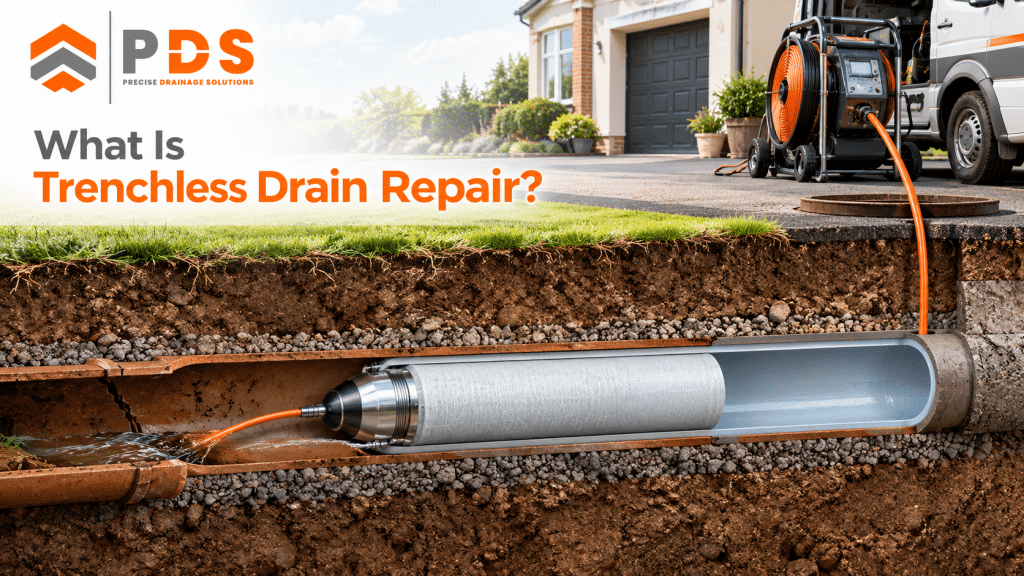

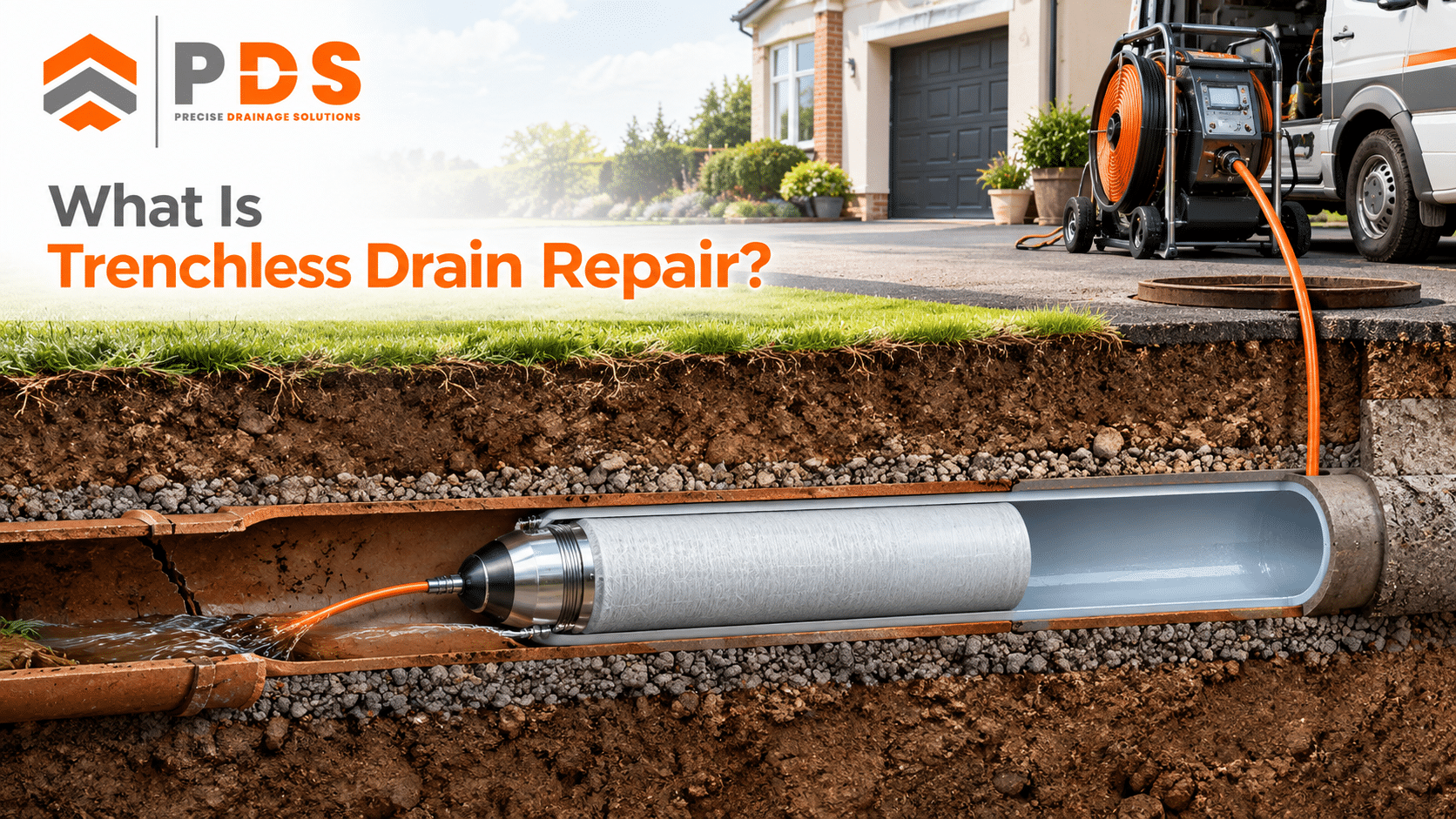
Drain problems can be stressful, especially when fixing them means digging up your garden, driveway, or patio. However, some damaged pipes can be repaired without extensive excavation. Trenchless drain repair uses specialist methods to restore damaged pipes through small access points, helping reduce disruption to your property. It can be a practical option for homeowners dealing with cracks, leaks, or ageing drainage systems.
Did you know? Trenchless pipe rehabilitation accounted for 64.20% of the U.K. trenchless pipe rehabilitation and new installation market. This was largely driven by ageing water and wastewater systems, and regulations focused on reducing leaks, protecting sewer pipes, and maintaining reliable services.
What Is Trenchless Drain Repair?
Trenchless drain repair fixes damaged underground pipes without digging a long trench. Specialists use existing access points or small openings to repair pipes internally or replace damaged sections.
This method can help protect:
- Gardens, lawns, and trees.
- Driveways, patios, and paved paths.
- Nearby walls, floors, and structures.
However, it is not suitable for every drainage problem. A professional inspection can determine whether trenchless repair is the right option.
How Does Trenchless Pipe Repair Work?
If you are wondering how trenchless pipe repair works, the process usually starts with a detailed inspection. A drainage specialist examines the pipe to identify the damage and decide which repair method is suitable.
The main steps generally include:
- Inspect the Pipe: A CCTV camera identifies cracks, blockages, damaged joints, and other pipe problems without digging.
- Clean the Drain: Specialists remove grease, silt, roots, and debris to prepare the pipe for repairs.
- Select the Method: The specialist chooses lining, patch repair, or pipe bursting based on the damage.
- Repair the Pipe: Specialists repair the damaged pipe through existing access points or small openings wherever possible.
- Check the Repair: A final inspection confirms the repair quality and checks that wastewater flows properly.
Which Trenchless Repair Methods Are Commonly Used?
Different methods are available for different types of pipe damage. Understanding the main options can help you follow your drainage specialist’s recommendations.
Cured-in-Place Pipe Lining
Pipe bursting is used when an underground pipe needs replacing. Specialist equipment breaks apart the old pipe while pulling a new pipe into its place.
This method can be useful for pipes with cracks, leaks, or general deterioration, provided the pipe is suitable for lining. It can often restore the pipe without replacing the entire section.
Pipe Bursting
Pipe bursting is used when an underground pipe needs replacing. Specialist equipment breaks apart the old pipe while pulling a new pipe into its place.
Although this method can reduce the need for continuous excavation, small access pits are usually required. It may be suitable for certain severely damaged pipes that cannot be repaired with lining.
Localised Pipe Repair
Sometimes, the damage is limited to one small section of a pipe. A localised repair can target that area rather than treating the entire length.
This may be a practical option when a camera inspection identifies a specific crack or damaged joint and the surrounding pipe remains in good condition.
Trenchless vs Traditional Drain Repair: What Is the Difference?
Both methods repair damaged drains differently. Traditional repairs involve digging to expose the pipe, while trenchless methods use smaller access points to reduce excavation.
Factor | Trenchless Drain Repair | Traditional Drain Repair |
Excavation | Usually requires small access points. | Often requires digging a trench. |
Property Disruption | Helps protect driveways, lawns, and patios. | May disturb gardens, paving, and other surfaces. |
Repair Options | Suitable for certain types of pipe damage. | Provides direct access for repairs or replacement. |
Repair Time | Some repairs may take less time. | Digging and excavation may extend the work. |
Site Restoration | Usually requires less surface restoration. | May require restoring soil, paving, or landscaping. |
Neither method is always better. The right choice depends on the pipe’s condition, accessibility, location, and extent of damage.
Wondering if trenchless drain repair is right for your property? Contact our drainage experts today!
When Is Drain Repair Without Excavation a Good Option?
Drain repair without excavation may be suitable when the pipe is damaged but still provides a workable route for repair equipment.
A drainage specialist may recommend it for:
- Cracks or small leaks in underground pipes.
- Worn or deteriorating pipe walls.
- Certain damaged joints.
- Localised defects in otherwise serviceable pipework.
- Pipes beneath driveways, patios, or landscaped gardens.
It may also help where digging could disturb nearby structures or established landscaping.
However, a fully collapsed pipe, severe deformation, or a badly misaligned section may require excavation. A CCTV survey helps establish whether a trenchless method can provide a reliable repair.
What Are the Benefits of No-Dig Drainage Technology?
No-dig drainage technology offers several practical advantages for homeowners. Its main benefit is that it can repair or renew certain underground pipes without exposing their full length.
Other potential benefits include:
- Less disruption: Gardens, driveways, and paved areas may need less reinstatement work.
- Reduced excavation: Smaller access points can mean less soil removal and fewer disturbances around the property.
- Targeted repairs: Specialists can focus on the damaged section when the problem is localised.
- Improved convenience: Some jobs may involve less disruption to everyday activities around the home.
- Long-term pipe protection: Suitable lining systems can create a renewed internal surface that helps protect the existing pipe.
The results depend on the repair method, the pipe’s condition, and the quality of the installation. A professional assessment is essential before choosing this approach.
What Affects Trenchless Drain Repair Cost?
The trenchless drain repair cost varies from one property to another. There is no single price that applies to every job because the amount of work depends on several factors.
These include:
- Damage severity: Extensive deterioration may require more complex repairs.
- Pipe length and diameter: Larger or longer sections can need additional materials and labour.
- Access conditions: Difficult access may increase the time and equipment needed.
- Repair method: Pipe lining, localised patching, and pipe bursting involve different processes and materials.
- Preparation work: Heavy blockages or debris may need to be removed before repairs can begin.
Ask for a clear quotation that explains the recommended method, the work included, and any additional costs that could arise. Comparing quotations is easier when each contractor has assessed the same drainage problem.
Need professional trenchless drain repair? Call our drainage experts now!
How Can You Tell If Your Drain Needs Repair?
Drainage problems often develop gradually. Spotting the warning signs early can help prevent further damage.
Look out for:
- Repeated blockages.
- Slow-draining sinks, baths, or outdoor drains.
- Unpleasant drain smells.
- Wet patches or sinking ground above pipes.
- Wastewater backing up into toilets or fixtures.
These signs may have other causes. If problems persist, arrange a professional CCTV drain survey. Avoid opening underground chambers or attempting repairs yourself, especially during wastewater backups.
Avoid opening underground chambers or attempting repairs yourself, particularly if wastewater is backing up.
Get Expert Advice for Your Drainage Problem
Recurring blockages, leaks, or damaged underground pipes do not always require extensive digging. The right repair depends on what is happening inside your drainage system.
Precise Drainage Solutions can help you understand your options and determine whether trenchless drain repair is suitable for your property. Arrange a professional assessment to identify the problem and find a practical way to restore your drainage system.
Key Takeaways:
- Trenchless repair can restore certain damaged pipes with limited excavation.
- CCTV inspections help identify defects and guide the choice of repair method.
- Pipe lining, pipe bursting, and localised repairs suit different conditions.
- Traditional excavation may still be necessary for collapsed or severely damaged pipes.
- Costs depend on the damage, pipe size, access, and repair method.
- Early professional assessment can help prevent recurring drainage problems from becoming more serious.
Frequently Asked Questions
Is trenchless drain repair suitable for every damaged pipe?
No. Trenchless repair works best on pipes that are suitable for lining or other no-dig methods. Severely collapsed pipes or badly misaligned sections may need traditional excavation.
How long does trenchless drain repair take?
Many straightforward repairs can be completed within a day. Larger or more complex jobs may take longer, depending on the damage, repair method, and preparation required.
Does trenchless pipe repair last?
Yes, a properly installed trenchless repair can last for many years. Its lifespan depends on the repair method, materials, installation quality, and condition of the existing pipe.
Is trenchless repair cheaper than traditional drain repair?
It can be cheaper because it may reduce digging and surface restoration costs. However, the final price depends on the pipe damage, repair method, and site conditions.
Do I need a CCTV drain survey before trenchless repairs?
Yes, a CCTV drain survey is usually recommended. It helps identify the damage, assess the pipe’s condition, and determine whether trenchless repair is suitable.