


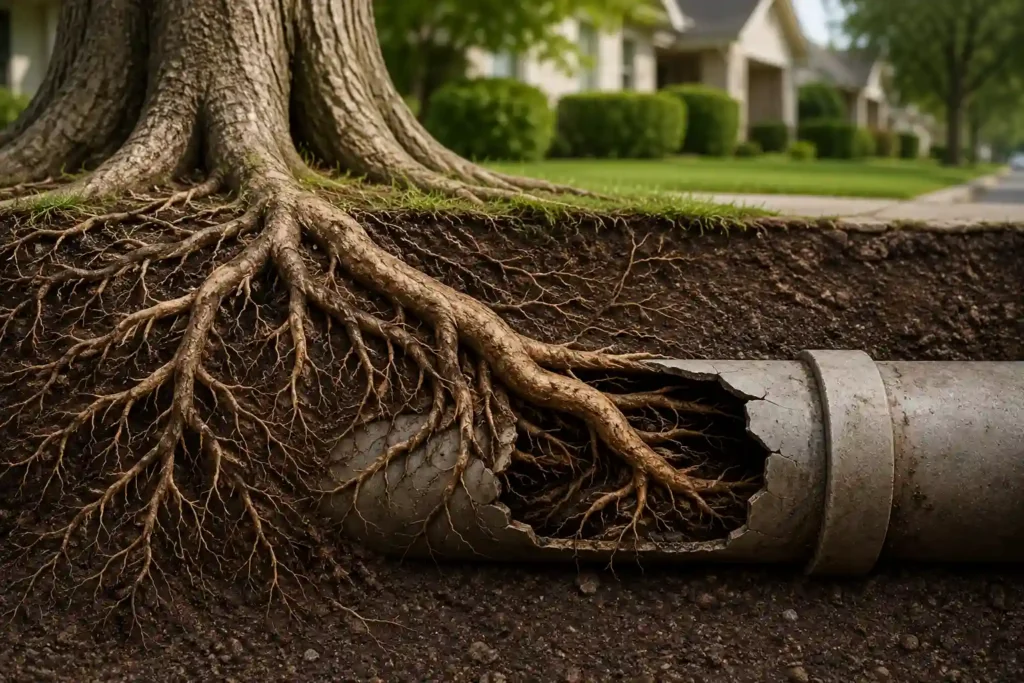

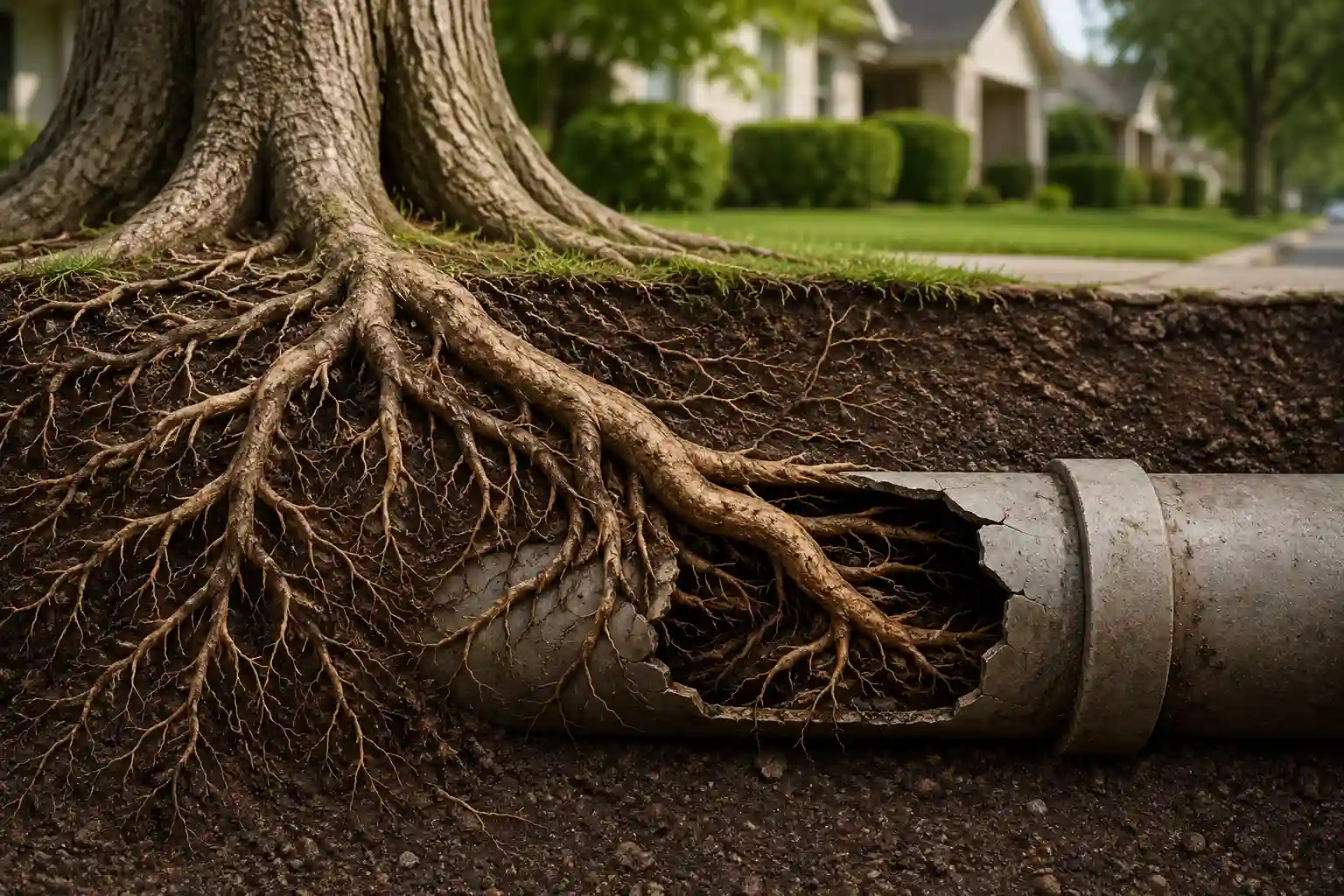
Trees add beauty, shade, and environmental value to a property, but their root systems can sometimes cause problems underground. Roots will naturally gravitate towards drainage systems, especially those with small cracks or ageing joints, in their search for moisture. Once inside a pipe, they can grow over time and interfere with normal drainage performance.
“Did you know? Responsibility for drain repairs often depends on ownership. According to Ofwat, homeowners are typically responsible for drains serving only their property, while water companies usually maintain shared sewers.”
At Precise Drainage Solutions, we frequently help property owners investigate and sort out problems with tree roots in drains. The first step in finding an effective solution and avoiding unnecessary conflicts is usually to find out who caused the damage.
Key Takeaways
- Usually tree roots get access to drains through cracks or weak joints.
- Normally, whoever’s drain is affected is responsible for repairs.
- The neighbour is not automatically liable for a tree that belongs to him.
- Professional inspections can help determine the source and extent of the damage.
- Early action can prevent expensive repairs and drainage issues.
Who Is Usually Responsible for the Damage?
The answer depends quite a lot on who owns the impacted drainage system.
Often, the property owner must maintain and repair a damaged drain that only their property uses. This responsibility generally applies to wherever the roots came from.
If the sewer is a shared sewer or involves public drainage infrastructure, then the relevant water authority may be responsible. Therefore, identifying ownership is a key part of determining liability.
What Happens If the Roots Come from a Neighbour's Tree?
Some people assume that if tree roots from a neighbour’s tree cause damage to their drain, then the neighbour is automatically responsible. Still, across most cases, liability is a lot more complicated than that.
Let’s say that a fully grown tree exists right next door. After a while, its roots spread underground and find their way inside a fragile part of your pipework. In this scenario, although the roots have started from the neighbouring property, the question of who is responsible is not always clear.
Possible factors to consider include:
- Whether the roots can be traced to the neighbouring tree
- Whether the neighbour knew about the issue
- Whether reasonable action was taken after the problem became known
- The condition of the affected drainage system before the intrusion occurred
Given that each case is unique, it is usually important to get a professional opinion.
How Do Tree Roots Actually Damage Drains?
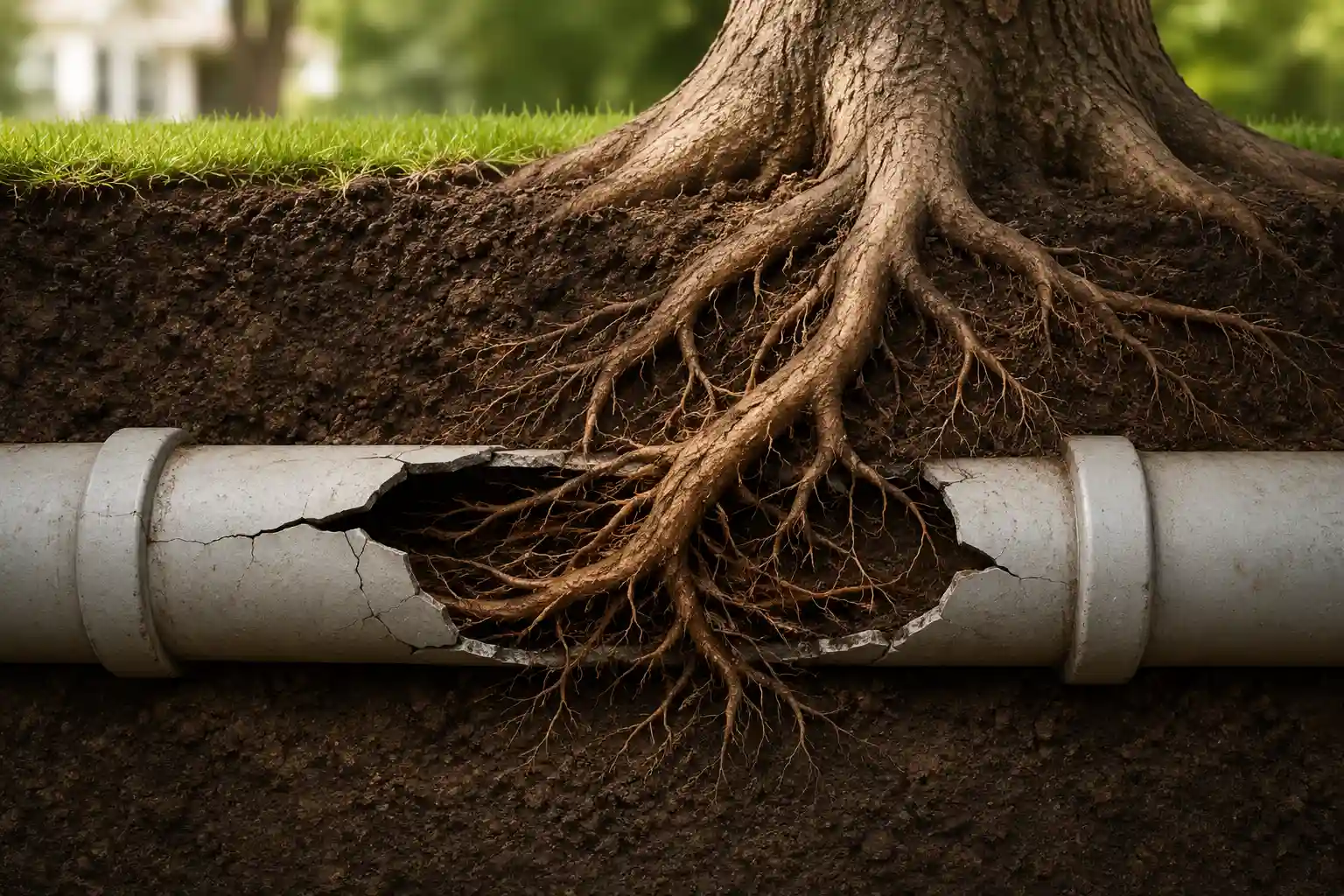
It is a common misconception that roots break through pipework that is in perfect condition.
In reality, roots take advantage of potentially weak parts of the pipework:
- Cracked pipes
- Faulty joints
- Aging drainage infrastructure
- Previously damaged sections
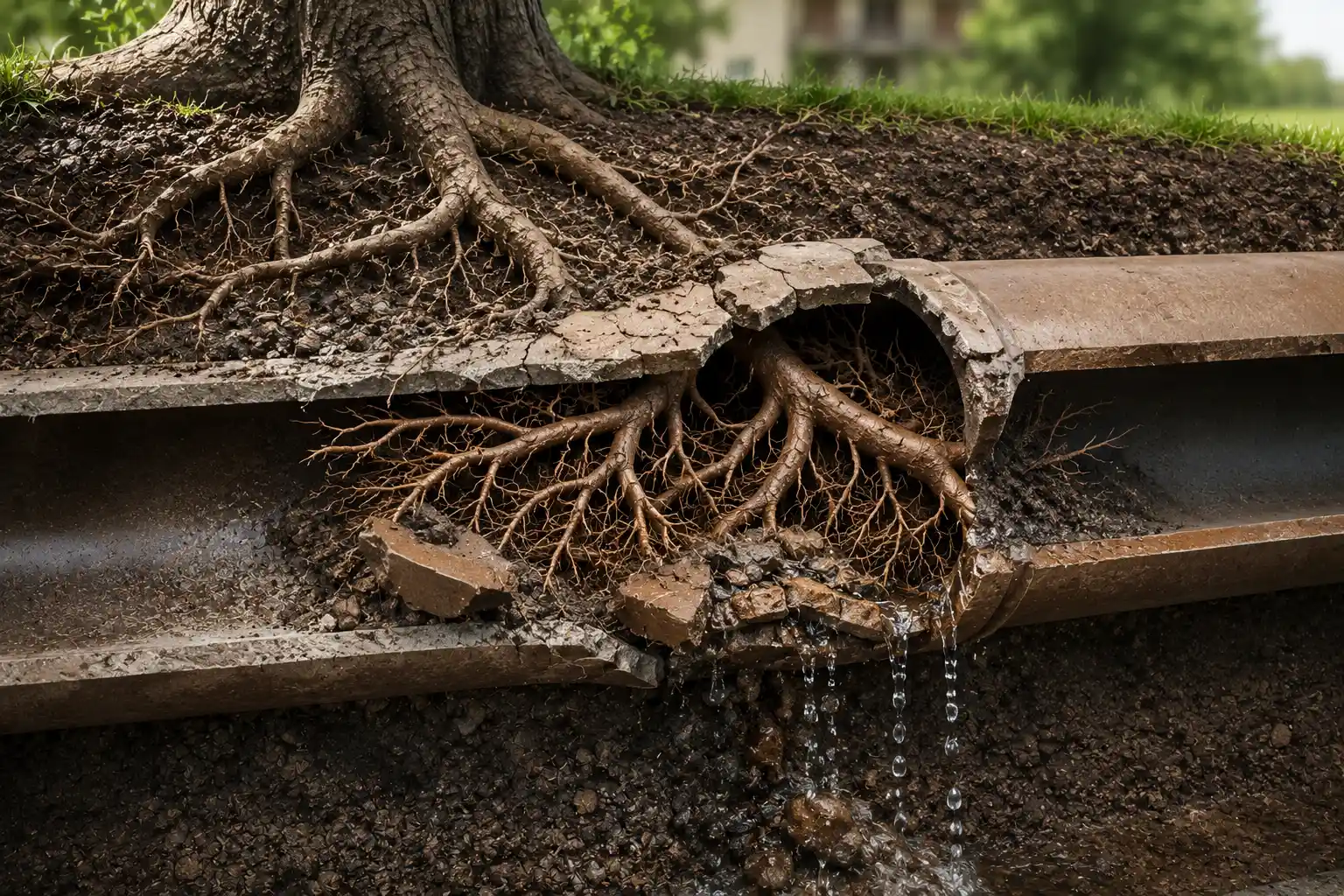
Once inside, tree root damage to drains can develop gradually. When roots keep growing, they not only reduce the water flow but also pressurise the pipe structure, leading to a higher chance of blockages and deterioration over time.
Spot These Early Warning Signs
Root intrusion usually progresses slowly, allowing property owners time to detect problems before they cause major damage.
Be aware of:
- Frequent drain blockages
- Water draining slower than normal
- Lingering bad odours
- Gurgling sounds from drains
- Damp or flooded areas near inspection chambers
Actually, often these signs can mean tree roots in drain pipe networks that need a professional check-up.
After noticing several warning signs, you would generally be recommended to get a specialist inspection.
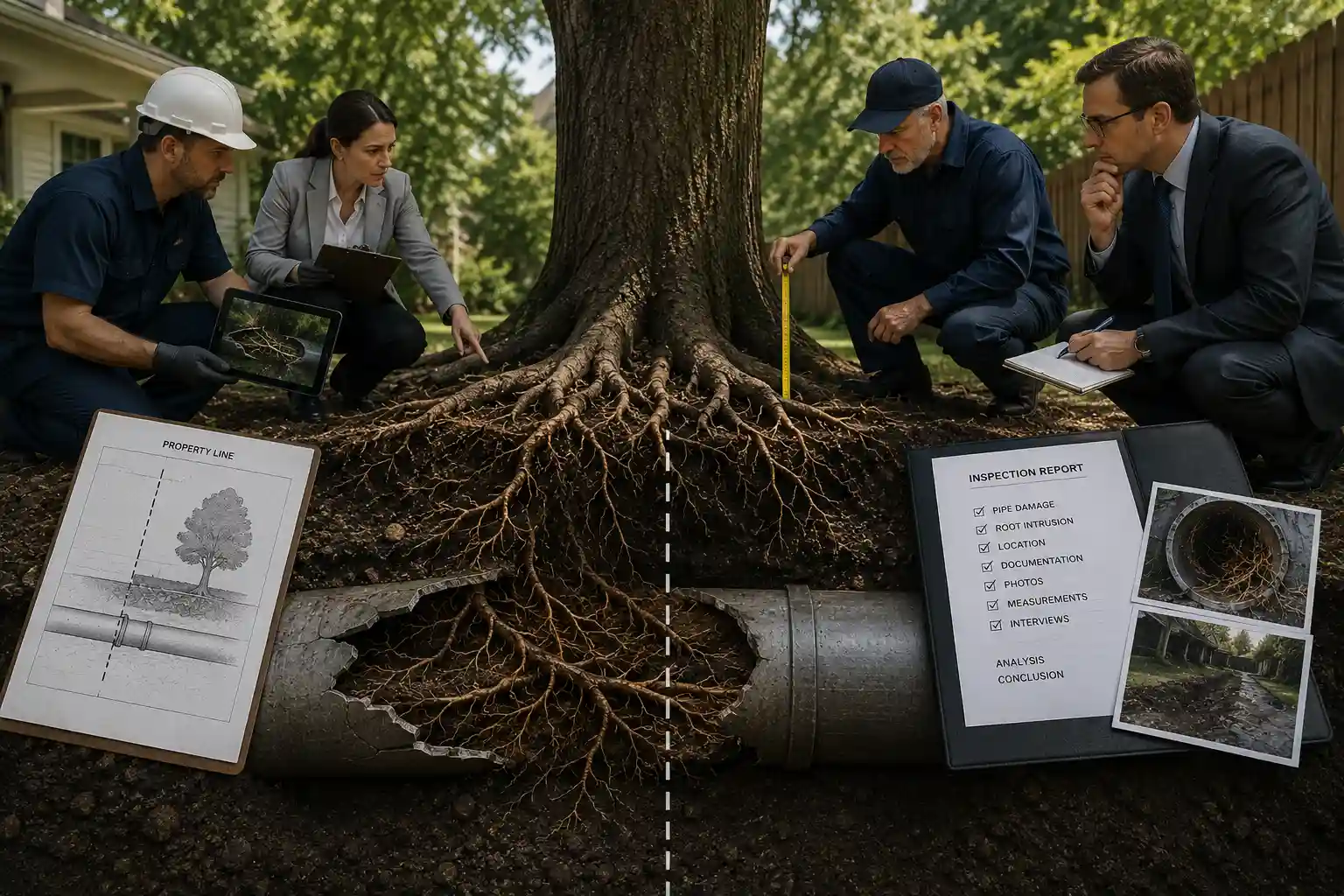
How Professionals Determine Responsibility
Evidence is very important if there are disputes.
Professional drainage specialists can install:
- The origin of the root intrusion
- Which section of pipe has been affected
- The condition of the drainage system
- The extent of any structural damage
- Whether defects existed before the roots entered
CCTV drain surveys and detailed reporting can provide engineers with information that may be useful when discussing liability with insurers or neighbouring property owners.
This evidence-based approach takes away the guessing and allows for informed decisions.
Before Contacting Your Insurer
If root intrusion has affected a part of your drainage system, then a few practical steps can make the claims process easier.
Consider:
- Reviewing your policy documentation
- Gathering evidence of visible damage
- Obtaining a professional drainage report
- Confirming claim requirements with your insurer
Insurance policies vary a lot, so it’s good to know what cover is available before you go ahead with repairs.
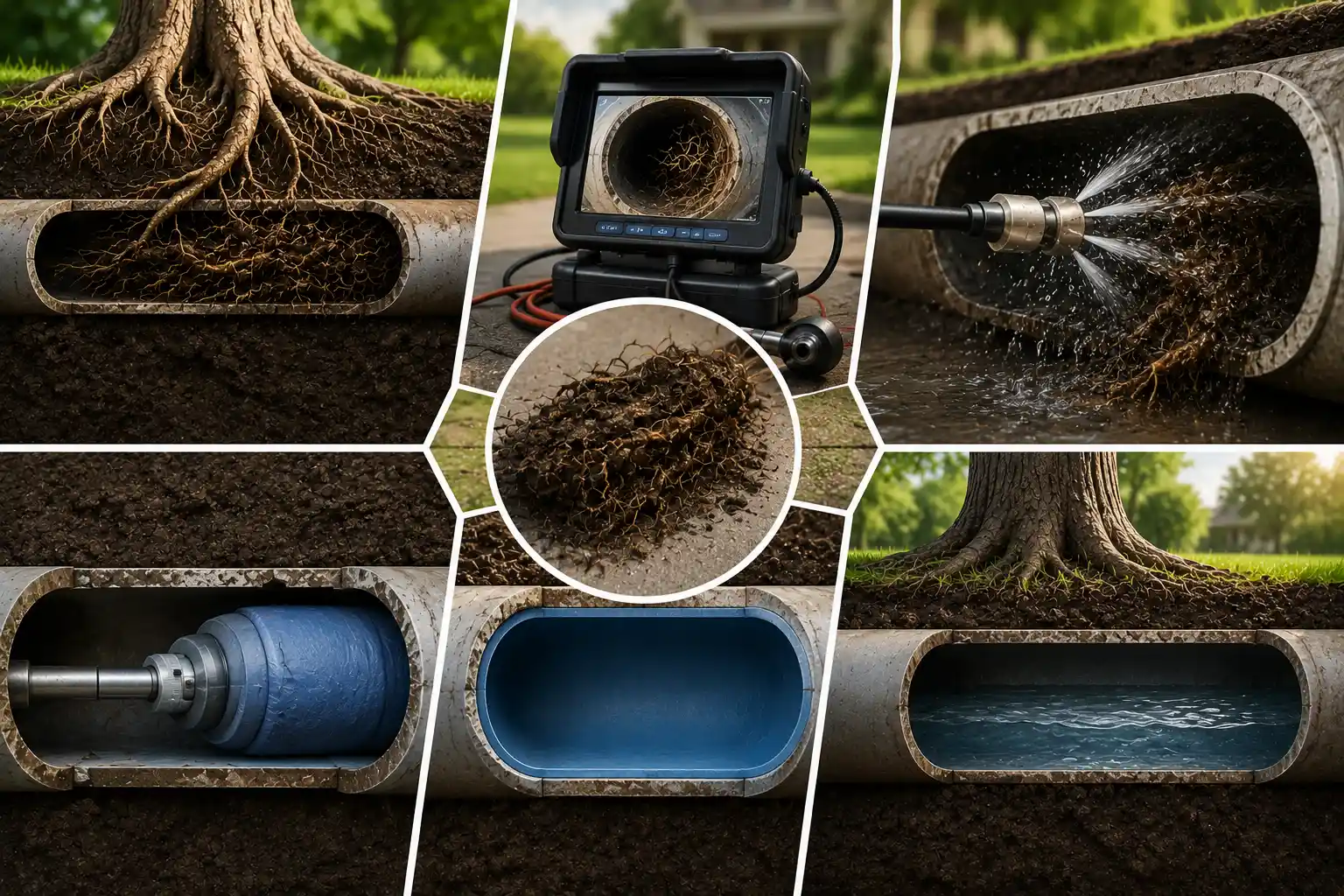
How Are Root-Related Drain Problems Resolved?
The best solution will depend on the level of intrusion and condition of the affected pipework.
Professional drainage specialists may recommend you:
- High-pressure root cutting
- Mechanical root removal
- Drain relining
- Localised pipe repairs
- Pipe replacement where necessary
Property owners researching how to get rid of tree roots in drain pipes often find that merely removing the roots is not sufficient. Any broken section of pipe must be repaired to reduce the risk of future intrusion.
Why Delaying Action Can Become Expensive
Drainage problems caused by roots usually don’t resolve themselves.
Delaying investigation and repair can result in:
- More frequent blockages
- Increased repair costs
- Greater risk of pipe collapse
- Damage to property
- More extensive excavation work
In situations involving root damage to drainage pipes, early treatment can often enable a less invasive and less costly solution.
Quick action on the issue helps protect the drainage system and surrounding property.
Protect Your Drains Before Tree Roots Take Control
Tree root invasion can be a hidden problem, but it can quickly turn into an expensive drainage problem if left unchecked. Knowing who is responsible is important, but stopping the bleeding should always come first. The earlier you find the problem, the easier and cheaper it usually is to fix.
At Precise Drainage Solutions, we offer professional root removal and CCTV inspections and drainage repair services to address root-related issues at the source. Whether you are investigating recurring blockages, assessing potential liability or seeking a long-term solution, we have experienced people ready to help you.
Contact us today and take positive action to safeguard your drains against unnecessary root intrusion.
Frequently Asked Questions
1. Can tree roots enter modern drainage systems?
Yes, cracks, damaged joints, and structural weaknesses can all give a way in for roots even to modern pipework.
2. Are homeowners always responsible for root-related drain damage?
Not necessarily, drain ownership, property lines and the nature of the damage determine responsibilities.
3. How do professionals confirm root intrusion?
Commonly, drainage specialists use CCTV surveys to see inside pipes and accurately pinpoint root growth and damage.
4. Can tree roots cause a drain to collapse?
Yes, as the roots grow, they can worsen structural defects and increase the potential for catastrophic pipe failure.
5. Is removing the roots enough to solve the problem permanently?
Not normally, they will often repair or reline damaged sections of pipe to prevent roots from re-entering through the same access point.