


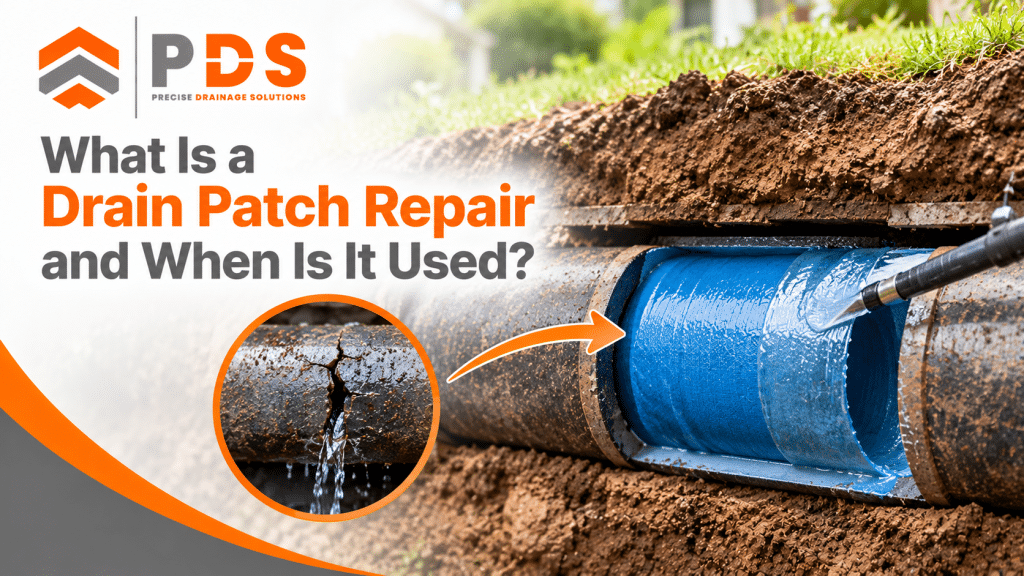

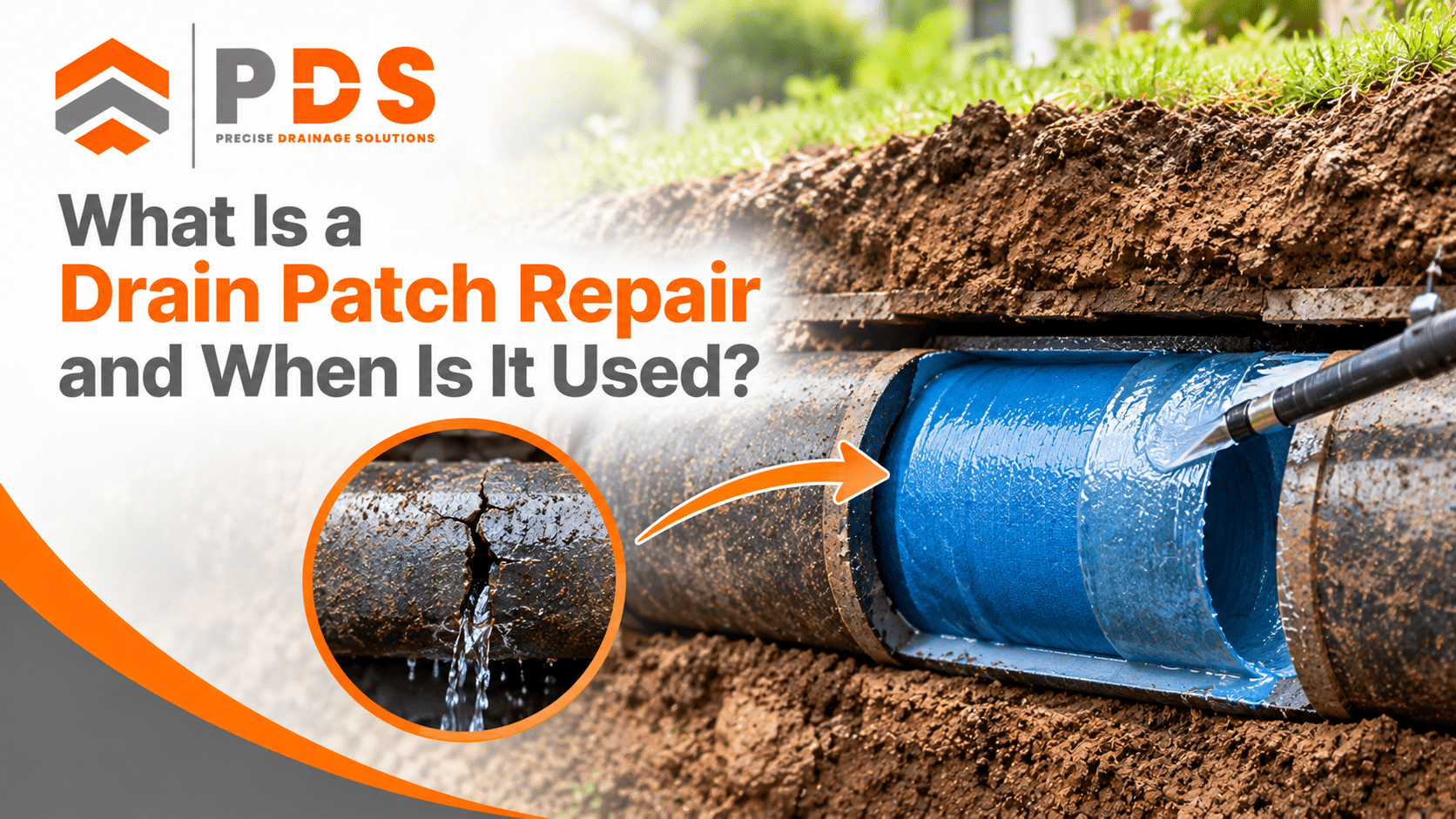
A damaged drain does not always need to be replaced. In many cases, a small crack, leaking joint or local defect can be repaired without digging up the entire pipe. A drain patch repair fixes the damaged section from inside the pipe, helping restore its condition with less disruption to your property. It can be a practical option for homeowners who want to address drainage problems without unnecessary excavation.
What Is a Drain Patch Repair?
A drain patch repair is a localised method of fixing a damaged area inside a drainage pipe. Instead of replacing the whole pipe, a drainage specialist places a resin-soaked patch over the affected section. Once the resin hardens, it forms a strong lining that seals the defect.
The process usually involves a CCTV drain survey to identify the problem and check the pipe’s condition. A repair patch is then positioned at the correct location using specialist equipment.
This method is often suitable for pipes with isolated damage where the surrounding structure remains in reasonable condition.
What Does Drain Patch Repair Fix?
Understanding what drain patch repair fixes can help you decide whether this method may suit your property.
It can be used to address:
- Small cracks in underground drainage pipes.
- Leaking joints where pipe sections connect.
- Minor fractures that allow wastewater to escape.
- Localised damage caused by wear, movement or external pressure.
- Small areas where roots have entered through a joint, once the roots have been removed and the pipe is suitable for repair.
However, a patch is not suitable for every drainage problem. Severely collapsed pipes, extensive structural damage and significant pipe misalignment may need a different repair method.
When Should You Consider a Drain Patch Repair?
A patch repair may be worth considering when a CCTV survey identifies a specific defect rather than widespread pipe damage.
Look out for these warning signs:
- Recurring blockages: Water repeatedly drains slowly despite routine clearing.
- Unpleasant smells: Persistent foul odours may indicate a leaking joint or damaged pipe.
- Damp patches: Unexplained wet areas near underground drains can suggest escaping wastewater.
- Localised root intrusion: Roots entering through a small opening may indicate a repairable defect.
- Repeated drainage problems: The same issue keeps returning even after the pipe has been cleared.
These signs do not automatically mean your drain needs patching. Blockages, odours and dampness can have several causes, so a professional inspection is important before deciding on a repair.
Wondering if drain patch repair is right for your damaged drain? Contact our drainage experts today!
How Is a Drain Patch Repair Carried Out?
The repair process is usually straightforward, although the exact steps depend on the pipe’s location, size and condition.
1. Inspect the Drain
A CCTV camera is passed through the pipe to locate cracks, leaking joints or other defects. The footage helps the specialist assess the extent of the damage and determine whether a patch is appropriate.
2. Clean the Damaged Section
The affected area must be clear of debris, grease, scale and other obstructions. Roots may also need to be removed before the repair can begin.
3. Position the Repair Patch
A resin-impregnated patch is placed over the damaged section using specialist equipment. The operator positions it carefully to ensure it covers the defect.
4. Allow the Resin to Cure
The patch is held against the pipe wall while the resin hardens. This creates a durable seal over the damaged area.
5. Check the Repair
A follow-up CCTV inspection can confirm that the patch is correctly positioned and the repaired section is in suitable condition.
How Does a Soakaway Work With a Septic Tank?
Understanding soakaway drainage helps show how these systems differ. A rainwater soakaway allows water to drain into the soil, while a septic tank collects and partially treats household wastewater.
Treated wastewater may pass into a properly designed drainage field for further treatment. A septic tank should not discharge untreated wastewater into an ordinary soakaway, as this can cause pollution and breach environmental rules.
When Do You Need a Soakaway for Wastewater?
If your property uses a septic tank, you may need a suitable drainage field or another compliant discharge arrangement for the effluent. Whether a soakaway-style arrangement is permitted depends on the system design and current requirements.
Before choosing a solution, arrange an assessment of the soil, groundwater levels, available space and nearby watercourses. These factors affect how wastewater can be safely managed.
What Should You Check Before Installing Either System?
Choosing between these systems involves more than comparing their costs. You need to understand your property’s drainage needs and the conditions on your land.
Check the following before making a decision:
- Water source: Establish whether you need to manage rainwater or household wastewater.
- Soil conditions: Check how quickly water moves through the ground.
- Available space: Ensure there is enough suitable land for the proposed installation.
- Groundwater levels: Consider whether the water table could affect drainage or cause pollution.
- Maintenance access: Allow space for inspections, cleaning and septic tank emptying.
- Existing drainage: Check whether the property already has a sewer connection or an established private system.
These checks can prevent poor drainage, unnecessary installation costs and problems with neighbouring land.
Need professional drain patch repair? Call our drainage experts now!
Drain Patch Repair vs Full Drain Relining
The main difference between patch repair and full drain relining is the amount of pipe being treated.
A patch repair addresses one specific damaged area. Full drain relining generally creates a new lining along a longer section of the existing pipe, which may be more suitable when several defects are present.
A patch is often the more practical option when damage is limited to one location. Full relining may be worth considering when defects are spread across a larger section,n but the pipe remains suitable for lining.
The right choice depends on the number of defects, the pipe’s structural condition and the likely cause of the damage. A CCTV survey helps establish whether a local repair will be sufficient.
What Is Drain Patch Lining Explained?
In simple terms, drain patch lining explained means reinforcing a damaged part of a pipe from the inside using a resin-based patch.
The patch bonds to the internal pipe surface as the resin cures. It creates a sealed layer over the defect without requiring the entire pipe to be dug up.
This approach is particularly useful when a damaged drain runs beneath a driveway, garden, patio or other area where excavation would cause disruption.
However, the pipe must be suitable for the method. A patch cannot reliably restore a pipe that has collapsed or suffered extensive structural failure.
How Much Does Drain Patch Repair Cost?
The drain patch repair cost depends on the nature of the damage and the work needed to complete the repair.
Factors that may affect the price include:
- The depth and accessibility of the drain.
- The pipe’s diameter, material and condition.
- The location and size of the damaged section.
- Whether cleaning, root removal or additional preparation is required.
- The number of patches needed.
- The inspection and testing included in the service.
A single, accessible defect may cost less to repair than several damaged areas that require extensive preparation. Ask for a clear quotation that explains the inspection, repair work and any follow-up checks included.
Is a Patch Repair Better Than Digging Up the Drain?
One of the main advantages of a patch repair is that it can avoid excavation when the damage is suitable for a localised fix.
This can help reduce disruption to gardens, driveways and paved areas. It may also shorten the repair process compared with digging up and replacing a section of pipe.
A patch is a form of non-dig localised pipe repair, but it is not always the best long-term solution. If a pipe has widespread cracks, severe deformation or a collapsed section, excavation or another repair method may be necessary.
A specialist should explain the available localised drain repair options after inspecting the pipe, rather than recommending a patch before confirming the extent of the damage.
How Can You Tell If Your Drain Needs a Patch or a Bigger Repair?
A CCTV drain survey helps identify the location and extent of the damage and check whether the surrounding pipe is strong enough for a patch repair.
Before agreeing to the work, ask your drainage specialist whether the damage is limited to one area, if a patch will be sufficient, or if full relining or replacement is needed. Also, confirm whether a follow-up inspection is included. This helps you choose the right repair for your drain.
Get Your Drain Inspected Before the Damage Spreads
If you have recurring blockages, suspected leaks or signs of damaged underground pipework, an early inspection can help prevent further problems.
Precise Drainage Solutions can help you understand the condition of your drain and identify a suitable repair.
Contact our team to discuss whether a drain patch repair could be the right option for your property.
Key Takeaways:
- A patch repair fixes a specific damaged area inside a drain.
- It can seal small cracks, leaking joints and certain localised defects.
- A CCTV survey helps identify the damage and select the right repair.
- Full relining or pipe replacement may be necessary for widespread or severe damage.
- Costs depend on access, pipe condition, preparation and the number of repairs required.
Frequently Asked Questions
1. How long does a drain patch repair last?
Its lifespan depends on the repair materials, installation quality, pipe condition and surrounding ground conditions. A correctly installed patch can provide a durable repair, but regular inspections may still be necessary.
2. Does a drain patch repair require digging?
Usually, no. The patch is installed from inside the pipe through an existing access point where possible. Excavation may still be needed if the drain is inaccessible or has extensive damage.
3. Can a drain patch repair stop root intrusion?
Yes, it can seal a suitable opening where roots have entered, provided the roots are removed first and the surrounding pipe is sound. Extensive root damage may require a different repair.
4. Is a patch repair suitable for a collapsed drain?
No. A patch generally cannot restore a collapsed pipe. Depending on the damage, the pipe may need excavation, replacement or another suitable structural repair.
5. Is a patch repair better than full drain relining?
Neither option is always better. A patch is generally suited to isolated defects, while full relining may be more appropriate for several defects across a longer section of pipe.