


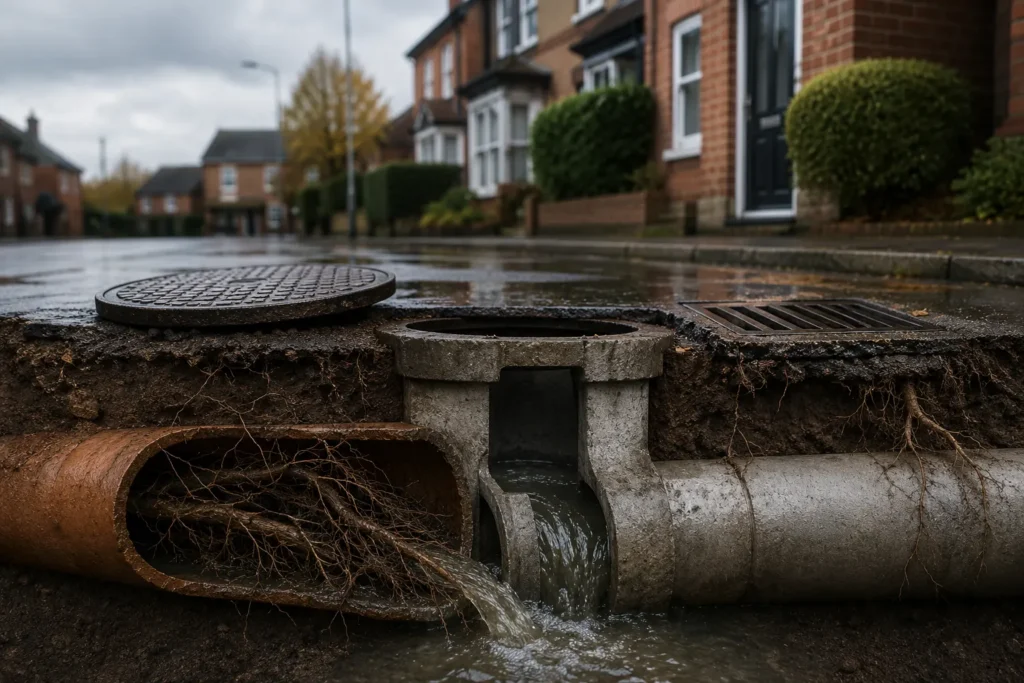

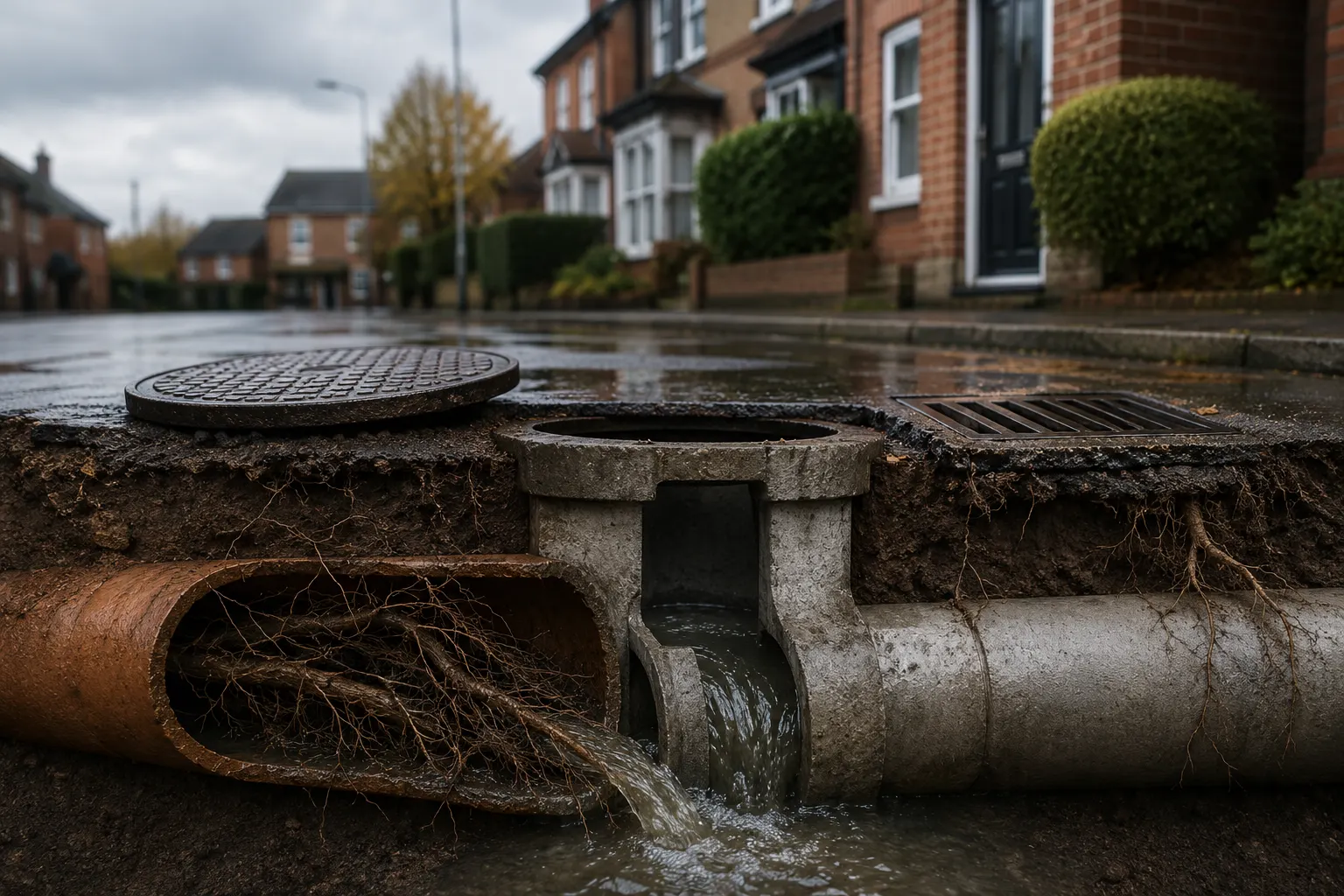
A blocked drain in an emergency can be very stressful, especially when wastewater starts to back up or drainage systems are not working properly. In such cases, property owners tend to be concerned with the immediate problem, but they may miss another equally important question: who pays for the repairs?
“Did You Know? According to Ofwat, homeowners are generally responsible for drains that serve only their property, while water companies are typically responsible for public sewers and many shared sewer networks.”
At Precise Drainage Solutions, we frequently assist homeowners and businesses in investigating drainage emergencies and understanding blocked drain inspection before they make repair decisions. Knowing who owns something can often save you time and confusion and help you make sure you are contacting the right party.
Key Takeaways
- If a drain is blocked, it is usually the responsibility of the owner of the pipe affected.
- Private drains that only serve your property are generally the responsibility of the homeowner.
- Typically water companies have shared and public sewer networks.
- Before making plans for repairs, you should identify where the blockage is located.
- Professional investigations can easily determine ownership and accountability.
So, What Determines Responsibility?
The answer is usually dependent on the type of drainage infrastructure affected.
Generally, the first step in determining who should schedule and fund repairs is to determine the category to which the affected pipe belongs. Simply put:
- Private drains generally serve one property.
- Shared sewers carry wastewater from multiple properties.
- Public sewers are normally maintained by water companies.
When Is the Property Owner Responsible?
Homeowners are often responsible for the drains on their property boundary that only serve their premises.
Examples may include:
- Localised drain blockages
- Pipe damage within private drainage systems
- Root intrusion affecting private drains
- Structural defects in privately owned pipework
Drain repair responsibility starts with establishing whether the pipe in question serves only your property. If it does, the property owner will often bear the repair costs.
What If the Problem is in a Shared Sewer?
Responsibility can be different when wastewater from several properties goes into the same pipe.
A blocked sewer drain that forms part of a shared sewer network may fall under the responsibility of the local water company rather than an individual homeowner.
This difference matters because typically the owner decides who will carry out the investigation and who will pay in the end.
Why Location is More Important Than Problem Severity
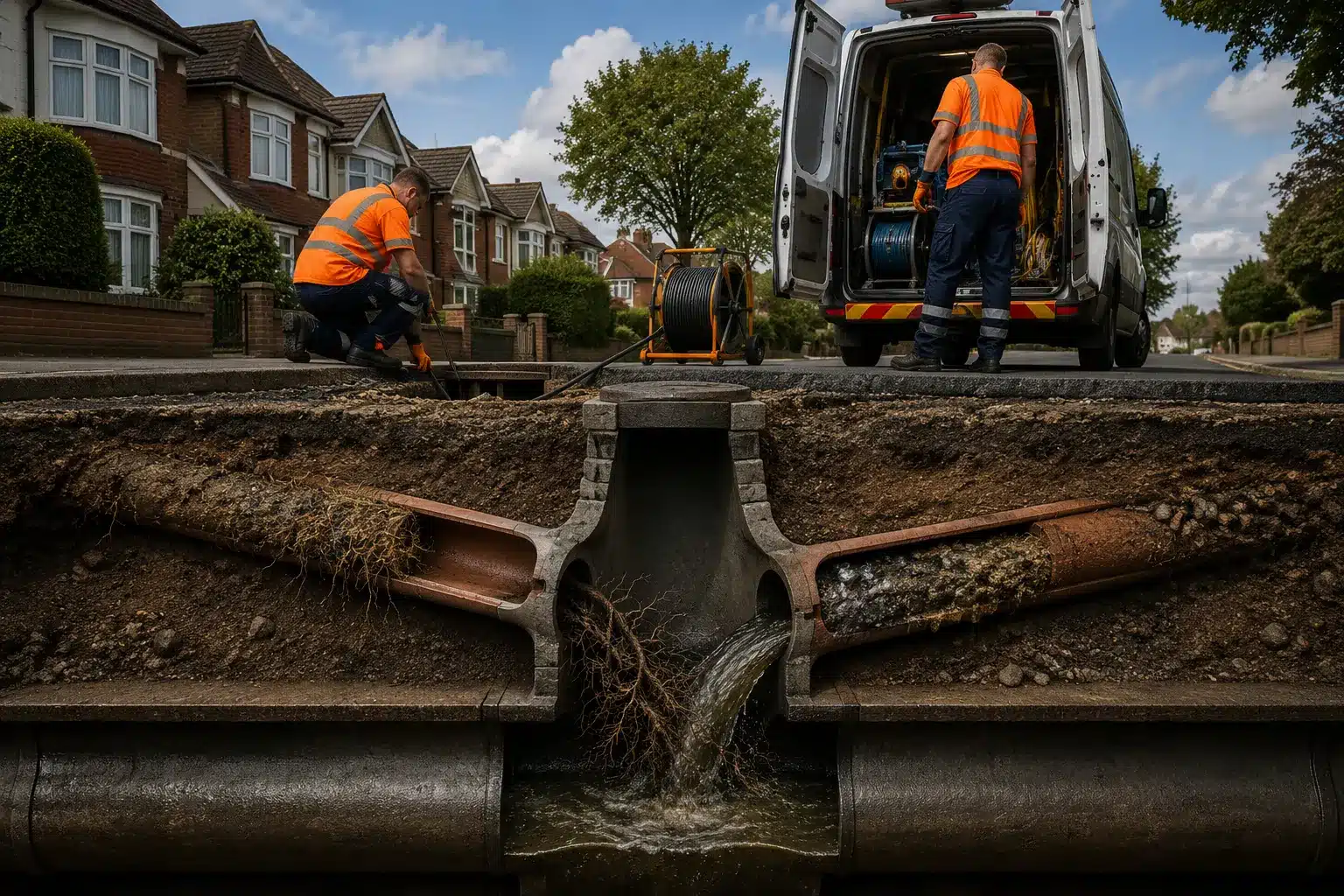
There is a common misconception that a serious blockage must be the water company’s problem. But in fact the determining factor is very often who owns the line rather than how serious the problem is.
A large blockage in a private drain can still be the property owner’s responsibility even if at the same time a relatively small problem in the public sewer network may be taken care of by the local water authority.
Figuring out where the blockage is usually provides the clearest indication of who is liable.
Contact our drainage experts today for a professional assessment.
How Are Emergency Drain Problems Investigated?
In cases where it is not known who is responsible for the issue, conducting a professional investigation of the drainage system can help clarify the situation.
Specialist inspections may include:
- CCTV drain surveys
- Drain tracing
- Pipe location mapping
- Structural condition assessments
Performing these services can result in determining the problem’s root source and facilitating making the right decision when it comes to emergency drain repairs.
Evidence from professionals rather than mere guesswork can clearly show who owns what and which actions are best to take.
If You're Facing a Drain Emergency
Once a blockage starts to cause problems, taking the right steps early could effectively reduce the extent of the damage and your time of inconvenience.
Often, taking immediate action can help lessen disturbance while ensuring that the problem is properly investigated.
Make a priority list:
- Limiting use of affected fixtures
- Monitoring signs of wastewater backup
- Recording visible symptoms
- Contacting a drainage specialist
- Establishing ownership before major repairs proceed
Can Emergency Unblocking Solve the Problem Permanently?
Not necessarily.
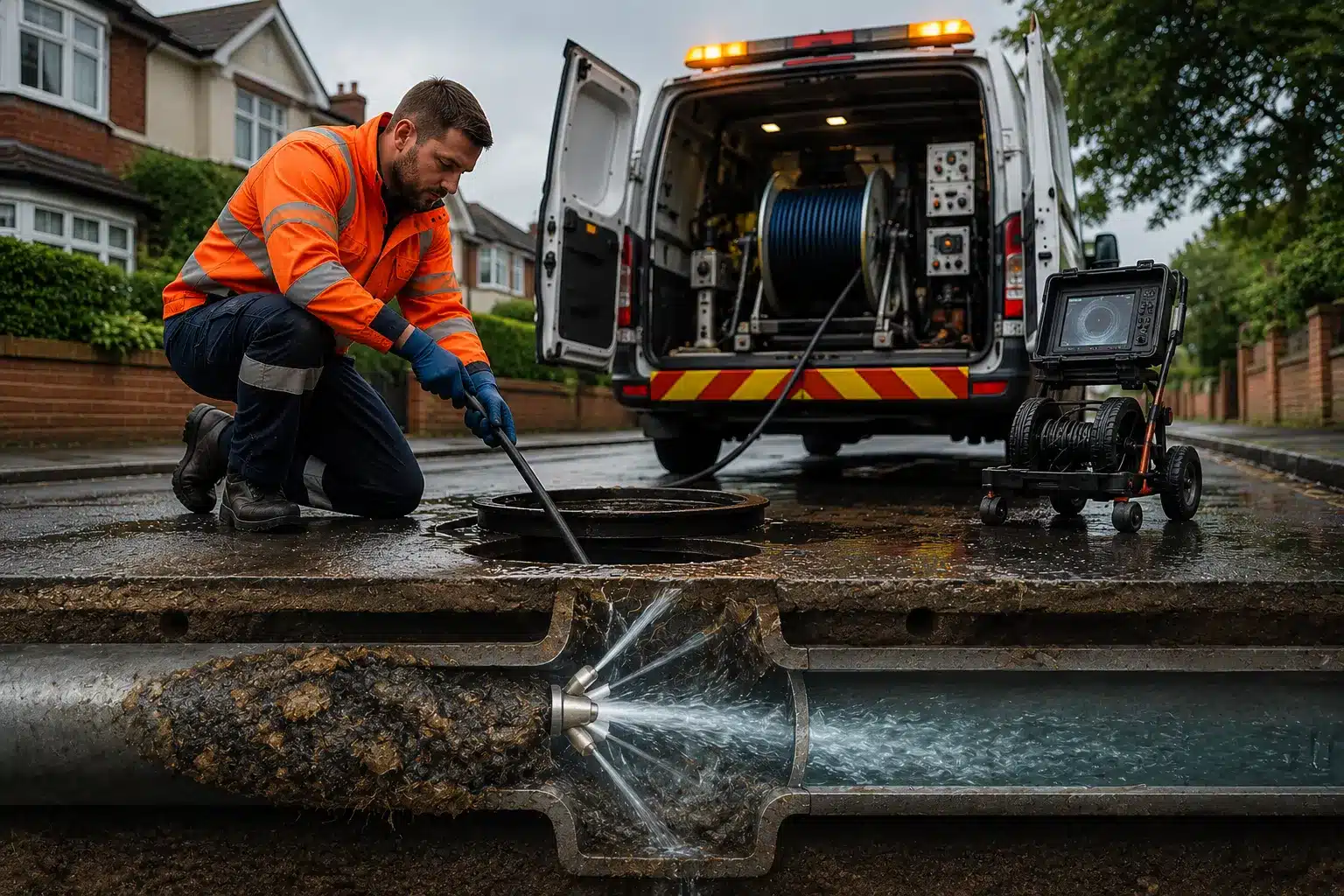
Expert emergency drain unblocking can get things flowing again pretty fast, but it might not tackle the root cause of the blockage.
Some usual hidden causes are:
- Root intrusion
- Pipe collapses
- Structural defects
- Debris accumulation
- Misaligned pipework
Often, figuring out the main reason is crucial if you want to avoid having more sudden blockages later on.
Why Professional Investigation Matters
Often, during a drainage crisis, it is unclear who is to blame or responsible. There might be underground pipes that serve multiple buildings, shared connections, or even historical drainage layouts without proper documentation, which makes it very hard to determine the owner of the drain without the help of a specialist.
This is particularly important for determining who is responsible for a blocked drain and for ensuring that the correct party contacts them.
Often times, accurate information may even help avoid delays, disputes, and unnecessary repair costs.
Conducting professional drainage investigations is a good way of understanding this:
- The location of the blockage
- The condition of the pipework
- Whether the affected drain is private or shared
- The most appropriate course of action
Who Pays for Blocked Drain Repairs?
Another important consideration is who pays for blocked drain repairs once the issue has been identified.
Usually the responsible party is determined as follows:
- Drain ownership
- Location of the blockage
- Type of drainage infrastructure involved
- Survey findings and evidence
Where private drains are affected, the property owner often bears the costs. Where public or shared sewer networks are involved, responsibility may rest with the relevant water company.
Understanding ownership before authorising major work can help to avoid confusion and unnecessary expenditure.
Know Who's Responsible Before You Pay for Repairs
When it comes to drainage emergencies, there is always a need for prompt decision-making, but at the same time, it must be based on correct information. Knowing who owns the affected drain or sewer is one way to avoid unnecessary expenses and ensure the right company gets involved from the beginning.
At Precise Drainage Solutions, we are continuously assisting both residential and commercial clients in Problem Drains Emergency through official inspections, getting advice from trained professionals, and providing top-quality solutions. Our skilled team is here to help if you are dealing with a sudden blockage, unsure about ownership, or concerned about repair costs.
Get in touch with Precise Drainage Solutions now and obtain the information that leads you to manage your drainage emergency with confidence.
Frequently Asked Questions
1. How can I tell whether a drain is private or shared?
A private drain usually serves one property, while shared sewers carry wastewater from multiple properties before joining the wider network.
2. Are water companies responsible for all blocked drains?
No. Water companies generally maintain public and shared sewers, while homeowners are usually responsible for private drainage systems.
Can a CCTV survey help determine responsibility?
Yes. CCTV surveys can identify the location of damage and provide information that helps clarify ownership and repair responsibility.
Should I arrange repairs before confirming ownership?
It is generally advisable to establish ownership first, particularly if significant repair costs may be involved.
What should I do if sewage is backing up into my property?
Contact a professional drainage specialist immediately and minimise the use of any affected fixtures until the issue has been assessed.