


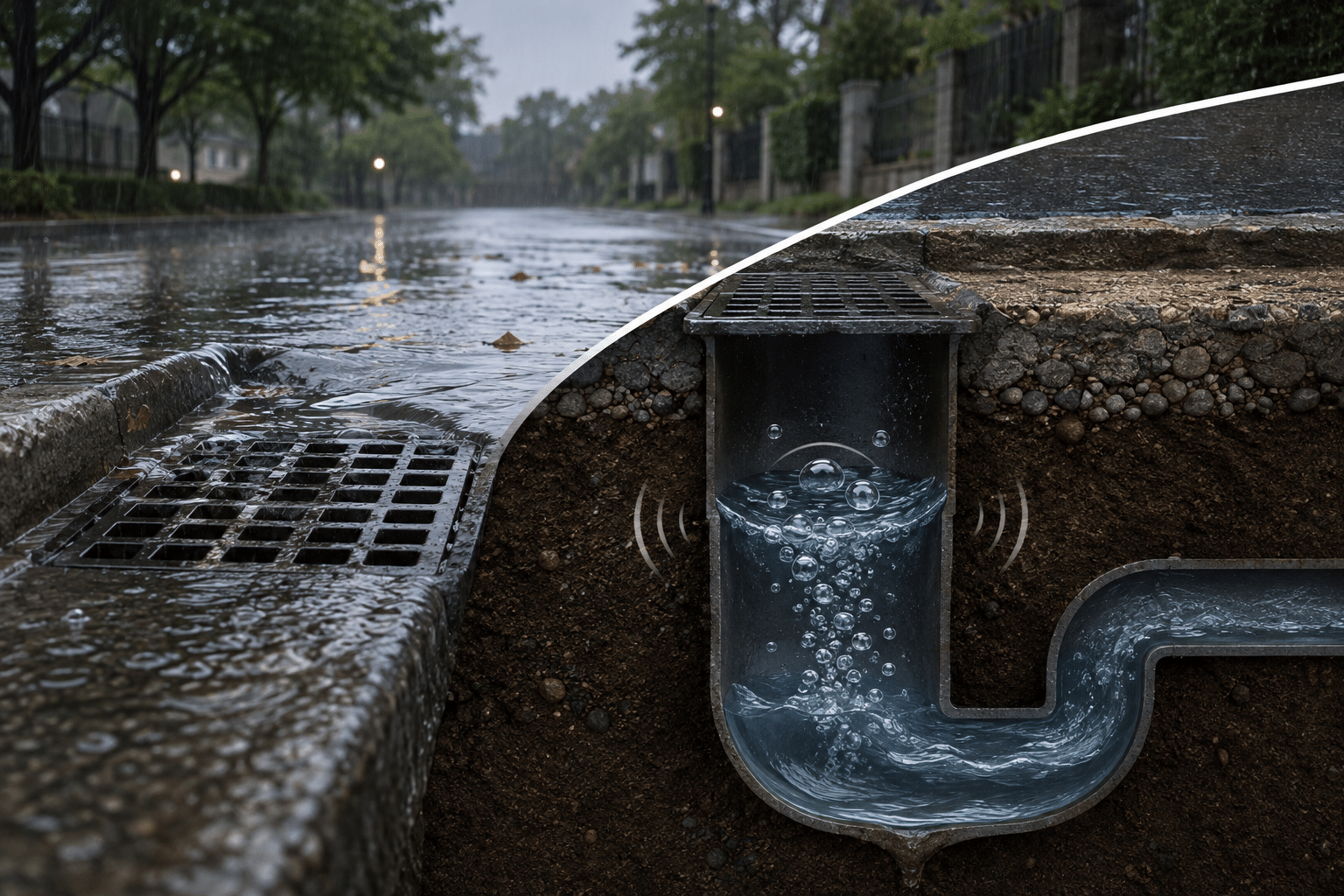
Heavy rain can put sudden pressure on household drainage systems. If you notice gurgling drains after heavy rain, the sound may be caused by trapped air, restricted flow, a blocked drain, or an overwhelmed sewer system.
The aim: understand the warning signs, identify the likely cause, and take the right action before a small drainage issue becomes a costly problem.
“Did you know? The Environment Agency’s latest national assessment estimates that around 4.6 million properties in England are in areas at risk of surface water flooding. This is an increase from the previous assessment of about 3.4 million properties.”
Key Takeaways
- Heavy rainfall can increase pressure and water flow within drainage systems.
- Trapped air and restricted airflow can create gurgling sounds.
- Partial blockages, tree roots, poor ventilation, and sewer restrictions are common causes.
- Recurring gurgling should be investigated, especially when accompanied by slow drainage or unpleasant smells.
- Professional drain inspection can help locate problems hidden inside underground pipes.
Why Can Heavy Rain Make Your Drains Gurgle?
During intense rainfall, large amounts of water can enter surface water and sewer networks within a short time. When the system struggles to move this extra water away, pressure inside the pipes can change.
What you may notice:
- Bubbling or glugging sounds
- Slow-moving water
- Unpleasant drain smells
- Water backing up after a storm
Air may then become trapped or pushed through the drainage system. As the air moves through water in your pipes, you may hear bubbling, glugging, or a low gurgling noise.
This is one reason gurgling drains after rain are often noticed shortly after a storm rather than during normal dry weather.
A brief noise may not always indicate a serious fault. However, repeated sounds should not be ignored, particularly if you also notice slow drainage, unpleasant smells, or water backing up.
Common Drain Problems Behind the Noise
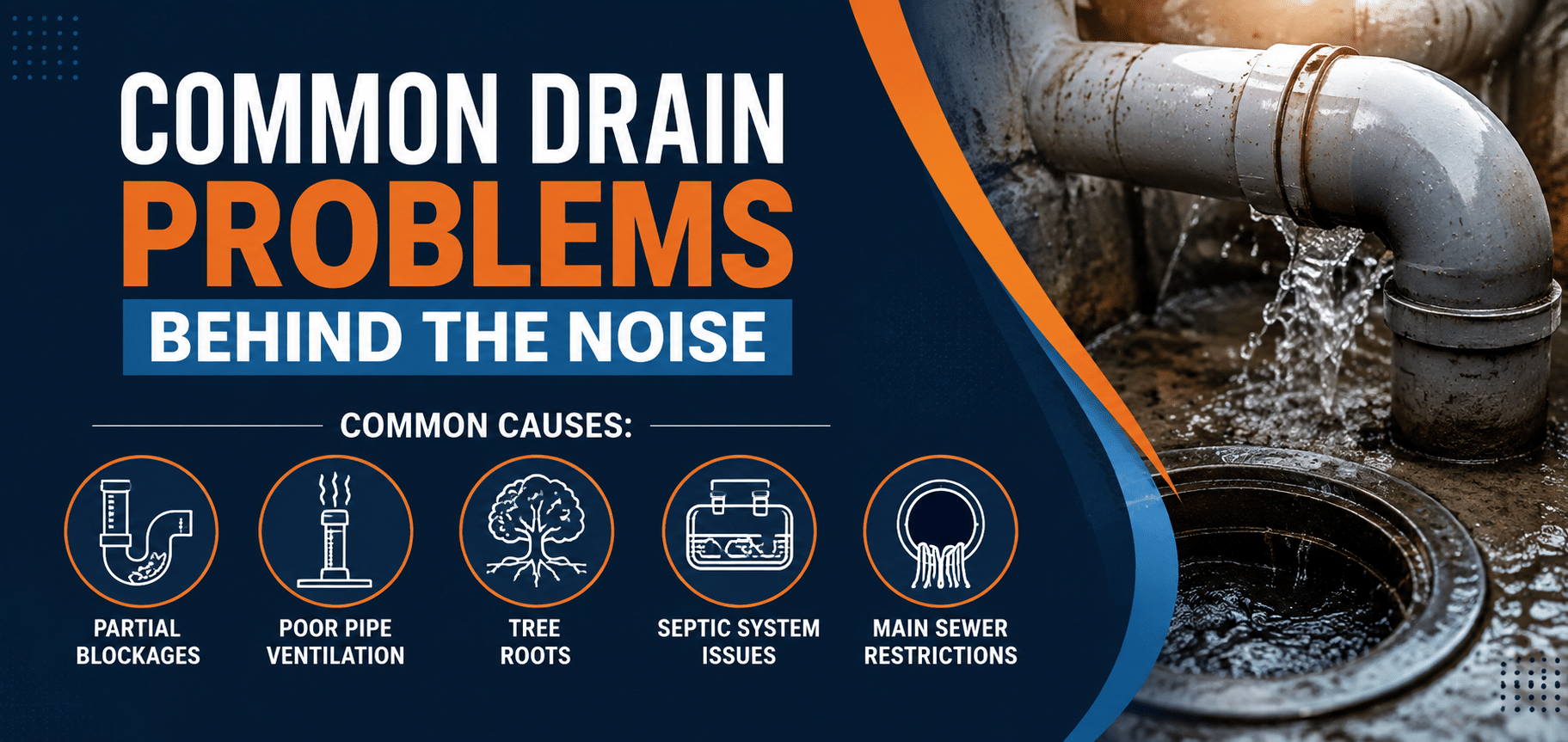
Partial blockages are a common reason for gurgling. Grease, debris, hair, and silt can narrow pipes, while heavy rain makes the restriction more noticeable.
Common causes:
- Partial blockages
- Poor pipe ventilation
- Tree roots
- Septic system issues
- Main sewer restrictions
Roots can also enter cracked or poorly sealed pipes. If you are wondering how to get rid of tree roots in drain pipes, professional inspection and root removal are safer options than repeatedly using harsh chemicals.
For private wastewater systems, gurgling drains after heavy rain may occur when saturated ground affects drainage or exposes an existing restriction. Other gurgling drain causes include blocked waste pipes and problems with the main sewer line.

What Causes Gurgling Drains After a Storm?
To understand the problem, think about how your drainage system normally works. Wastewater needs to flow through pipes while air moves through the system to balance pressure.
The basic process:
- Rain increases the amount of water entering the drainage network.
- A restriction slows normal movement.
- Air becomes trapped or displaced.
- Pressure changes create the gurgling sound.
A properly functioning vent allows air to enter and leave the drainage network. If that airflow is restricted, water may struggle to move smoothly.
This can lead to the question: why do drains gurgle when it has been raining heavily? In many cases, the answer is a combination of increased water flow and restricted air movement.
A blocked vent can make the problem worse. So can a partial blockage further down the line — and if it keeps recurring, it may be worth checking whether you have a soakaway system that isn’t coping with the extra volume.
Is a Gurgling Sink Drain a Warning Sign?

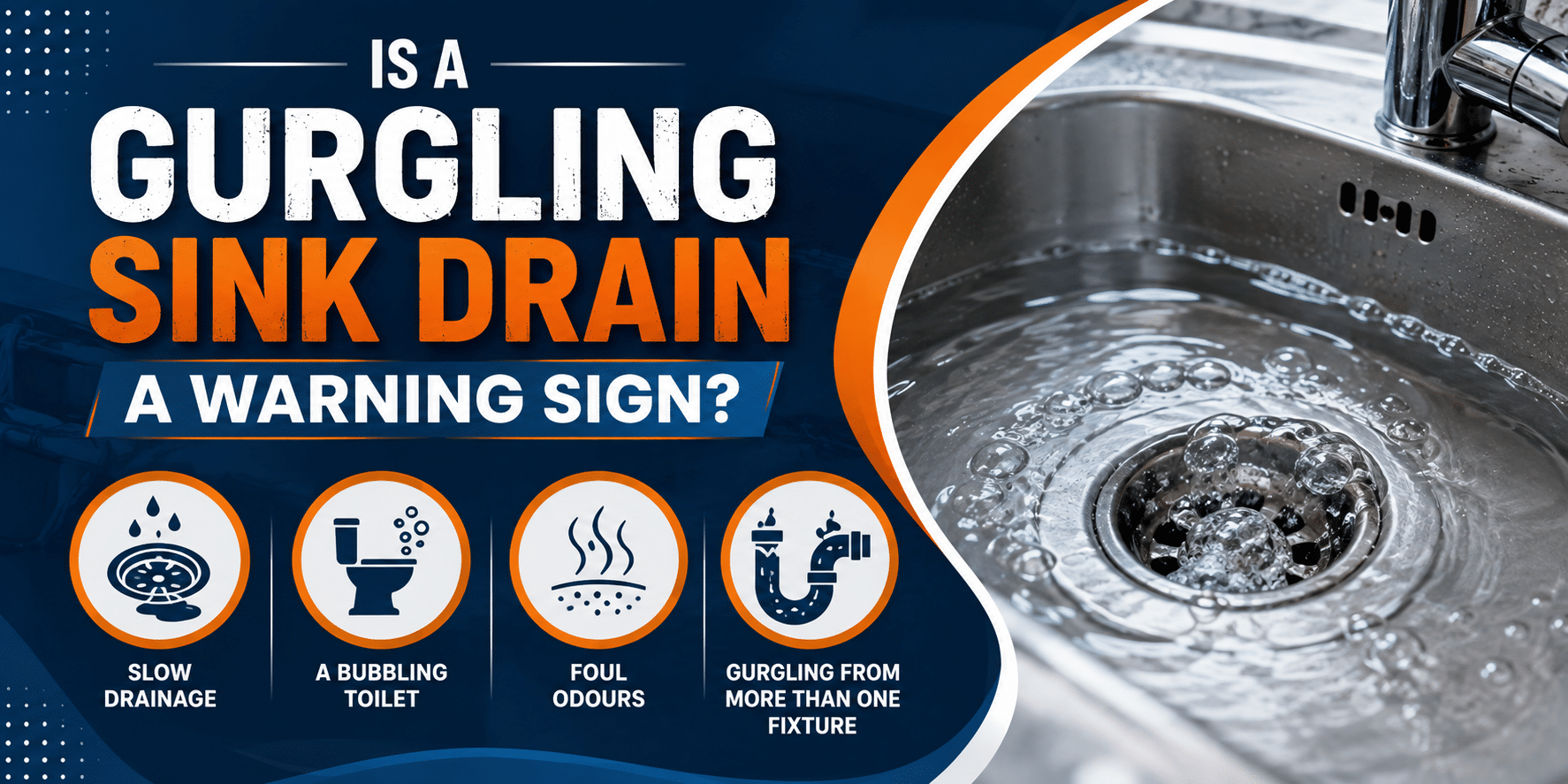
A gurgling sink drain can sometimes be an early warning that water is not moving as freely as it should.
Watch for these extra signs:
- Slow drainage
- A bubbling toilet
- Foul odours
- Gurgling from more than one fixture
If the sink drains at its normal speed and the sound happens only once after an unusually heavy storm, you may simply be hearing changes in pressure.
But if the sound keeps returning, pay attention to other symptoms. A slow sink, bubbling toilet, foul odor, or water appearing in another drain can indicate a wider drainage problem.
It is also useful to notice whether several fixtures make the same sound. One noisy fixture may have a local blockage. Several affected fixtures can suggest that the restriction is further along the drainage system.
Why Septic Systems Can Gurgle After Heavy Rain
Heavy rain can saturate the soil around a septic system, making it harder for wastewater to disperse. A full tank, poor maintenance, or restricted drainage field can make the issue worse.
This may explain gurgling drains septic system after heavy rain, especially when you also notice slow flushing, unpleasant smells, soggy ground, or wastewater backing up indoors.
If several fixtures are affected, reduce water use and consider a professional assessment rather than assuming the rain is the only cause.
What You Can Do Before Calling a Drainage Professional
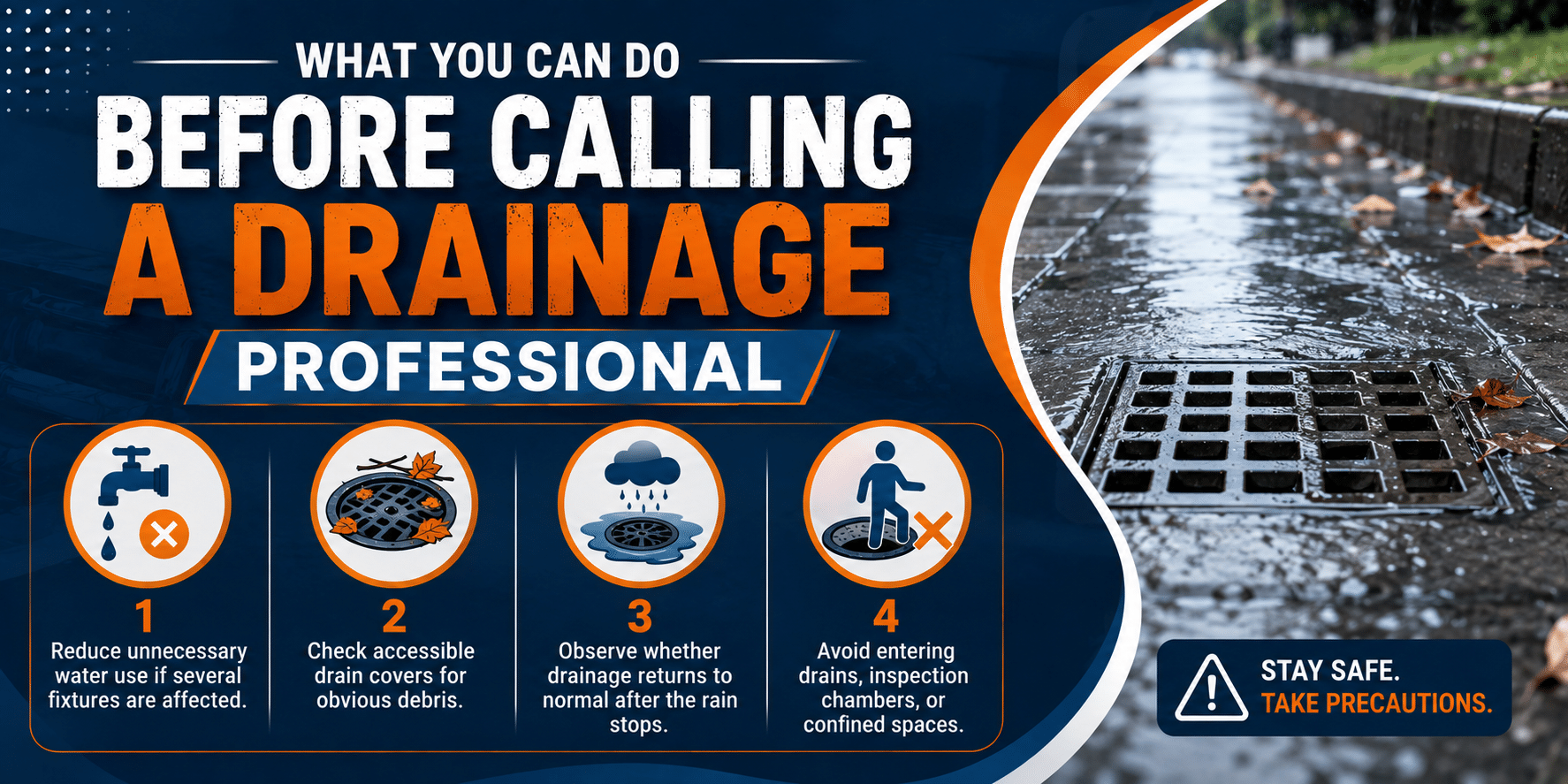
There are a few sensible steps you can take without putting yourself or the drainage system at risk.
Do this first
- Reduce unnecessary water use if several fixtures are affected.
- Check accessible drain covers for obvious debris.
- Observe whether drainage returns to normal after the rain stops.
- Avoid entering drains, inspection chambers, or confined spaces.
If water has already backed up indoors, our guide on handling emergency drain backups covers what to do while you wait for help.
When to Get the Drain Professionally Checked
If you keep asking yourself, why are my drains gurgling, despite trying basic maintenance, it is time to look beyond the fixture itself.
What a professional inspection can reveal:
Inspection | What it can help identify |
CCTV survey | Blockages, damage and root intrusion |
Drain flow checks | Restrictions affecting water movement |
Visual assessment | Accessible surface-level problems |
Professional drainage specialists can use inspection equipment to identify restrictions that are not visible from the surface. CCTV drain surveys, for example, can help locate blockages, damaged sections, root intrusion, and other faults inside a pipe.
This is particularly useful when the problem returns after every major rainfall event.
Simple Ways to Reduce Future Drain Problems
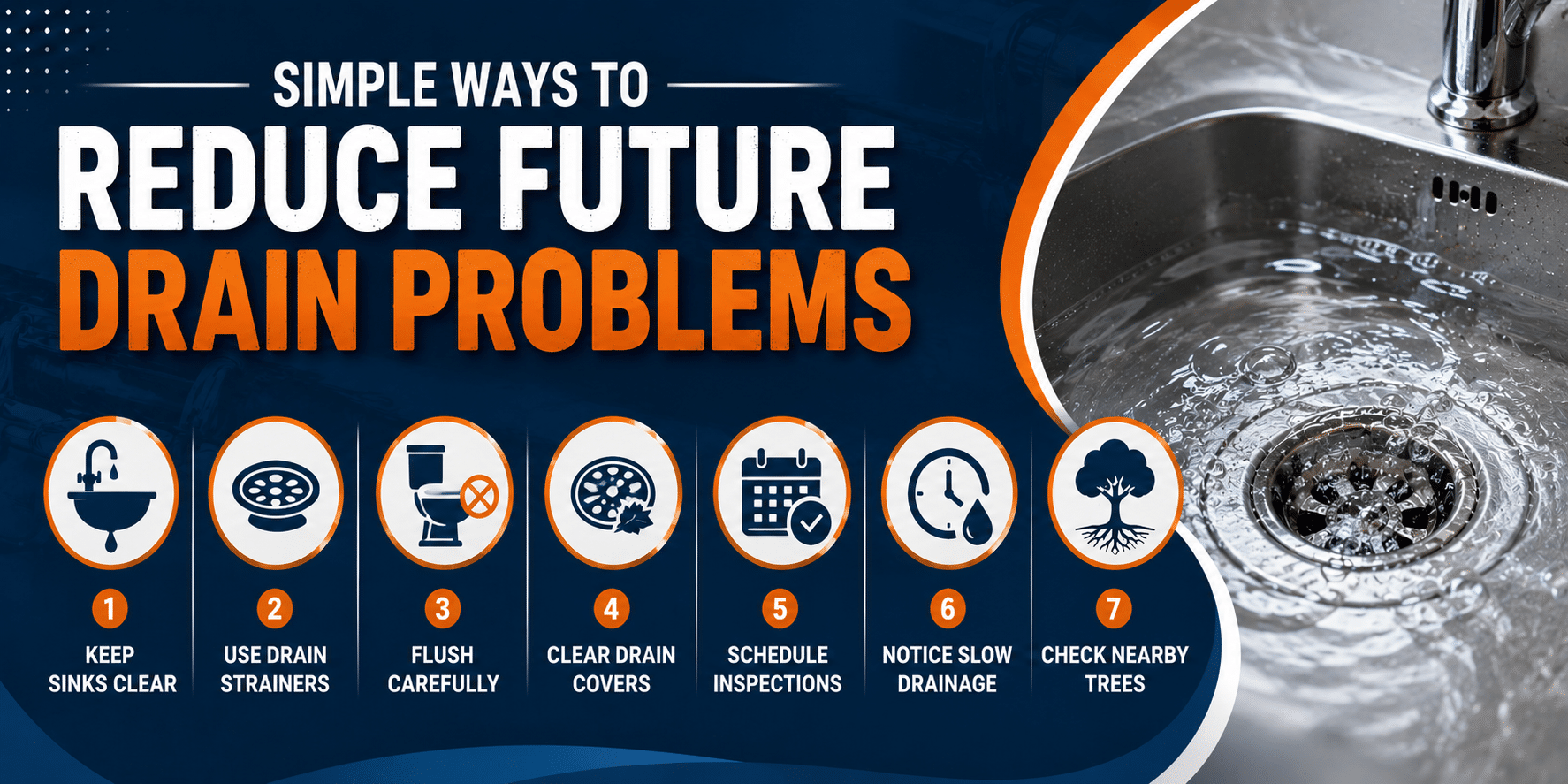
Good maintenance cannot prevent every issue, but it can reduce avoidable blockages.
- Keep Sinks Clear: Keep food scraps and cooking grease out of household sinks whenever possible.
- Use Drain Strainers: Use suitable strainers to catch hair, debris, and other materials.
- Flush Carefully: Never flush wipes or unsuitable materials that could restrict your pipes.
- Clear Drain Covers: Remove leaves and debris from accessible drain covers regularly.
- Schedule Inspections: Arrange periodic inspections if your property has recurring drainage problems.
- Notice Slow Drainage: Address slow drainage early before it develops into a blockage.
- Check Nearby Trees: Consider a professional survey when trees are near underground drainage pipes.
These simple habits can help prevent gradual restrictions from becoming serious drainage problems. It’s also worth preparing your drains ahead of the next heavy rainfall season rather than waiting for a storm to expose a weak spot.
Know the Difference Between a Temporary Noise and a Drainage Fault
Not every gurgle means your drainage system is failing. Heavy rain can temporarily increase pressure, but repeated symptoms need attention.
Situation | What it may mean | What to do |
Temporary | One-off noise during heavy rain, with normal drainage afterward. | Monitor the system once the weather clears. |
Needs attention | Repeated noise, slow drainage, bad smells, bubbling fixtures, or wastewater backing up. | Arrange a professional drainage inspection. |
However, drain gurgling after heavy rain becomes more concerning when it keeps returning or appears with other symptoms. Check the frequency, location, drainage speed, smells, and water movement. Early inspection can help prevent a minor restriction from becoming a major blockage or backup.
Get Your Drainage Problem Checked Before It Gets Worse
Persistent gurgling drains after heavy rain should not simply be treated as an annoying sound. When the noise keeps returning, it may be your drainage system showing that water or air is struggling to move properly.
Early investigation can help identify blockages, root intrusion, damaged pipes, ventilation issues, or other drainage faults before they lead to backups.
For reliable drainage assessment and practical solutions, Precise Drainage Solutions can help identify the cause and determine the right next step.
Frequently Asked Questions
1. Why does my drain make a gurgling sound after rain?
The sound is often caused by changes in pressure and airflow inside the drainage system. Heavy rainfall can increase water flow, making an existing restriction or ventilation problem more noticeable.
2. Can heavy rain cause a drain blockage?
Heavy rain does not necessarily create a blockage by itself. However, the increased flow can expose a partial blockage that was already present. Debris, grease, roots, or damaged pipe sections can restrict normal flow.
3. Should I worry if my drains gurgle only during storms?
An occasional sound during extreme rainfall may be temporary. If it happens regularly, continues after the rain has stopped, or occurs alongside slow drainage or bad smells, professional inspection is recommended.
4. Can tree roots cause drains to gurgle?
Yes. Tree roots can enter damaged or poorly sealed pipe joints and gradually restrict the flow. As water and air move through the narrowed section, gurgling may occur.
5. What should I do if several drains are gurgling?
Reduce water use and avoid repeatedly flushing toilets or running appliances until the cause is clearer. If several fixtures are affected, arrange a professional drainage inspection to check for a wider blockage or sewer-related issue.