Blocked drains are a common problem in the UK. They are often caused by waste buildup, grease deposits, or things that shouldn’t be there getting in the way of the flow. Water UK says that sewer blockages are often caused by fats, oils, and things that can’t be flushed down the toilet that build up in pipes and make them less useful over time.
When restrictions come up, it’s important to pick the right approach. Different situations require different blocked drain solutions. Using the wrong method might only give you temporary relief instead of fixing the problem.
At Precise Drainage Solutions, we usually look at the symptoms and what we find during an inspection to figure out what the problem is and suggest a solution. Property owners can make better choices when they know the differences between jetting and rodding.
Key Takeaways
- Jetting and rodding are two ways to fix different kinds of blockages.
- Choose a method after doing an assessment.
- Problems that keep coming up often have deeper causes.
- A professional evaluation helps you make smart choices.
- The right approach can help cut down on repeat disruptions.
So, what’s the difference between jetting and rodding?
Both techniques are recognised as drain unblocking methods used to restore flow, but they work in very different ways.
Drain rodding — mechanical clearance
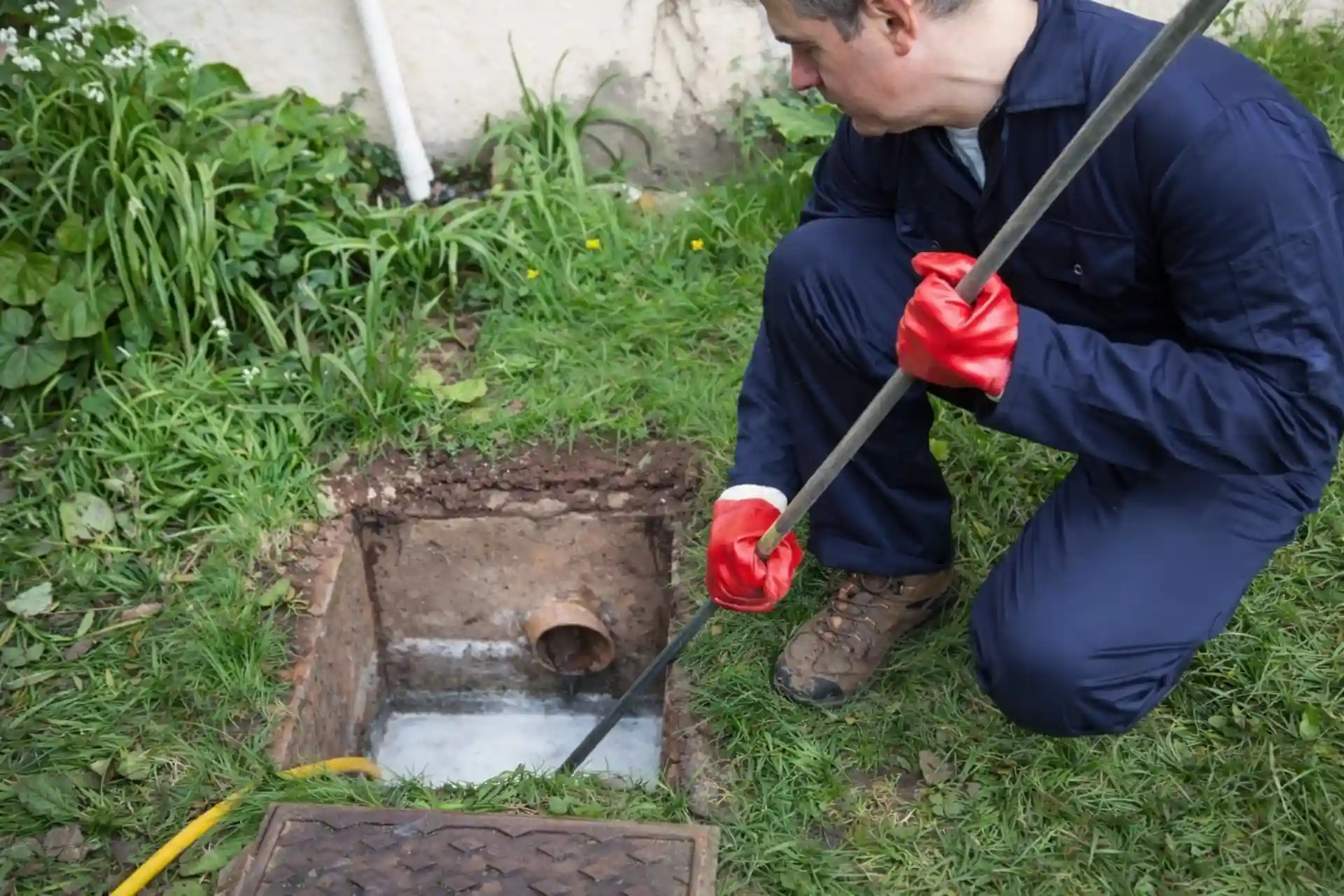
To break up or move an obstruction, drain rodding involves putting connected rods into the pipe by hand. It is mostly used when:
- The blockage is localised
- The obstruction is accessible
- Clearance is needed right away.
- The condition of the pipes seems stable.
This method is more about physically moving the blockage than getting rid of all the buildup inside.
Drain jetting — pressurised water clearance
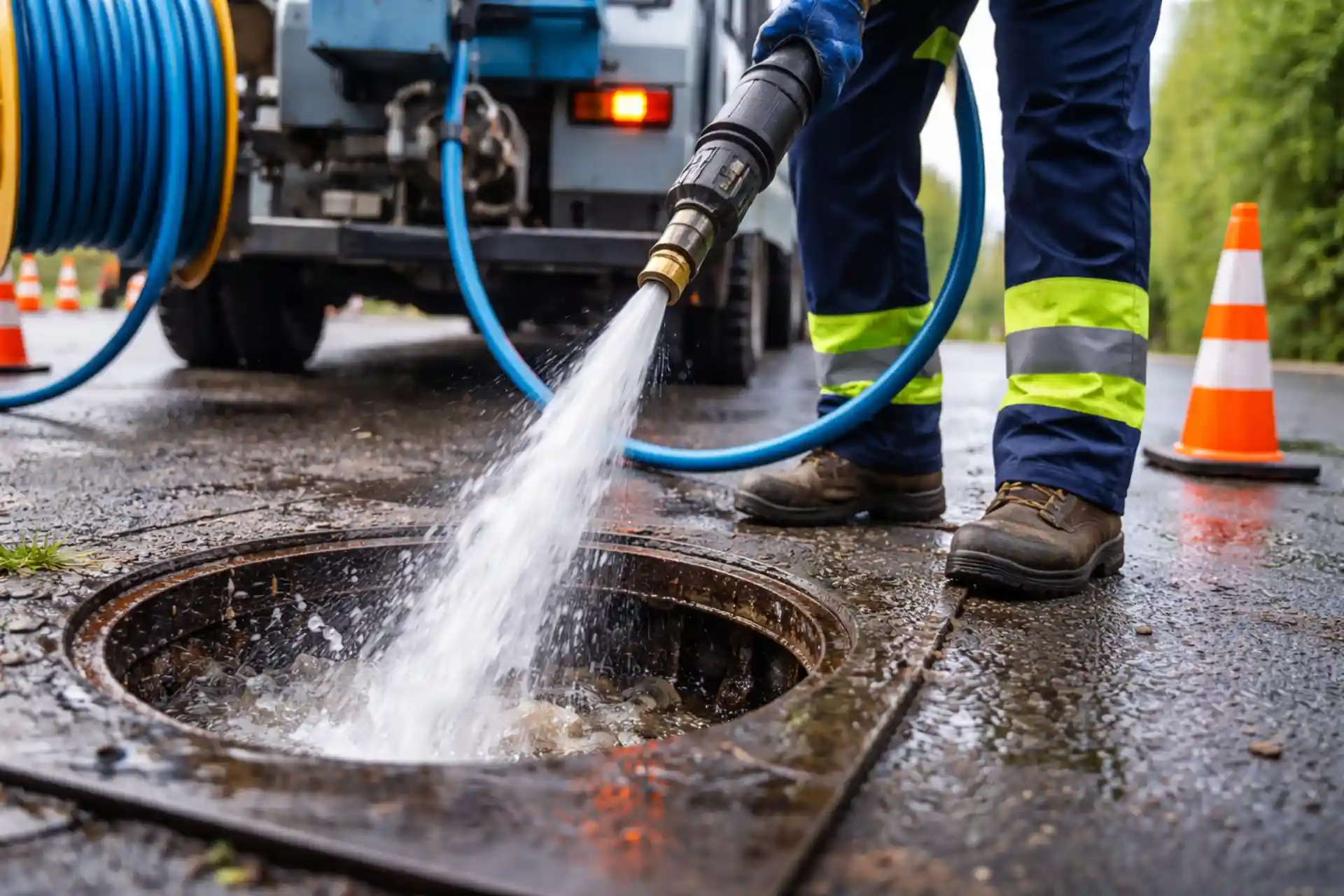
Drain jetting uses a water jet drain unblocker to direct controlled streams of water through pipework. The goal is to get rid of trash and move things through the system.
This technique may be considered where:
- Lines that build up pipe walls
- It appears that grease or trash has accumulated in the pipe.
- Flow restriction goes beyond just one point.
- A more thorough internal cleaning is needed.
How does drain jetting actually work?
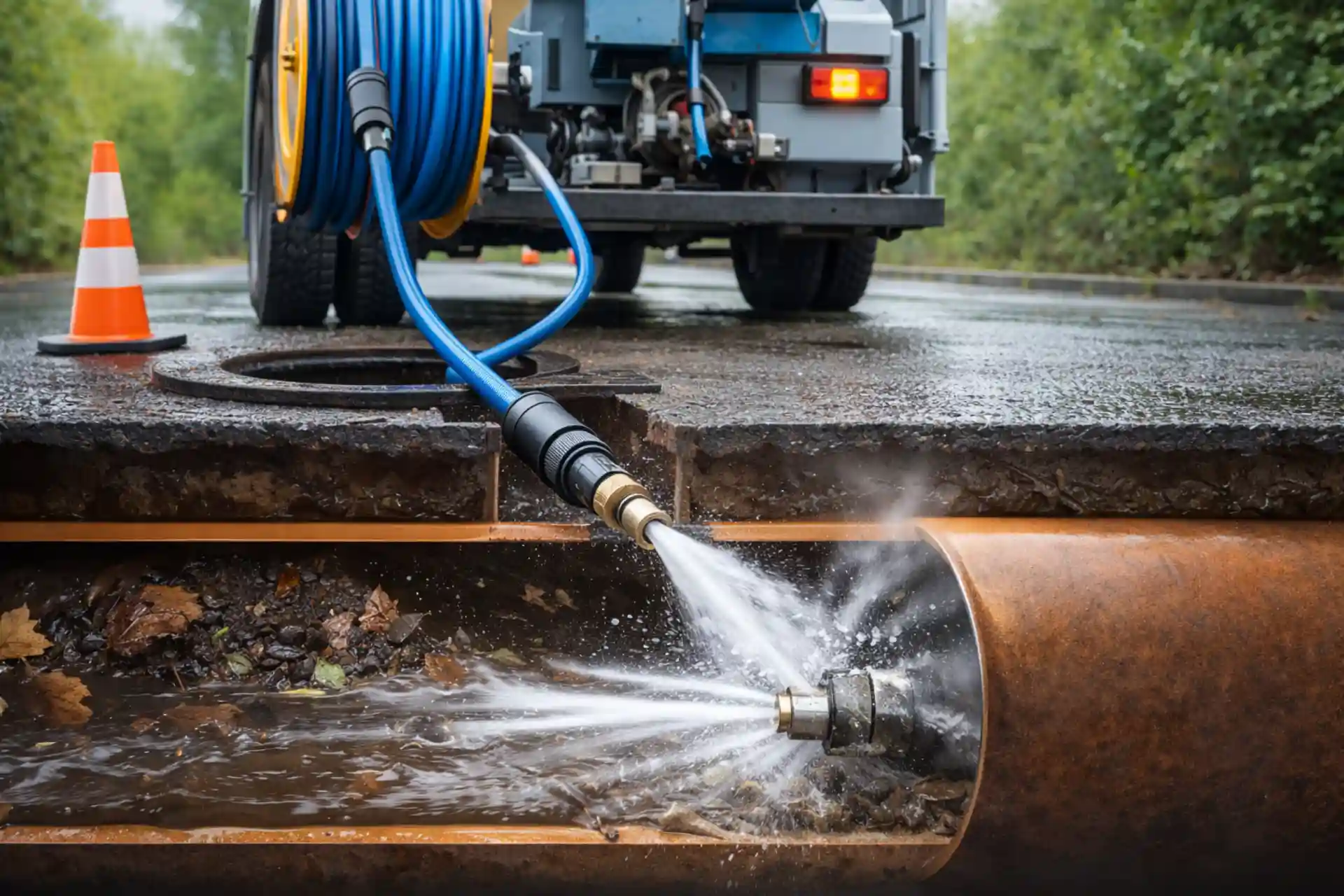
Understanding how drain jetting works helps explain why it is often used for ongoing or widespread restrictions.
A special hose is put into the pipe, and it lets out controlled water pressure that moves through the system. The process can help:
- Break apart soft obstructions
- Flush loose debris
- Improve internal pipe condition
- Restore more consistent flow
The technique is usually chosen after careful consideration, not as a default response, because water pressure is applied in a controlled way.
When might rodding be sufficient?
When symptoms point to a simple, localised blockage, rodding is often used. When property owners want to know how to clear a blocked drain, rodding is one of the most direct professional answers.
Situations where rodding may be appropriate
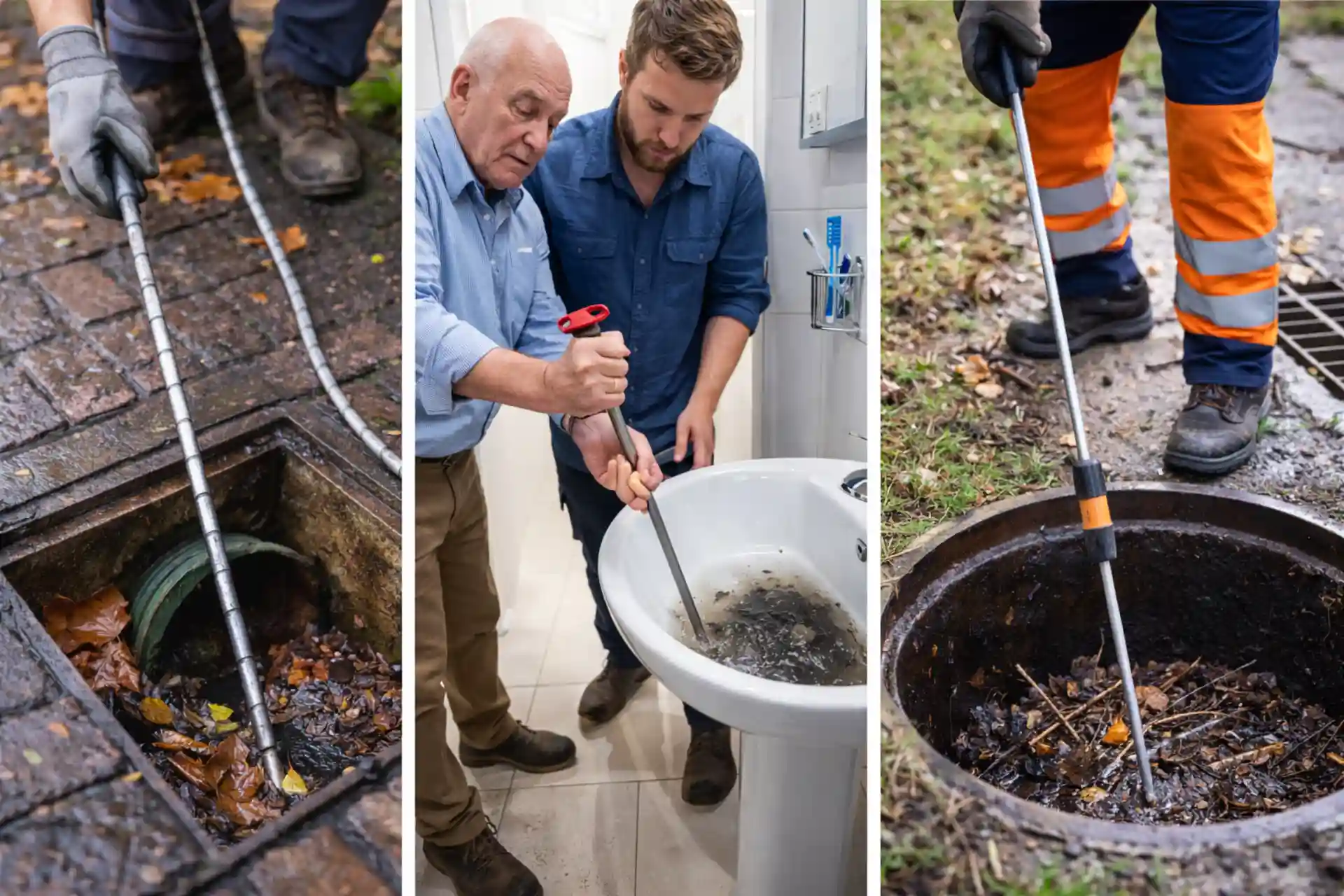
- A blockage that occurs only in one location near an access point is a situation where rodding may be appropriate.
- A sudden restriction occurs without any prior history of similar incidents.
- There is a suspicion of minimal internal pipe build-up.
- It is necessary to restore flow right away.
However, if symptoms come back quickly, it may be best to take a more investigative approach.
A side-by-side look at jetting and rodding
Feature | Drain Rodding | Jetting Approach |
Method | Mechanical disturbance | Pressurised water flow |
Typical focus | Local obstruction | Internal build-up and debris |
Coverage | Targeted area | Broader pipe section |
Outcome | Restores immediate flow | May improve overall flow condition |
Investigation need | Often symptom-led | Typically assessment-led |
Both methods may be part of structured blocked drain solutions, depending on how the system is set up and how often the problem happens.
When high-pressure cleaning may be considered
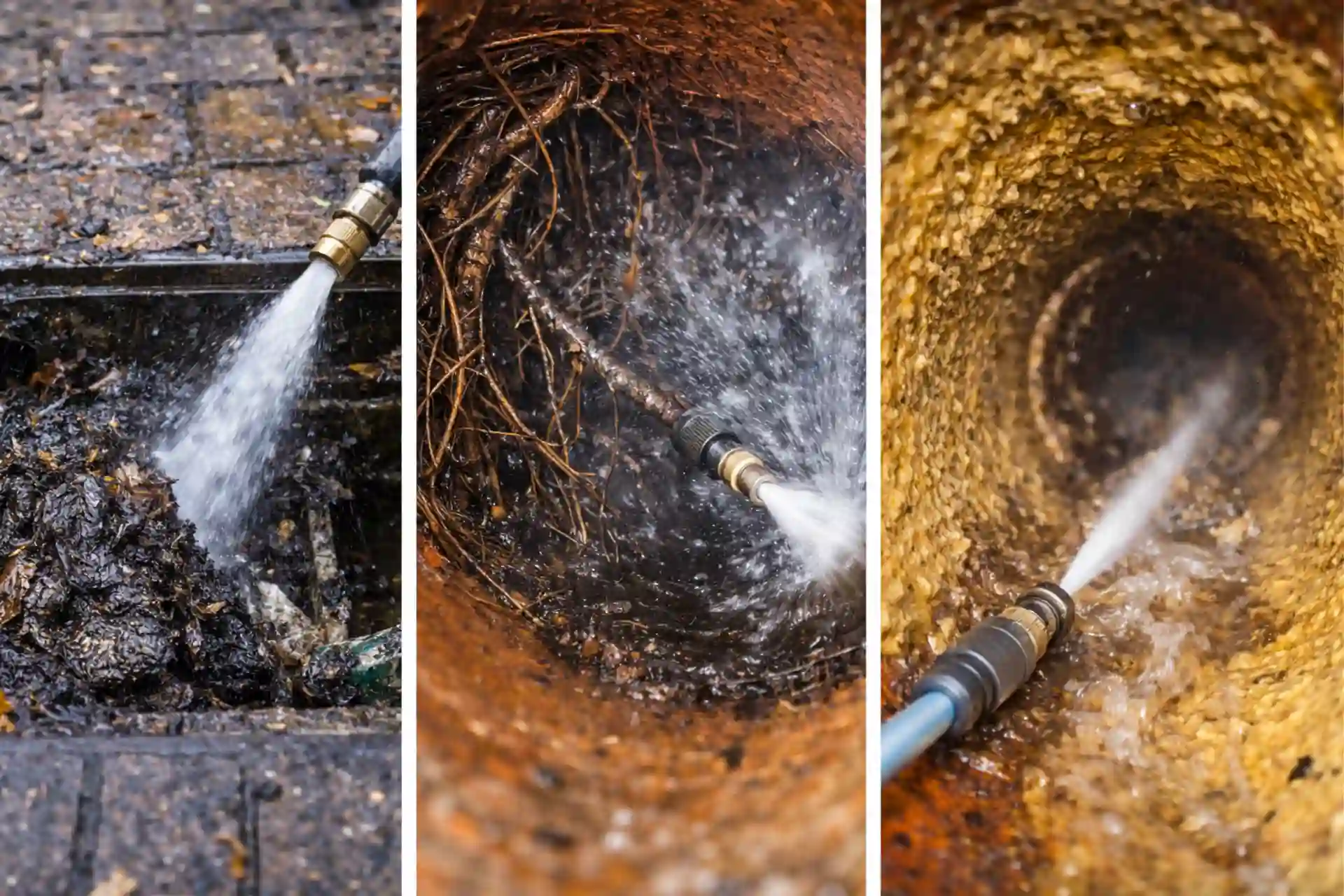
High-pressure drain cleaning may be necessary in some cases, such as when debris sticks to the walls of pipes or when repeated blockages indicate that material is building up rather than just a single blockage.
Signs that a more thorough approach might be helpful include:
- Slow drainage that happens again and again
- The problem affected several fixtures simultaneously.
- Odours that don’t go away are linked to restricted flow.
- Evidence of build-up following inspection
Assessment helps determine whether cleaning, clearance or further investigation is the most appropriate course of action.
Why it matters to pick the right method
Choosing the right intervention leads to more reliable results. Both methods aim to restore flow, but their effectiveness depends on:
- Where the blockage is
- Type of material that stops flow
- The state of the pipe
- History of recurrence
In practice, effective blocked drain solutions usually start with a diagnosis and then go on to targeted intervention instead of repeated surface-level treatment.
How professional assessment supports better decisions
Structured evaluation helps determine the difference between behavioural causes (what goes in the drain), structural conditions (pipe alignment or damage), and environmental factors (pressure from outside the system).
A typical assessment may include:
- Review of symptoms
- Visual inspection where possible
- Finding the likely obstruction zone
- Advice on the right steps to take to fix the problem
This method puts clarity and evidence ahead of guesses.
Choose the right approach for lasting results
When drainage problems keep happening, they often need more than one fix. Choosing the right blocked drainage solutions can help you get more reliable results and avoid having to deal with the same problem over and over again, whether it’s a localised blockage or a larger internal buildup.
Precise Drainage Solutions carefully assesses the situation and provides practical recommendations based on what they find. If you have ongoing drainage problems on your property, getting a professional opinion can help you understand the issue and decide on the best course of action.
Get your drainage problems sorted today, contact us for expert solutions!
Frequently Asked Questions
1. Which method gets rid of blockages the fastest?
Both methods can quickly get the flow back to normal. Suitability depends on the blockage type, pipe condition, and frequency, not just speed.
2. Is jetting always better than rodding?
Not always. Each method deals with different conditions. Assessment helps find the best way to meet the needs of the drainage system.
3. Can rodding hurt pipes?
Rodding is under control when used correctly. But whether it is suitable depends on the condition of the pipe and the access points found during the assessment.
4. When should you use high-pressure cleaning?
It may be considered when buildup affects pipe walls or when blockages happen repeatedly, which could mean more buildup inside.
5. Should you look into blockages that keep happening?
Yes. Repeated symptoms often mean that there are underlying conditions that need to be looked at by a doctor rather than just clearing them up again and again.