
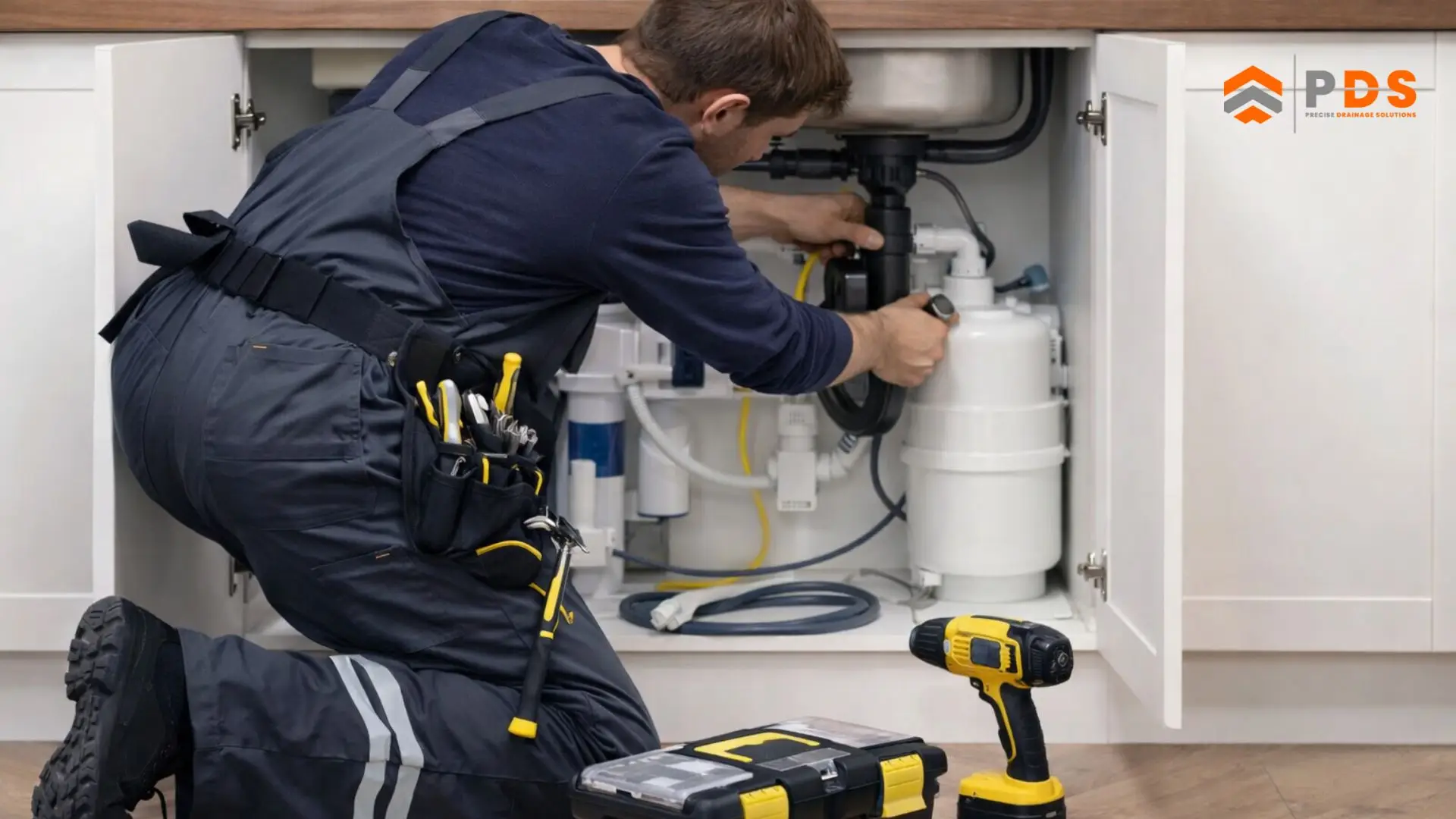
When water starts to back up or won’t drain, a blocked drain emergency can be very stressful. Property owners can take steps to limit immediate disruption, even though they often need professional help to fix the underlying problem.
Objective:
Provide clear, useful advice on how to handle urgent drainage problems safely while they wait for help from a professional.
“Did you know? According to Water UK, fats, oils, grease, and things that can’t be flushed down the toilet often get into drainage systems and block sewers. Many of these things come from homes.”
Understanding these causes helps explain why emergency drain problems often develop gradually before becoming urgent. Precise Drainage Solutions offers drainage services based on inspections, with a focus on accurately identifying the causes and responding appropriately to the conditions of the system.
Key Takeaways
- Most drain emergencies develop gradually before becoming urgent.
- Stopping water use can limit immediate damage.
- Temporary fixes might only help for a short time.
- When problems keep coming up, it’s often best to have a professional look at them.
- Preventive habits reduce long-term emergency risk.
What typically causes drain issues at home?
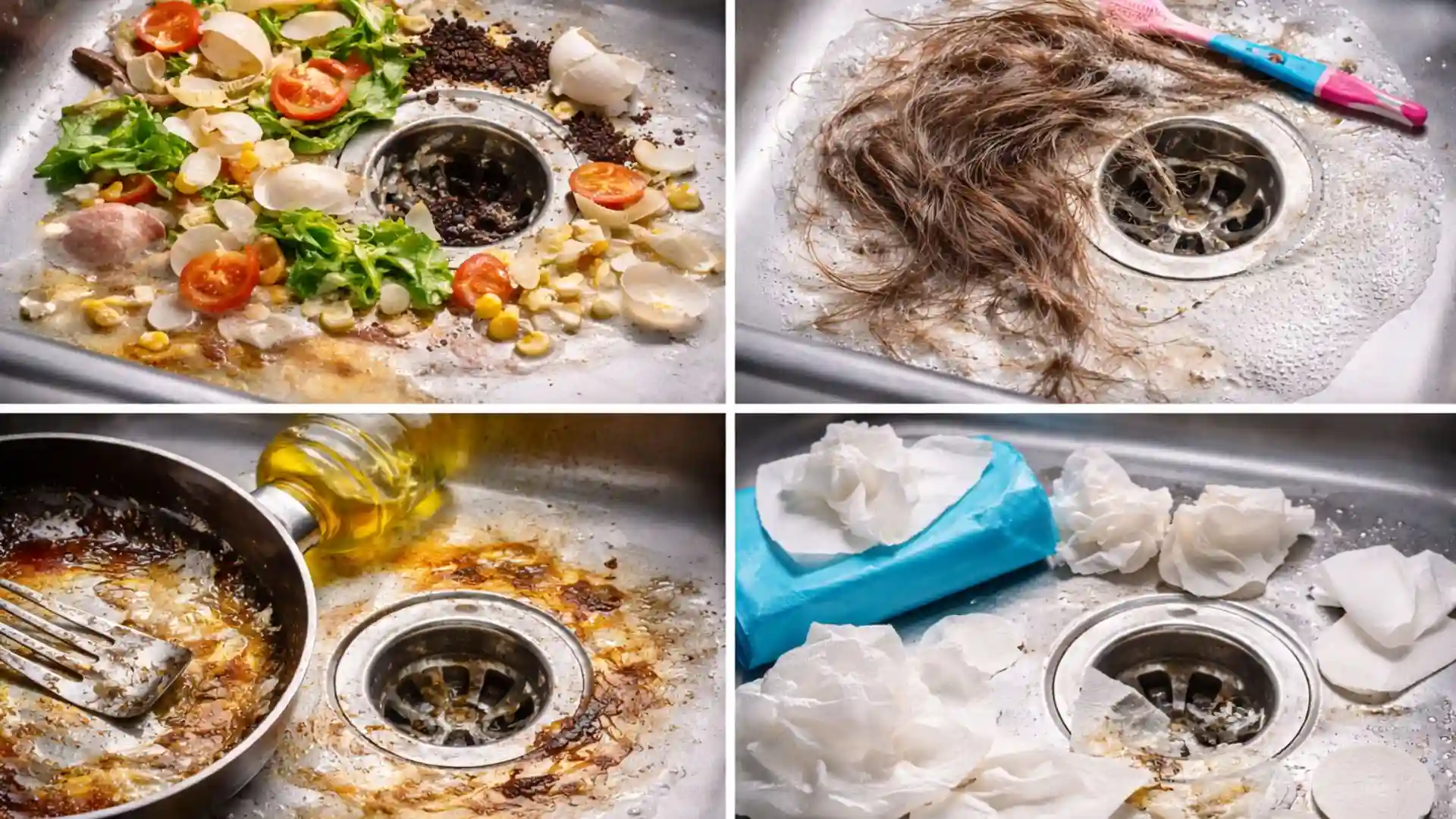
Most drain issues at home start out as partial blockages. Over time, things build up inside the pipe, which makes the flow capacity smaller until the pressure builds up or the water backs up.
Some common reasons are:
- Food waste and grease getting into sinks
- Drains in the bathroom get clogged with hair and soap.
- Hygiene products or wipes that were flushed
- Tree roots getting into pipes outside
These drainage system issues may go unnoticed until they become a visible blockage.
How to manage a drain emergency at home Safely
When disruption occurs, knowing how to manage a drain emergency at home can help limit the damage while you wait for professional help.
Consider the following measured actions:
- Stop using affected plumbing fixtures immediately
- Turn off appliances connected to drainage systems
- Remove standing water where safe to do so
- Avoid flushing additional waste
These first steps might help ease the system’s stress and lower the risk of overflow.
Related Blog: Top 10 Emergency Drain Situations That Need a Plumber Immediately
Temporary fixes that work for clogged Drains
While professional repair may be required, certain temporary solutions for blocked drains can help manage minor restrictions in the short term.
Examples include:
- Using a plunger to clear light suction
- Taking away trash that can be seen from easy-to-reach plugholes
- Using warm (not boiling) water to flush
These temporary drain solutions won’t fix the problem permanently, but they might help a little bit in the short term if the blockage isn’t too big.
When is it okay to fix a drain yourself?
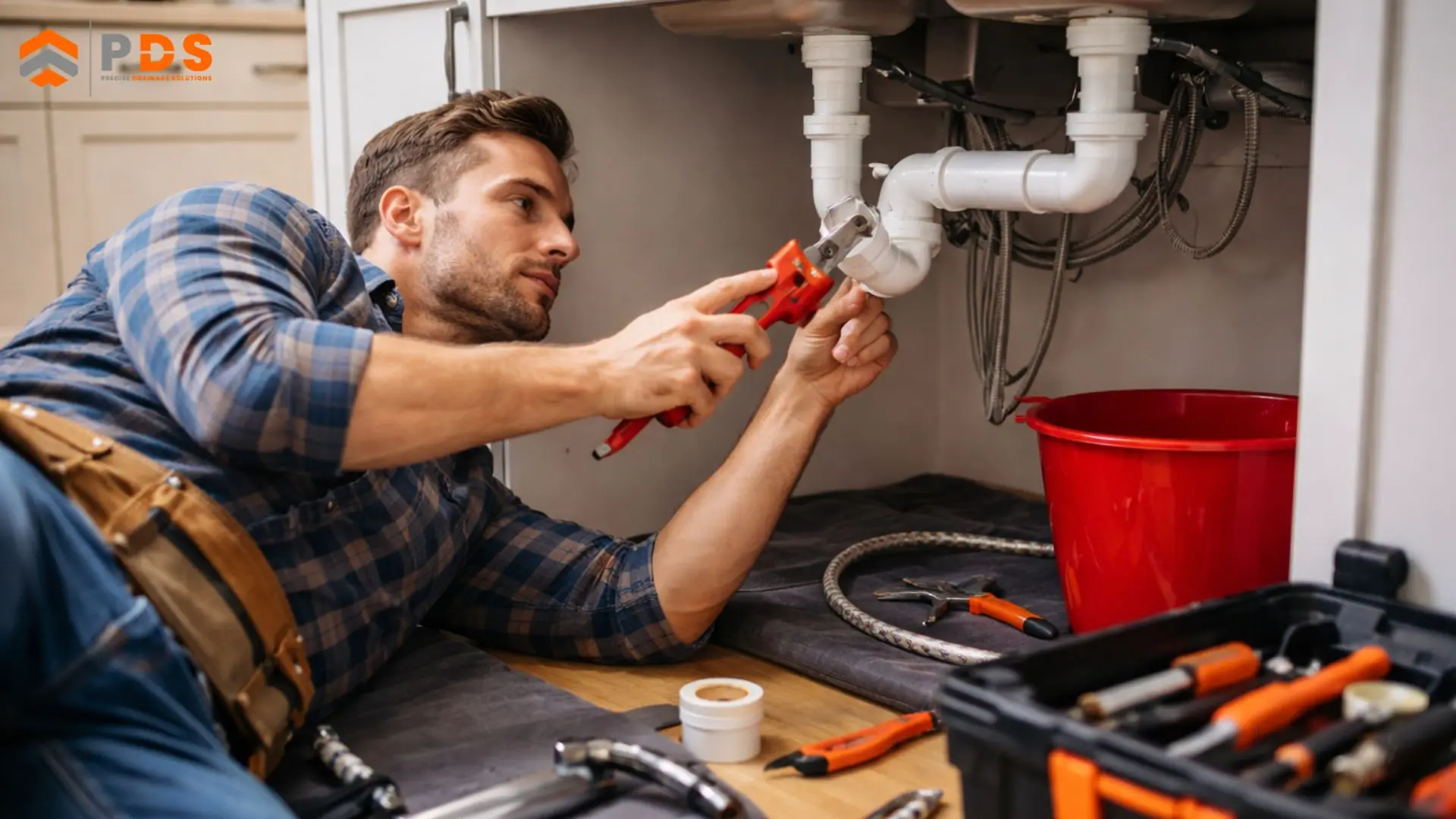
Some property owners attempt DIY drain fixes before contacting a specialist. Small blockages on the surface might be able to be fixed with home remedies, but deeper or more persistent blockages usually need to be looked at by a professional.
DIY measures may help when:
- The blockage is recent and localised
- There is no external flooding
- No foul odours suggest deeper system failure
But if the situation doesn’t get better or gets worse, it could be a more serious emergency blocked drain that needs to be looked at by a professional.
Emergency tips for slow or blocked Drains
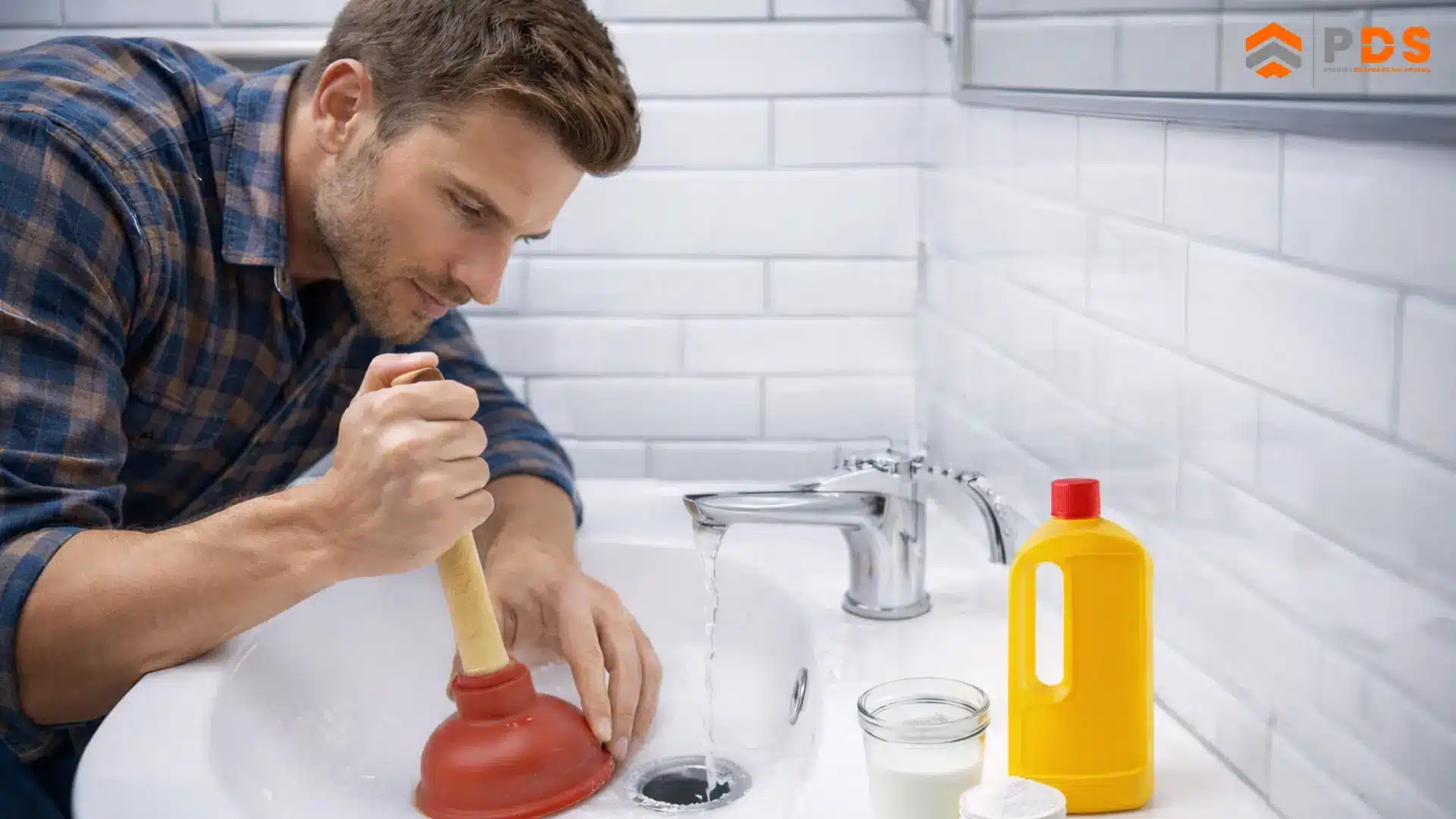
Identifying early warning signs can help stop things from getting worse. These emergency tips for slow or blocked drains may support safer management:
- Avoid using chemical cleaners repeatedly
- Monitor external drains for pooling water
- Keep children and pets away from overflow areas
- Document visible symptoms for professional review
If the drain keeps getting blocked, it might be a beneficial idea to do structured emergency drain maintenance to check the pipes and lower the risk of it happening again.
When should you seek urgent professional help?
Some situations need more than temporary fixes right away.
If you notice any of the following, seek assistance immediately:
- Wastewater backing up into sinks or toilets
- External flooding near inspection chambers
- Strong sewage odours indoors
- Multiple fixtures draining simultaneously
These signs could mean that there is a big blockage inside or a restriction outside. Attempting to fix a blocked drain emergency around the house is unlikely to be effective in these situations, which is why many property owners choose professional help from Precise Drainage Solutions to identify and resolve the problem correctly.
Comparing temporary action to a professional resolution
Approach | Focus | Likely Outcome |
Household temporary action | Reduce immediate overflow risk | Short-term containment |
Professional inspection-led service | Identify root mechanical or structural cause | More reliable long-term resolution |
Temporary fixes can help with immediate problems, but they usually don’t fix the root cause of the problem.
How prevention reduces emergency Risk
Some drainage problems are unavoidable, but good habits can reduce their frequency and severity.
Practical steps include:
- Avoid disposing of grease in sinks
- Use drain covers to catch debris
- Schedule periodic system inspections
- Address slow drainage early
Taking care of things ahead of time might help lower the chance of an unexpected problem.
Act quickly with Precise Drainage Solutions
If not handled carefully, a blocked drain emergency can get worse very quickly. Taking reasonable short-term precautions may lessen the immediate effects, but a structured assessment is usually needed for a long-term solution. Precise Drainage Solutions provides meticulous drainage assistance, utilising inspections to identify the root causes and recommend suitable remedies.
Get in touch with us right away to get your drainage consultation!
Frequently Asked Questions
1. What qualifies as a blocked drain emergency?
In most cases, an emergency means that water is backing up, overflowing, smelling foul, or several fixtures are breaking at the same time.
2. Can I fix a blocked drain myself?
Basic methods may work for small blockages, but professional help is usually needed for blockages that happen often or are very bad.
3. Should I use chemical drain cleaners during an emergency?
Using chemicals over and over again might not fix deeper problems and could damage the pipes.
4. How quickly should I seek help?
If water backs up or floods from the outside, you should call a professional right away.
5. Can emergencies be prevented entirely?
Some problems are inevitable, but good disposal habits and regular inspections can reduce their frequency and severity.




