
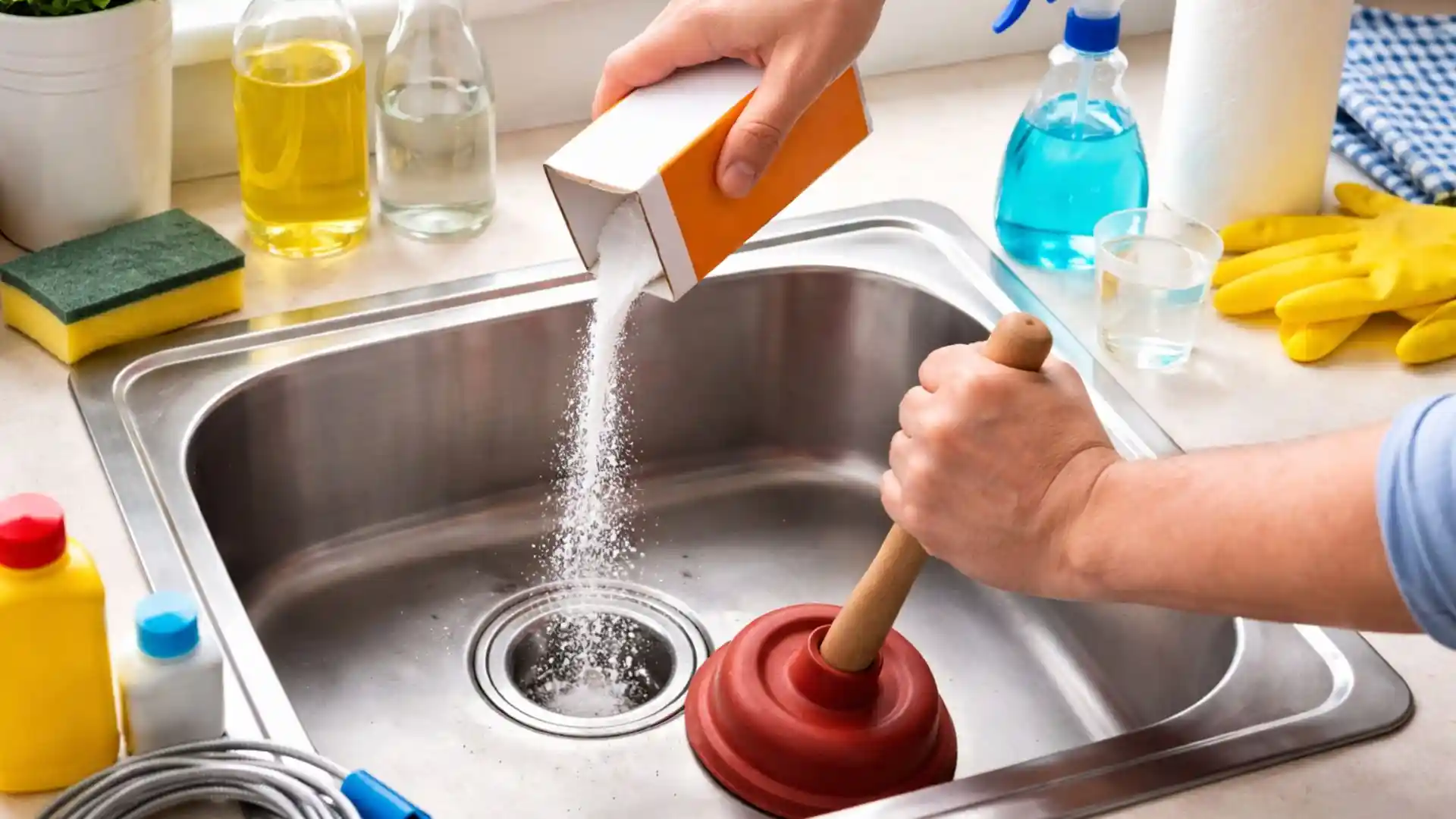
If you don’t know how to fix it, a washbasin that suddenly stops draining can mess up your daily life and cause more problems with the pipes. Authorities in the UK consistently assert that major causes of drainage problems include fats, oils, and non-flushable waste.
“According to Water UK, substances such as grease and food waste commonly contribute to pipe obstructions and restricted water flow.”
If you are dealing with a blocked sink, understanding safe clearing methods can help minimise risk to your drainage system. At Precise Drainage Solutions, drainage issues are usually dealt with by carefully looking at the situation and taking the right action based on what is seen, not what is assumed.
This guide gives property owners useful advice on what they can do before getting professional help.
Key Takeaways
- Blockages in sinks often happen slowly over time.
- Gentle methods are usually safer than clearing with force.
- Problems that keep coming up may mean that something is blocking the way.
- Inspection helps people make smart decisions about what to do next.
- Prevention lowers the chances of more disruptions.
First, let's talk about why sinks get clogged
Before exploring how to unblock a kitchen sink, it helps to understand what typically causes restricted flow.
Common contributing factors include:
- Buildup of grease and food scraps
- Soap residue accumulating within pipes
- Things from outside getting into the drainage system
- The pipe’s diameter gets smaller over time because of buildup.
When a kitchen drain clogged condition develops gradually, early action may help keep things from getting worse.
What should you do first if the water stops draining?
When your kitchen sink is clogged, it’s usually best to use gentle methods to lower the risk of damaging the pipes.
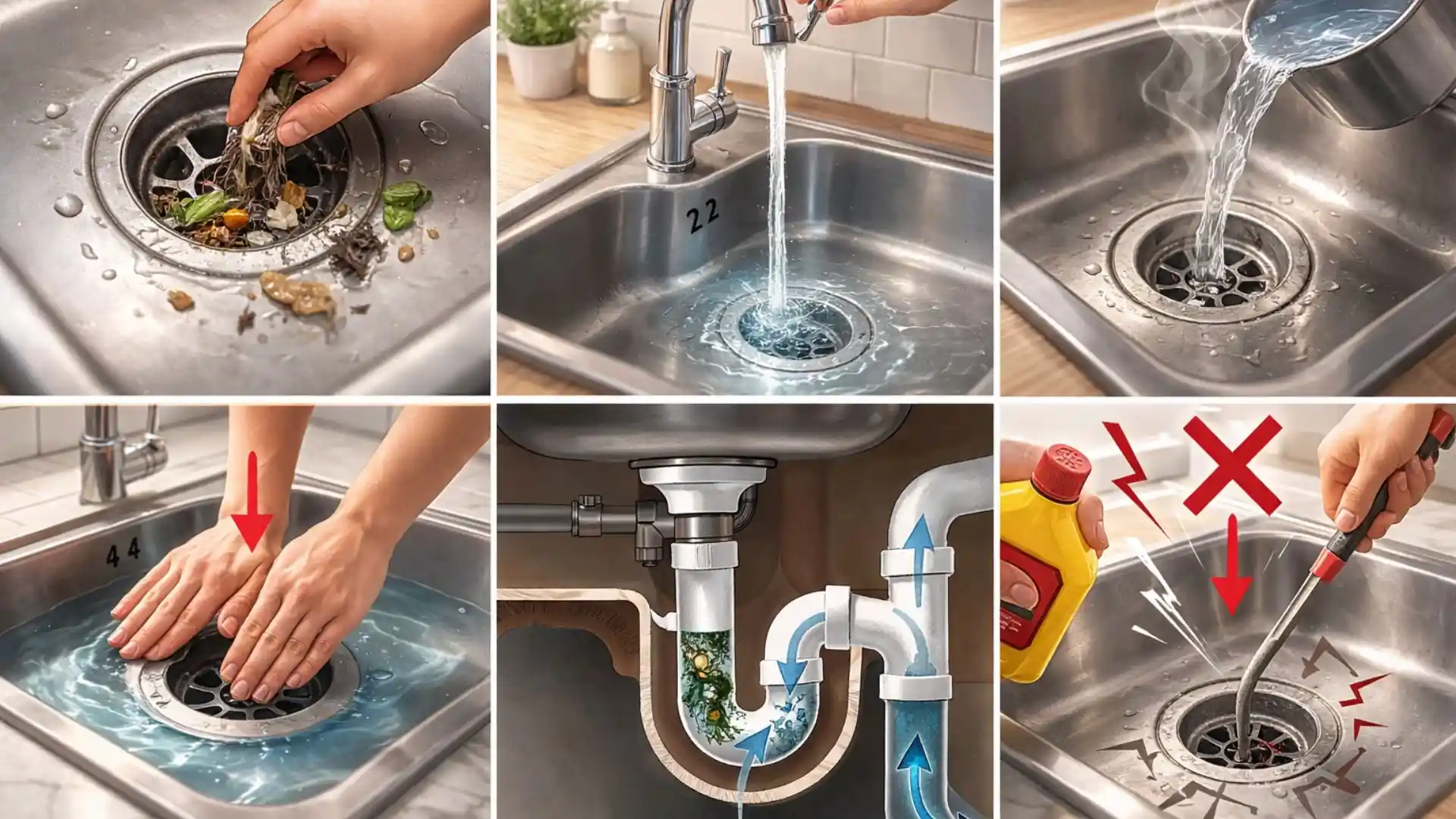
Step-by-step cautious approach
- Remove visible debris from the sink opening
- Run warm water briefly to test flow
- Use manual pressure methods carefully
- Avoid excessive force or repeated harsh attempts
These first steps might help clear blocked sinks where the blockage is small and close to the surface.
Methods property owners commonly consider
Many people try to fix a clogged sink with things that are easy to get. But whether something is suitable depends on the type and location of the blockage.
A Look at Different DIY Methods
Method | Focus | Typical Consideration |
Manual removal | Removes visible debris | Limited to accessible blockages |
Basic mechanical clearing | Applies pressure to dislodge obstruction | Requires cautious use |
Chemical treatment | Breaks down organic material | May not suit all pipe types |
Some people who own property use a drain unblocker, but it’s best to be careful when using it so that it doesn’t accidentally damage pipes.
When symptoms point to an internal build-up rather than a single object affecting flow, drain jetting is often looked into.
Tools that are sometimes used for minor blockages
If it’s safe to do so, you can try simple mechanical methods with basic drain cleaning tools.
Examples include:
- Manual plungers
- Flexible clearing devices
- Basic drain and pipe cleaning tools
- Entry-level plumbing drain cleaning tools
These tools might help with shallow obstacles, but they usually don’t work as well for deeper ones.
When repeated attempts don’t improve drainage
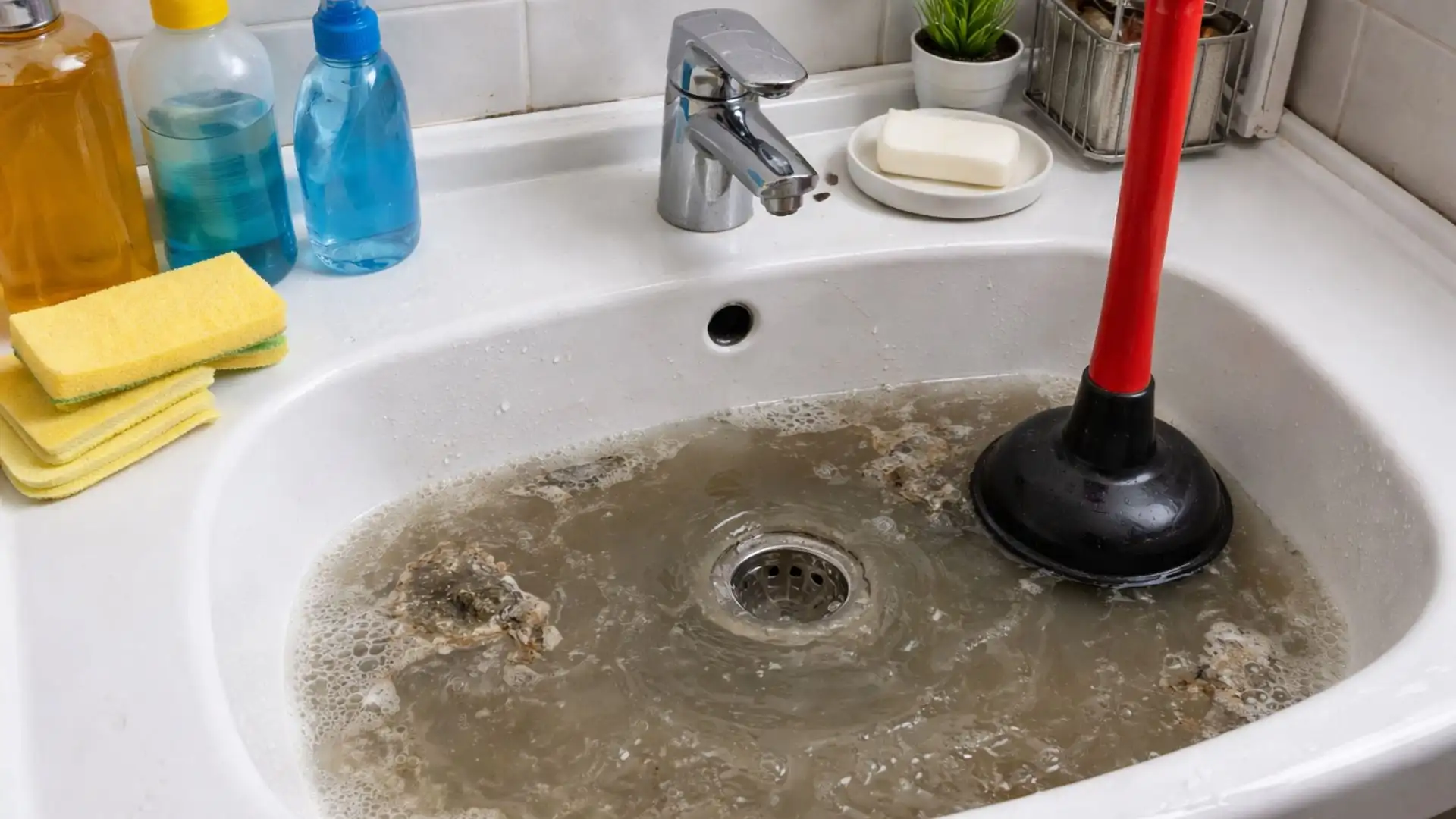
If a blocked sink still doesn’t let water flow after careful attempts, it could mean that the blockage is deeper in the system and not right next to the sink.
In these situations, acting without investigation may worsen the problem.
Persistent symptoms may include:
- Water backing up quickly
- Slow drainage returning after clearing
- Odours accompanying restricted flow
- Multiple fixtures showing similar behaviour
When these signs show up, a professional evaluation might give you a better idea of how the system is doing.
How professional assessment typically differs
Structured inspection may help figure out if unclogging a kitchen sink drain pipe is due to a build-up, an obstruction, or the condition of the pipe when household methods don’t work.
Professional support generally focuses on:
- Looking at patterns of recurrence
- Checking drainage points that are easy to get to
- Finding places where things are likely to get stuck
- Recommending the right steps to fix the problem
Why prevention is often more effective than repeated clearing
Learning how to unblock a kitchen sink can help in some situations, but long-term reliability usually depends on how often you use it and how quickly you respond to warning signs.
Practical prevention steps
- Avoid disposing of grease or oil in sinks
- Remove food debris before washing items
- Monitor slow drainage early
- Arrange assessment if problems recur
Being aware of things on a regular basis can lower the chances of restrictions happening again.
When ongoing issues may require support
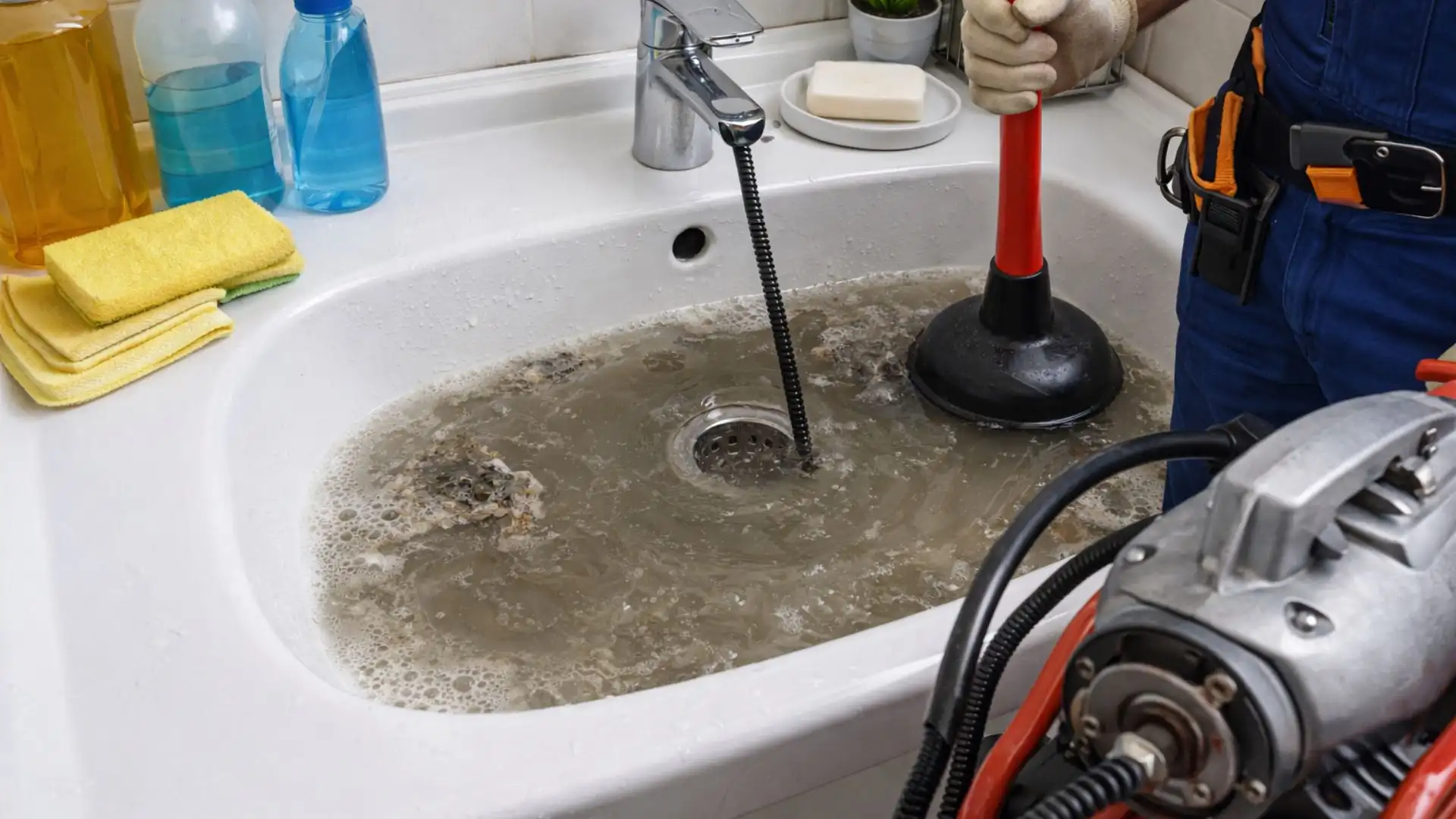
If symptoms don’t go away even after careful attempts, structured intervention or 24/7 drainage solutions may be needed, depending on how urgent and serious they are.
Professional involvement is often relevant when:
- Water does not drain at all
- Multiple drainage points are affected
- Odours persist after clearing attempts
- Flow problems return quickly
Assessment helps figure out what the next steps should be based on how the system is doing.
Restore safe drainage flow with informed action
Structured evaluation is often a better way to understand persistent drainage problems than trying to clear them up over and over again. If a blocked sink keeps making it hard to use normally, figuring out what’s causing the problem is usually the best way to move forward.
Precise Drainage Solutions carefully looks at what they see and makes practical suggestions based on what they find. If your property has ongoing problems with washbasin drainage, getting a professional evaluation can help you understand what’s going on and what to do next. Contact us today to arrange a professional drainage evaluation with Precise Drainage Solutions.
Frequently Asked Questions
1. What usually causes a blocked kitchen sink?
Most washbasin blockages happen when grease, food particles, soap residue or other foreign objects build up inside the pipes, slowly blocking the flow of water.
2. Is it safe to use chemical cleaners regularly?
Not all pipe systems can handle frequent use of chemicals. Careful use and professional advice may help lower the chance of accidentally hitting a pipe.
3. How do I know if the blockage is deeper in the pipe?
If your drain keeps getting slow, smells foul, or water backs up quickly after you clear it, there may be a deeper blockage that needs to be looked at.
4. Can DIY methods permanently fix sink blockages?
Minor blockages on the surface may go away on their own, but if they keep happening, you may need to have them looked at to find out what’s causing them.
5. When should I seek professional help?
When drainage doesn’t get better, symptoms come back quickly, or multiple fixtures show restricted flow, it may be time for a professional evaluation.




