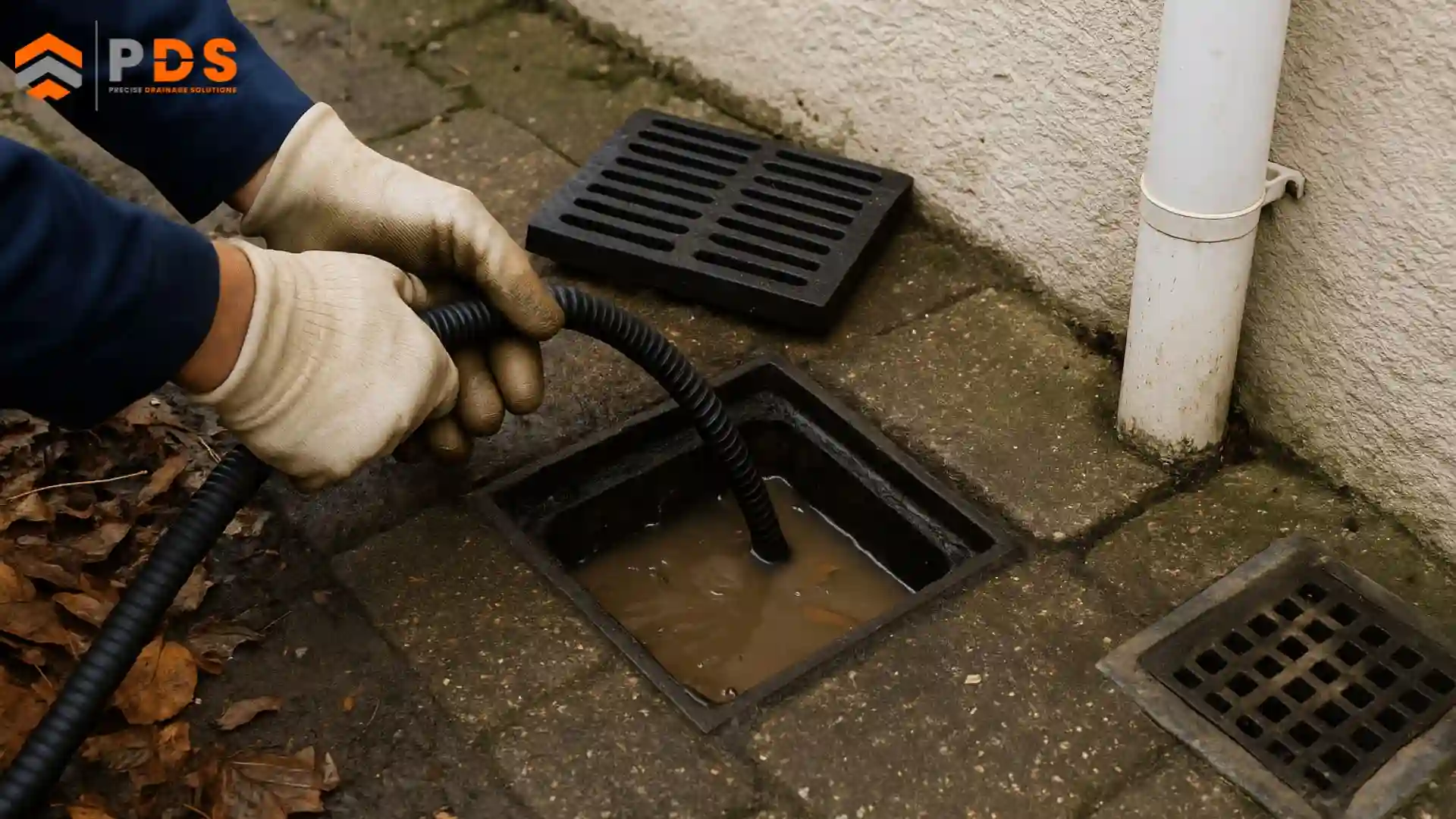
If you see water pooling near your property, it could mean that the pipes outside are not letting water flow freely. When they see early warning signs, like after a lot of rain or when seasonal debris builds up, many property owners try to unblock outdoor drains.
Objective:
Provide clear, useful steps to help property owners safely deal with small outdoor drainage problems on their own before calling in a professional.
“Did you know, According to the UK Environment Agency, that blocked drains and poor surface water management can contribute to localised flooding, particularly during periods of heavy rainfall?”
This instance shows why it’s important to fix blocked drains outside right away to avoid more problems. Property owners can get help from Precise Drainage Solutions with inspection-led drainage services that find the real problems and suggest appropriate solutions.
Key Takeaways
- Leaves, silt, and other debris can get into outdoor drains.
- The first step in fixing small blockages is to look at the surface.
- Gentle flushing helps check the condition of the internal flow.
- Persistent blockage may indicate deeper structural issues.
- Preventive maintenance lowers the chance of something happening again.
What Usually Causes Outside Drainage Blockages?
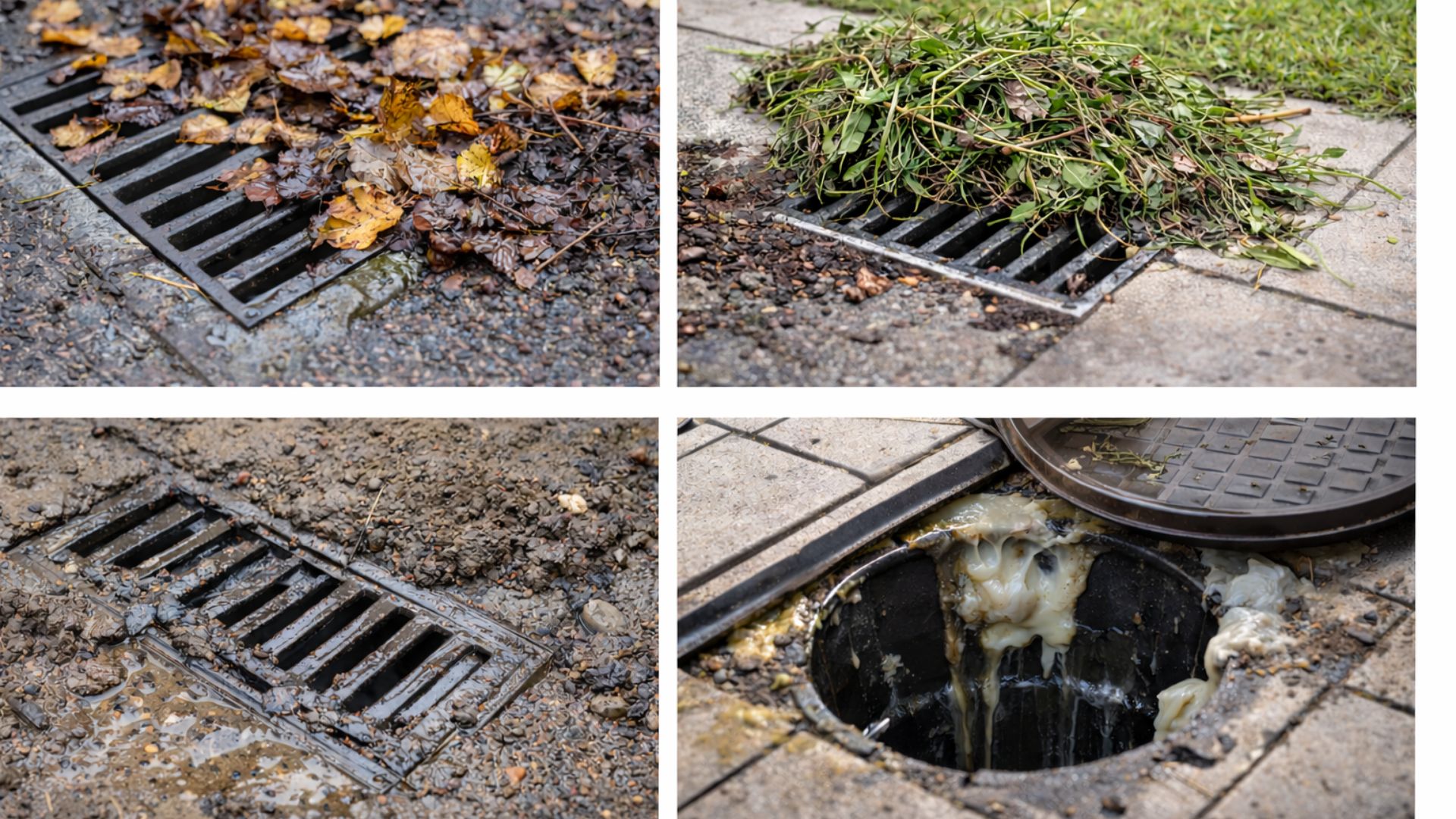
The exposure of outdoor drainage solutions to weather and environmental debris increases their likelihood of blockage.
Common causes include:
- Leaves and garden waste accumulation
- Silt and soil buildup
- Moss growth and organic matter
- Tree root intrusion
- Accidental disposal of debris
If these problems aren’t fixed, they could get worse over time and cause a deeper pipe blockage drain condition.
Step 1: Inspect the drain cover and surrounding area
Look at the drain before you try to clear it.
Look for:
- Visible leaf buildup
- Standing water around the grate
- Mud or silt covering the drain opening
Outdoor drain cleaning usually starts with getting rid of debris on the surface. Always wear gloves to protect yourself, and don’t touch wastewater directly.
Step 2: Carefully remove any debris that is easy to reach
If the water stays still, you might be able to see buildup inside by lifting the drain cover (if it’s safe to do so).
Basic DIY outdoor drain unclogging tips include:
- Scooping out loose debris
- Flushing with warm water
- Checking for visible obstructions near the opening
These steps might fix small problems. But they might not fix bigger problems with the system.
Step 3: Flush and observe water movement
After cleaning up the trash on the surface, use a hose to gently flush the drain. Watch how quickly the water spreads out.
If the flow significantly improves, surface-level buildup may be the only issue. More outdoor drain cleaning solutions might be required if the water backs up or drains slowly.
This stage is often included in an outdoor drain blockage guide, as it helps determine whether the obstruction is shallow or internal.
Step 4: Be careful when using simple tools
For small blockages close to the surface, simple tools like drain rods may be useful. But if you don’t handle it right, you could push debris deeper into the system.
When thinking about how to unblock an outdoor drain safely, it is important to:
- Rotate rods in a clockwise direction
- Avoid excessive force
- Stop if resistance feels solid or immovable
If resistance persists, it may indicate a deeper structural or root issue that requires professional attention.
When Should You Stop Trying to Do Things Yourself?
Some minor restrictions can be handled on the surface, but some signs point to the need for a professional assessment.
Seek further support if:
- Multiple drains are affected simultaneously
- Foul odours emerge from inspection chambers
- Water backs up rapidly during rainfall
- You suspect a collapsed or damaged pipe
At this stage, attempting to unblock outdoor drains with special tools might not work in the long run.
Preventive Outdoor Drain Cleaning Tips
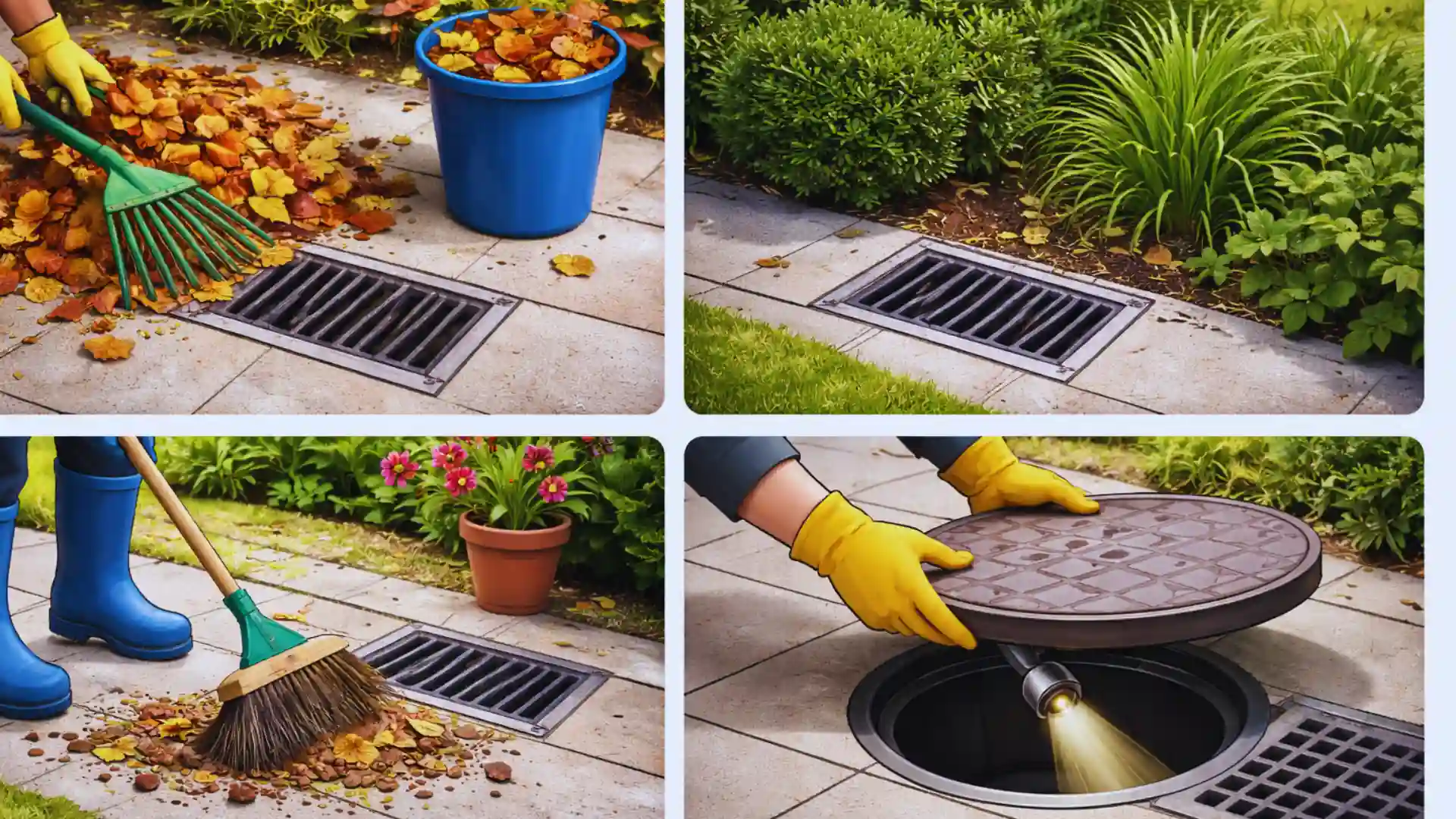
Preventive habits can lower the chances of an obstruction happening again.
Consider the following outdoor drain cleaning tips:
- Clear leaves regularly during autumn
- Trim vegetation near drain openings
- Avoid sweeping garden debris into surface drains
- Check inspection covers periodically
Regular drain cleaning can help keep buildup from getting so bad that it stops flow.
Comparing Minor Blockages and Structural Issues
Condition | Typical Cause | Likely Action |
Surface debris accumulation | Leaves, mud, litter | Manual clearing |
Gradual internal restriction | Silt buildup | Flushing or inspection |
Structural pipe damage | Root intrusion, collapse | Professional repair |
Knowing the difference between these two things helps property owners figure out if they should try to fix them themselves or if they need to look into the problem more closely.
Why Taking Action Early Is Important
A drainage solution keeps water from pooling near buildings and protects their foundations. Not paying attention right away may increase the likelihood that:
- Surface flooding
- Property dampness
- Soil erosion
- Repeated obstruction
Timely intervention, even during the inspection stage, can help lower the risk of disruption.
Get Reliable Help From Precise Drainage Solutions to Protect Your Property
Sometimes you can fix small pieces of debris on the surface with care, but if the blockage keeps happening, you may need to have it checked out in a structured way. Acting early to unblock outdoor drains can help protect your property from avoidable water-related damage. Precise Drainage Solutions provides customised drainage services based on thorough inspections and the specific condition of each system.
Get in touch with us right away to get your drainage consultation!
Frequently Asked Questions
1. What causes blocked drains outside most often?
During the autumn and heavy rains, leaves, silt, and other garden debris often build up in surface drains.
2. Can I safely clear an outdoor drain myself?
Sometimes it’s safe to remove small pieces of debris from the surface, but deeper or more frequent blockages may need to be looked at by a professional.
3. How do I know if the blockage is serious?
A structural or internal blockage may be present if it affects multiple drains or causes water to back up quickly.
4. Are drain rods safe to use?
They can help with shallow blockages, but you should be careful not to push debris deeper into the system.
5. How often should outdoor drains be checked?
Regular checks, especially in the autumn, can help keep debris from building up and lower the risk of blockages.