Objective:
This guide explains why outdoor drains overflow after rainfall and what you can do to reduce the risk. Acting early can help prevent a small drainage issue from becoming a bigger one.
Key Takeaways
- Heavy rain can place significant pressure on outdoor drainage systems.
- Saturated ground may slow the movement of rainwater.
- Leaves, soil, grease and roots can restrict drainage pipes.
- Repeated overflowing may point to an underlying problem.
- Regular maintenance can reduce the risk of future issues.
- Professional inspection can identify hidden blockages and pipe damage.
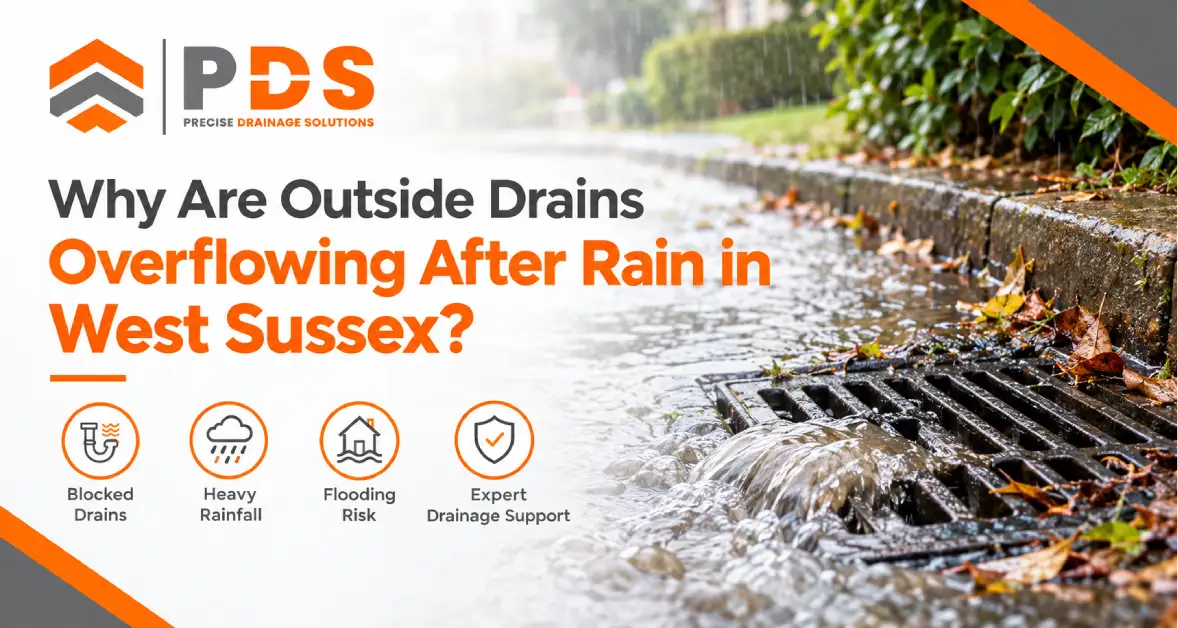
Heavy rain can quickly expose problems in an outdoor drainage system. If an outside drain is blocked by leaves, silt, grease, or other debris cannot carry water away, and rainfall may collect around your property. Clearing the blockage early can help restore normal flow and reduce the risk of damage.
Did you know? West Sussex County Council explains that heavy rainfall can put extra pressure on drainage systems. Saturated ground can also make it harder for water to drain away, while some coastal areas may experience slower water flow.
Need Help With Outside Drain Blockages? Contact Our Experts Today!
What Causes Outside Drains to Overflow After Rain?
Rainwater needs a clear route through the drainage system. When heavy rainfall arrives, that system may suddenly have to handle far more water than usual.
If there is already a restriction, the extra flow can expose the problem. Blocked drains may struggle to cope, causing a drain overflowing situation around driveways, gardens or paved areas.
Common causes include:
- Leaves, twigs and garden waste
- Soil and silt entering the drain
- Grease and other waste inside pipes
- Tree roots growing through damaged joints
- Cracked or collapsed underground pipes
- Poor surface drainage
- Heavy rainfall exceeding drainage capacity
How Does Heavy Rain Make an Existing Problem Worse?
A useful way to understand the problem is to compare normal and heavy rainfall.
During normal weather:
Water enters the drain gradually, giving it more time to flow away.
During heavy rain:
A large volume of water enters the system within a short period.
If there is a restriction:
The pipe cannot move the extra water quickly enough, so water starts backing up.
This is why an apparently minor drainage issue can suddenly become noticeable during a storm.
Could Leaves and Garden Debris Be the Problem?
Outdoor drains are exposed to the surrounding environment. This makes them particularly vulnerable to loose garden material.
Look out for:
- Leaves: Wet leaves can stick together and cover drain openings.
- Twigs and grass: Small pieces of garden waste can collect against the grate.
- Soil: Loose soil can wash towards drainage points during rainfall.
- General debris: Rubbish and other materials can restrict the flow of water.
Regularly checking accessible drain openings can help you spot these issues early. Never force open a heavy or difficult drain cover.
What Happens When Soil and Silt Enter the Pipes?
Soil and silt may seem harmless, but repeated deposits can gradually reduce the space inside a drainage pipe.
The process often happens slowly:
Rainfall → soil movement → sediment enters drain → deposits settle → water flow reduces
You may not notice the problem immediately. Eventually, however, water can begin draining more slowly or collecting around the drain.
If this keeps happening, professional inspection can determine whether deposits have built up further inside the pipe.
Can Tree Roots Cause Drainage Problems?
Tree roots can enter underground pipes through small cracks, gaps or damaged joints.
Once inside, they can continue growing and create an increasingly difficult restriction.
Roots can also catch leaves, soil and other debris. This gives additional material somewhere to collect and can make the problem worse.
A CCTV inspection can help identify root intrusion when the affected section is underground and cannot be assessed from the surface.
Could West Sussex Weather and Ground Conditions Play a Role?
Sometimes, the drainage system itself is not the only factor.
According to West Sussex County Council, heavy rainfall can place additional pressure on drainage systems. When the ground becomes saturated, it has less capacity to absorb more water.
In some coastal areas, local conditions can also slow water movement.
This means drainage problems may become more noticeable during prolonged or intense rainfall, particularly where the system is already under pressure.
What Signs Suggest Your Drain Needs Attention?
You do not always need to wait for visible flooding before investigating a drainage problem.
Watch for these warning signs:
- Water drains away unusually slowly.
- Water collects around the same drain.
- You notice unpleasant drainage smells.
- Several nearby drains become slow.
- Water rises from a drain during rainfall.
- The same area floods repeatedly.
Amay therefore be a warning that something needs checking rather than an isolated weather-related event.
What Should You Do When an Outdoor Drain Overflows?
If water starts rising, take a few sensible steps before the problem gets worse.
Step 1
Check the surface
Look for leaves, grass, mud or rubbish covering the drain opening.
Step 2
Remove loose debris
If it is safe, clear visible debris from the surface without reaching into the drain.
Step 3
Avoid chemical cleaners
Strong chemicals may not solve a deeper restriction and can create additional risks.
Step 4
Watch the water level.
See whether the water begins to drain once rainfall reduces.
Step 5
Arrange an inspection
If the problem continues or keeps returning, professional help may be needed.
Need Outdoor Drain Overflow Help? Speak to Our Experts Today!
How Can You Prevent Future Overflowing?
Prevention starts with simple maintenance. You cannot control the weather, but you can reduce some of the factors that make outdoor drainage problems worse.
Use this simple maintenance checklist:
☐ Keep leaves away from drain openings.
☐ Clear visible garden debris regularly.
☐ Avoid putting grease or unsuitable waste into drains.
☐ Check accessible drainage points after severe weather.
☐ Look out for repeated slow drainage.
☐ Arrange professional checks if problems keep returning.
These small steps can help identify developing issues before they lead to more serious flooding.
When Should You Contact a Drainage Professional?
One-off overflowing after very heavy rain may not mean serious damage. However, repeated issues need attention.
If the same drain keeps overflowing or water remains after rainfall, arrange an inspection. A blocked outside drain may be simple to clear, but recurring problems can have a deeper cause.
Professional drain unblocking West Sussex services can identify issues such as debris, roots, silt or damaged pipes and recommend the right solution.
Take Action Before the Next Heavy Downpour
Heavy rain can quickly expose drainage weaknesses. A restriction that seems minor in dry weather may cause serious flow problems during storms.
If you notice an outside drain blocked by debris, act early rather than waiting. Clearing the issue can help prevent standing water, bad smells and property damage.
At Precise Drainage Solutions, professional support can identify the cause and restore proper flow before the next heavy downpour.
Frequently Asked Questions
1. Why do outside drains overflow after heavy rain?
Heavy rainfall can send more water into the drainage system than it can move away quickly. Existing restrictions can make the situation worse.
2. Can leaves block an outdoor drain?
Yes. Leaves and garden debris can collect around the opening or enter the pipe, reducing the space available for water to flow.
3. Does overflowing always mean there is a blockage?
No. Heavy rainfall, saturated ground, drainage capacity and damaged pipes can also contribute to overflowing.
4. How can I prevent outdoor drains from overflowing?
Keep drain openings clear, remove visible debris regularly and deal with repeated slow drainage before it becomes a larger problem.
5. When should I call a drainage specialist?
Contact a professional if overflowing happens repeatedly, several drains are affected, water remains after rainfall, or you notice other signs of a drainage problem.