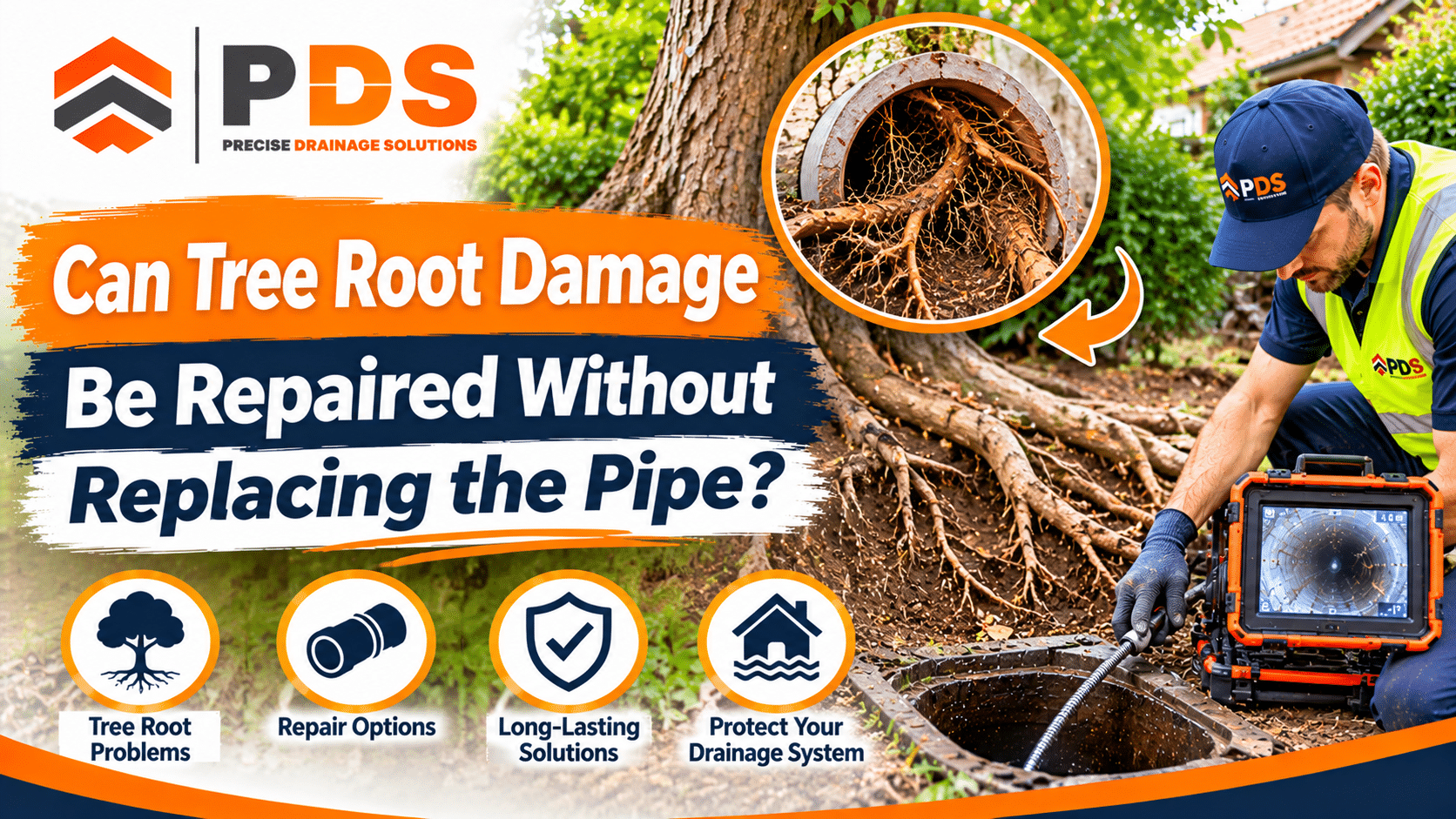

Tree roots can cause serious problems in underground drainage systems, but that does not always mean the entire pipe needs replacing. If the damage is limited to a small area, repairs may be possible without digging up the whole drain.
So, can tree root damage be repaired without replacing the pipe? In many cases, yes. The right solution depends on how far the roots have spread and whether the pipe is still structurally sound.
- Did you know? According to Ofwat’s Water Company Performance Report 2024–25, sewer collapses across England and Wales decreased by 36% compared with 2019–20. However, individual drainage problems still need timely repairs.
How Do Tree Roots Damage Underground Drain Pipes?
Tree roots naturally grow towards moisture and nutrients in the soil, making underground drainage pipes an attractive source. They usually enter through existing cracks, loose joints, damaged seals or weak pipe connections where water escapes. Once inside, roots continue growing and form dense masses that restrict wastewater flow.
Over time, this can cause blocked drains, cracked pipes, water leaks and further structural damage. Roots can trap grease and waste, put pressure on weakened pipe sections and allow wastewater to escape into the surrounding soil.
Early tree root damage drain repair can prevent the problem from getting worse. A professional inspection helps identify the damage and determine whether Drain relining or another repair method is suitable.
Can Tree Root Damage Be Fixed Without Replacing the Entire Pipe?
Yes, several repair methods can restore damaged drains without removing the entire pipe. The most suitable option depends on the location, size and severity of the damage.
For example, a small crack with limited root entry may only need a local repair. However, a pipe with widespread damage may require more extensive work.
Common drain pipe replacement alternatives include:
- Root removal and cleaning
- Localised patch repairs
- Drain relining
- Trenchless repair methods
A professional CCTV drain survey helps identify the affected section and assess the pipe’s overall condition before work begins.
What Repair Methods Can Fix Tree Root Damage?
The right repair method depends on the extent of root growth and the condition of the pipe. Three common options can help restore damaged drains without replacing the entire system.
1. Root Removal and Drain Cleaning
The first step is to remove roots growing inside the pipe. Drainage specialists use mechanical cutting equipment to clear the obstruction and restore wastewater flow.
This process, known as tree root removal from drains, helps clear the blockage. However, removing roots alone does not fix the damage. If the original crack or joint remains open, roots can enter again.
The pipe should be inspected after cleaning to determine whether further repairs are needed.
2. Localised Patch Repairs
If the damage is limited to one small area, a patch repair may be enough. This method involves placing a repair patch inside the pipe to seal the affected crack or damaged joint.
Localised drain repair is suitable when the surrounding pipe is structurally sound and has no major displacement. It can fix the damaged section without replacing the entire pipe. This also reduces excavation and limits disruption to gardens, driveways and outdoor areas.
3. Drain Relining
Drain relining is another option for repairing pipes with cracks or root entry points. It involves inserting a resin-coated liner into the existing pipe and allowing it to cure. Once hardened, the liner forms a strong inner layer that seals cracks and damaged joints.
Drain relining for root damage is suitable when the existing pipe is strong enough to support the new lining. It can restore the pipe without digging up the entire drainage system, making it a less disruptive repair option.
Wondering if tree root damage can be repaired without replacing the pipe? Contact our drainage experts today!
Why Must Roots Be Removed Before Drain Relining?
Before installing a liner, specialists must remove existing roots and clear the pipe. Leaving roots inside can prevent the liner from sitting correctly against the pipe walls.
This may affect the quality of the repair and leave gaps where water can escape.
The usual process includes:
- Inspecting the drain: A CCTV survey identifies root growth, cracks and damaged joints.
- Removing the roots: Suitable cutting equipment clears the internal obstruction.
- Cleaning the pipe: Waste and loose debris are removed to prepare the surface.
- Installing the liner: A resin-coated liner is positioned inside the damaged section.
- Checking the repair: A further inspection confirms that the liner has cured correctly and sealed the affected area.
This process makes Drain relining for root damage a practical option for many homeowners dealing with damaged underground drains.
When Is Pipe Replacement Necessary?
Although several repair methods are available, not every damaged drain can be saved. Sometimes, the condition of the pipe makes excavation and replacement the safer long-term option.
Full replacement may be necessary when:
Type of damage | Why replacement may be needed |
Collapsed pipe | Wastewater cannot flow through the damaged section. |
Severe displacement | Pipe sections have moved out of position. |
Extensive structural damage | Large areas are too weak for reliable repairs. |
Major deformation | The pipe has lost its original shape and cannot support a liner. |
For example, repairing cracked drain pipes may be straightforward when the damage is minor. However, a collapsed or badly displaced pipe may need excavation.
A specialist should assess the condition before recommending a repair or replacement.
Need Help with Tree Root Damage in Drains? Call Our Drainage Experts Today!
How Can Homeowners Prevent Tree Root Problems?
Although tree roots cannot always be controlled, homeowners can reduce the risk of drainage damage with a few practical steps.
- Check older drainage systems: Arrange inspections if your property has ageing underground pipes.
- Watch for warning signs: Slow drainage, repeated blockages and unusual damp patches may indicate a problem.
- Manage nearby trees: Consider the location and growth of large trees when planning new planting.
- Arrange regular inspections: A CCTV survey can identify early signs of root intrusion in drainage pipes.
- Act on damage quickly: Do not ignore recurring blockages or signs of leakage.
If you notice restricted water flow, professional drain unblocking can help clear the immediate obstruction. However, recurring problems may require a more detailed inspection and repair.
Get the Right Repair for Your Damaged Drain
Choosing the right repair method can save homeowners from unnecessary excavation and disruption. While root removal, patch repairs and relining can solve many problems, the pipe’s structural condition should always guide the decision.
If you are wondering whether tree root damage can be repaired without replacing the pipe, the answer often depends on the extent of the damage. For reliable advice, contact Precise Drainage Solutions for a professional inspection and suitable drain repair options.
Key Takeaways:
- Tree roots usually enter drains through existing cracks, damaged joints and loose connections.
- Removing roots can restore water flow, but the original entry point must also be repaired.
- Localised patch repairs can fix small areas of damage.
- Drain relining can restore suitable pipes without full excavation.
- Collapsed pipes and severe structural damage may require replacement.
- A CCTV survey helps determine the most appropriate repair method.
Frequently Asked Questions
1. Can tree roots grow back after drain repairs?
Yes. Roots can grow back if cracks or damaged joints remain open. Proper sealing helps prevent them from entering again.
2. Is drain relining better than pipe replacement?
Drain relining repairs cracks and damaged joints without excavation. However, collapsed or severely damaged pipes usually need replacement.
3. How are tree roots removed from underground drains?
Specialists use mechanical cutting equipment to remove roots inside the pipe. They then clean the drain and check for damage.
4. How do I know if tree roots have damaged my drain?
Common signs include slow drainage, repeated blockages, unpleasant smells and damp patches. A CCTV survey can confirm root damage.
5. Can a cracked drain pipe be repaired without digging?
Yes. Patch repairs and trenchless methods can seal certain cracks from inside the pipe without extensive excavation.