A drain backup can quickly become a stressful and disruptive problem for any homeowner. When water flows backwards through sinks, toilets, or outside drains, it usually means that the system is under pressure and can’t get rid of waste properly. If you act quickly and carefully, you can help stop more damage from happening.
When faced with these kinds of problems, Precise Drainage Solutions uses inspection-led methods to find the root cause before suggesting a solution.
“Did you know? According to Water UK, sewer blockages across the UK are frequently caused by fats, oils, grease, and non-flushable items entering the system, contributing to thousands of incidents each year.”
Knowing how to deal with an emergency drain backup can help keep things running smoothly while you wait for professional help.
Key Takeaways
- A drain backup usually builds up slowly before it becomes clear.
- Slow drainage, smells, and gurgling sounds are some of the first signs.
- Taking action right away can help limit water damage.
- Do-it-yourself methods might only work for a short time.
- A professional inspection can help find and fix the root causes.
What Causes Water Backing Up in Your Drainage System?
Many people who own property first notice a problem when they see water backing up in sink areas or other fixtures. This usually means that there is a blockage somewhere in the system.
Common causes include:
- Accumulation of grease and debris
- Flushed non-biodegradable items
- Tree root intrusion in underground pipes
- Structural damage or misaligned pipe joints
Blocked drains in the UK often cause these problems, halting the flow due to a slow build-up.
What Are the Early Signs of A Drain Backup?
Recognising signs of a backup drain early can prevent it from getting worse.
Some common signs are:
- Slow drainage across multiple fixtures
- Gurgling sounds from pipes
- Unpleasant odours near drains
- Rising water levels in sinks or toilets
If you don’t pay attention to these signs, you could experience overflowing or flooding inside.
Why Is My Drain Suddenly Overflowing?
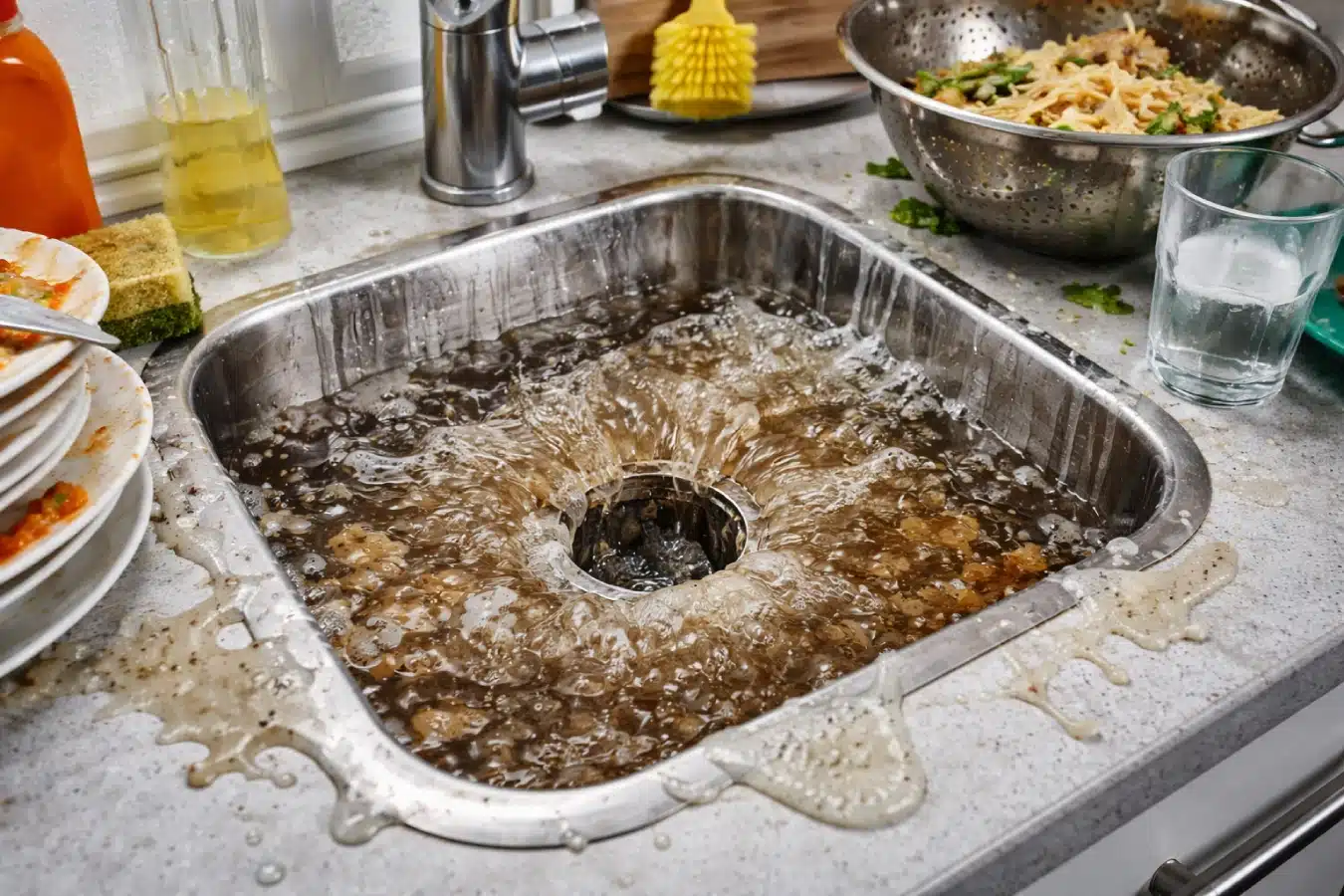
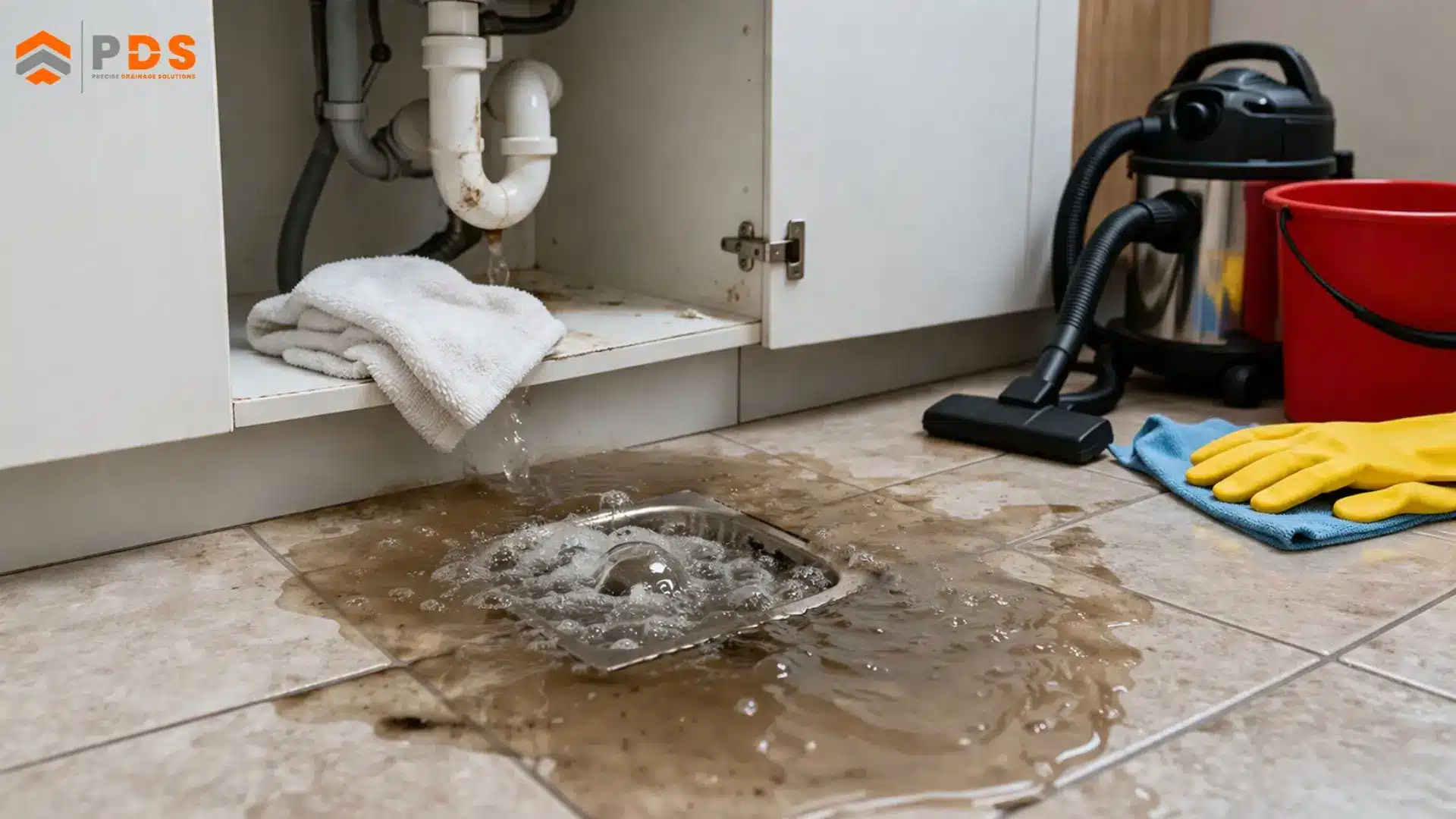
When a drain that used to work fine starts to overflow, a common question is, “Why is my drain overflowing?” In most cases, the problem has been getting worse over time.
Over time, partial blockages slow down the flow until the pressure rises. Eventually, the water is pushed back through the nearest outlet, which makes the overflow visible.
This is why it’s important to get help early, even if the symptoms seem small.
Immediate Steps You Can Take During A Drain Backup
When facing a drain backup, taking controlled steps may help limit the damage right away.
Things to do:
- Stop using all connected water fixtures
- Turn off washing machines or dishwashers
- Remove standing water where safe
- Keep affected areas ventilated
While you wait for an emergency drain service, these actions may help lower the pressure in the system.
Can Doing Things Yourself Help in an Emergency?
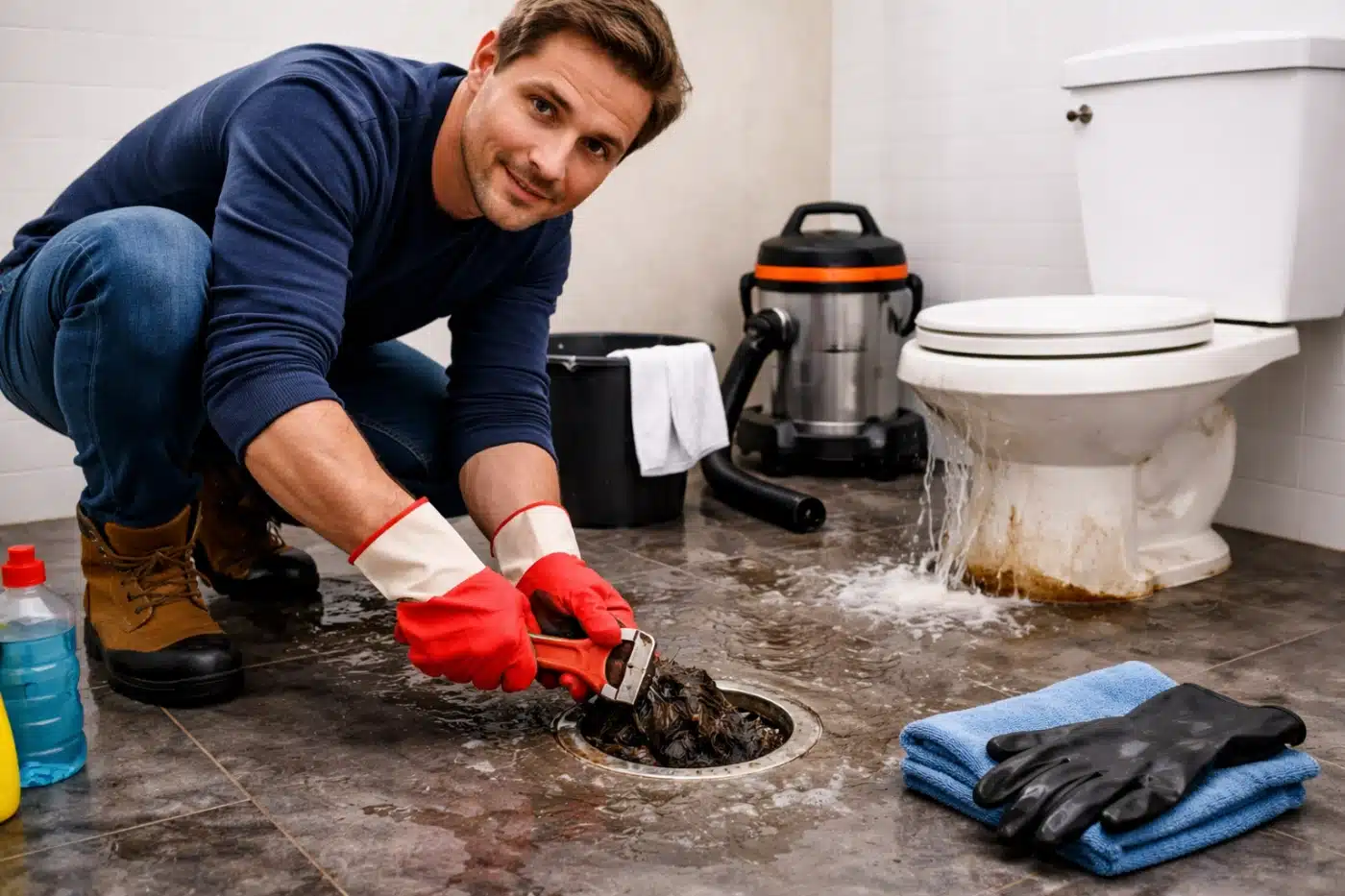
Some property owners attempt to figure out how to fix a blocked drain using basic tools. While small surface blockages may go away, bigger problems with the system often stay.
DIY methods may include:
- Using a plunger
- Clearing visible debris
- Flushing with warm water
But these usually work for a short time and may not resolve the real problem of drain overflow solutions.
When should you call an emergency plumber?
In some cases, it is best to get professional help right away.
You may need an emergency plumber if:
- Water is backing up rapidly
- Multiple drains are affected simultaneously
- External drains are overflowing
- Strong sewage odours are present indoors
These signs could mean that there is a bigger problem with the system or structure that needs special tools to correct.
Comparing Temporary Actions to Professional Responses
Approach | Focus | Outcome |
Temporary measures | Reduce immediate overflow risk | Short-term relief |
Professional inspection | Identify and resolve root cause | More reliable long-term outcome |
Temporary measures may help control the situation, but a professional evaluation makes sure the problem is correctly identified and fixed.
How to Reduce the Risk of Future Drain Backups
While it’s not possible to completely avoid all drainage problems, certain habits can significantly reduce the risk:
- Avoid disposing of grease in sinks
- Use drain strainers to catch debris
- Dispose of wipes and hygiene products properly
- Monitor early warning signs and act promptly
Preventive care can lower the chances of having problems again.
Protect Your Property with Expert Drainage Support from Precise Drainage Solutions
If you don’t handle a drain backup correctly, it can get worse rapidly. Temporary fixes might help with the immediate problem, but a long-term solution usually needs structured inspection and targeted intervention. Precise Drainage Solutions offers careful drainage services that are based on inspections and are meant to make problems clear and help you take the right next steps.
Contact us right away to set up your drainage consultation!
Frequently Asked Questions
1. What causes a drain backup most often?
Grease, trash, and things that can’t be flushed down the toilet often block pipes, which can eventually make water flow backward through the drainage system.
2. Can I fix a drain backup myself?
Basic methods may work for small problems, but for backups that happen often or are severe, you should call a professional.
3. How quickly should I act during a drain backup?
It is best to act right away to limit water damage and stop the system from getting more pressure.
4. Are drain backups dangerous?
Contaminated water may pose hygiene risks, so it’s important to limit contact with affected areas.
5. When should I call a drainage specialist?
If more than one fixture is affected or the overflow keeps happening, it’s usually best to call in a professional.