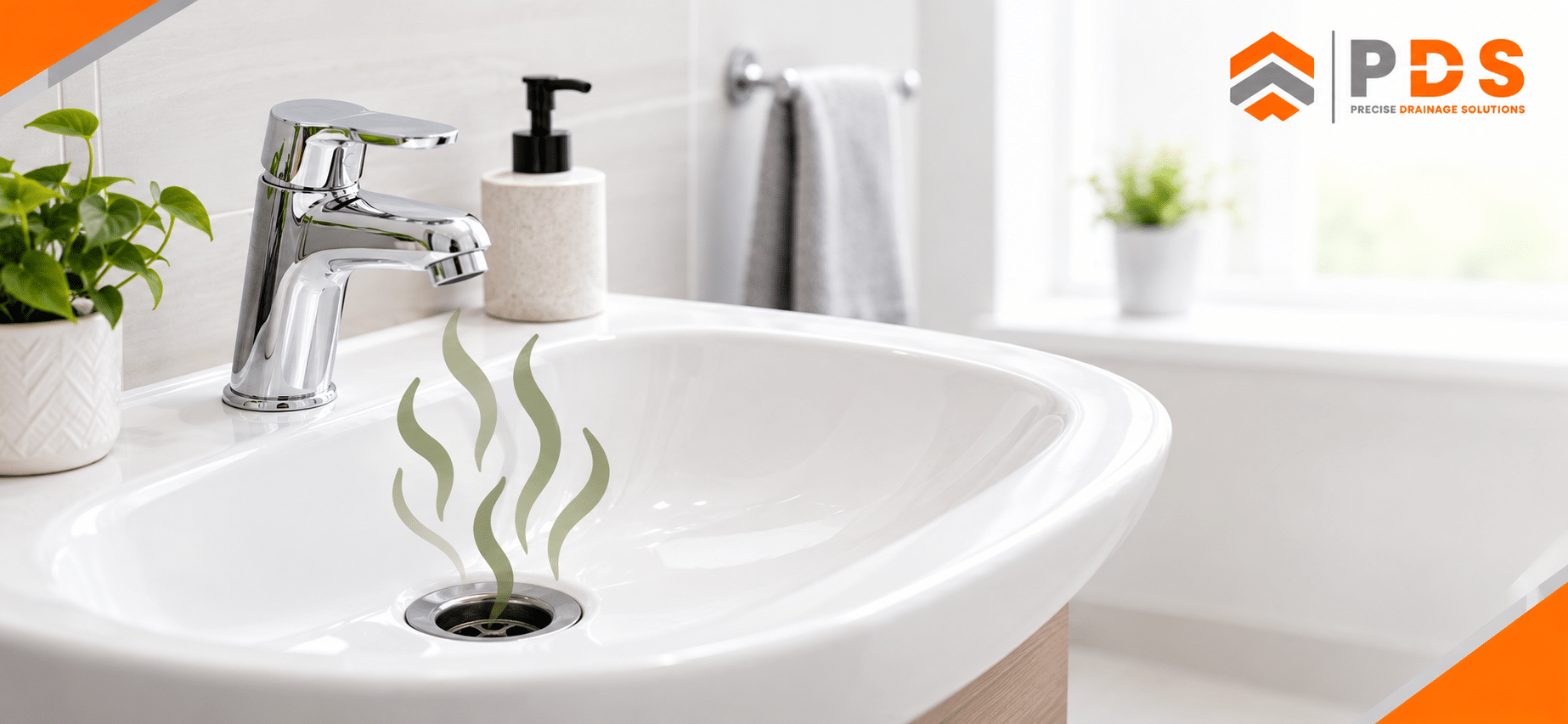
A smelly sink can make an otherwise clean bathroom feel unpleasant. If your bathroom sink smells, the cause is often trapped waste, bacteria or gases inside the drainage system. This guide explains what causes sink odours and what you can do to remove them before the problem becomes worse.
“Did you know? A small amount of organic waste trapped inside a drain can start decomposing and produce unpleasant odours, even when the sink looks completely clean.”
If bathroom sink smells continue despite regular cleaning, the issue may be deeper within the drainage system. Finding the source early can help prevent recurring odours and more serious drainage problems. Precise Drainage Solutions can provide practical drainage support when a simple clean is no longer enough.
Key Takeaways
- Sink odours commonly come from organic waste, bacteria or sewer gases.
- Hair, soap and residue can build up inside waste pipes.
- A dry or faulty trap can allow unpleasant gases into the bathroom.
- Regular cleaning can help reduce organic buildup.
- Rarely used sinks should be run periodically.
- Persistent sewage smells may indicate a deeper drainage issue.
- Recurring odours, slow drainage and leaks may require professional attention.
Start by Finding Where the Smell Comes From
Before treating the odour, try to identify its source. Run the tap for a few seconds, then smell around the plug hole, overflow opening and the area beneath the basin.
If the smell becomes stronger when water runs, there may be a buildup inside the waste pipe. If the odour remains even when the sink is unused, sewer gases or a drainage issue could be involved.
You may also wonder: why does my bathroom smell even though the basin, floor and surfaces have been cleaned? In many cases, the source is hidden inside the plumbing rather than on the visible surfaces.
Common Reasons Your Sink Smells
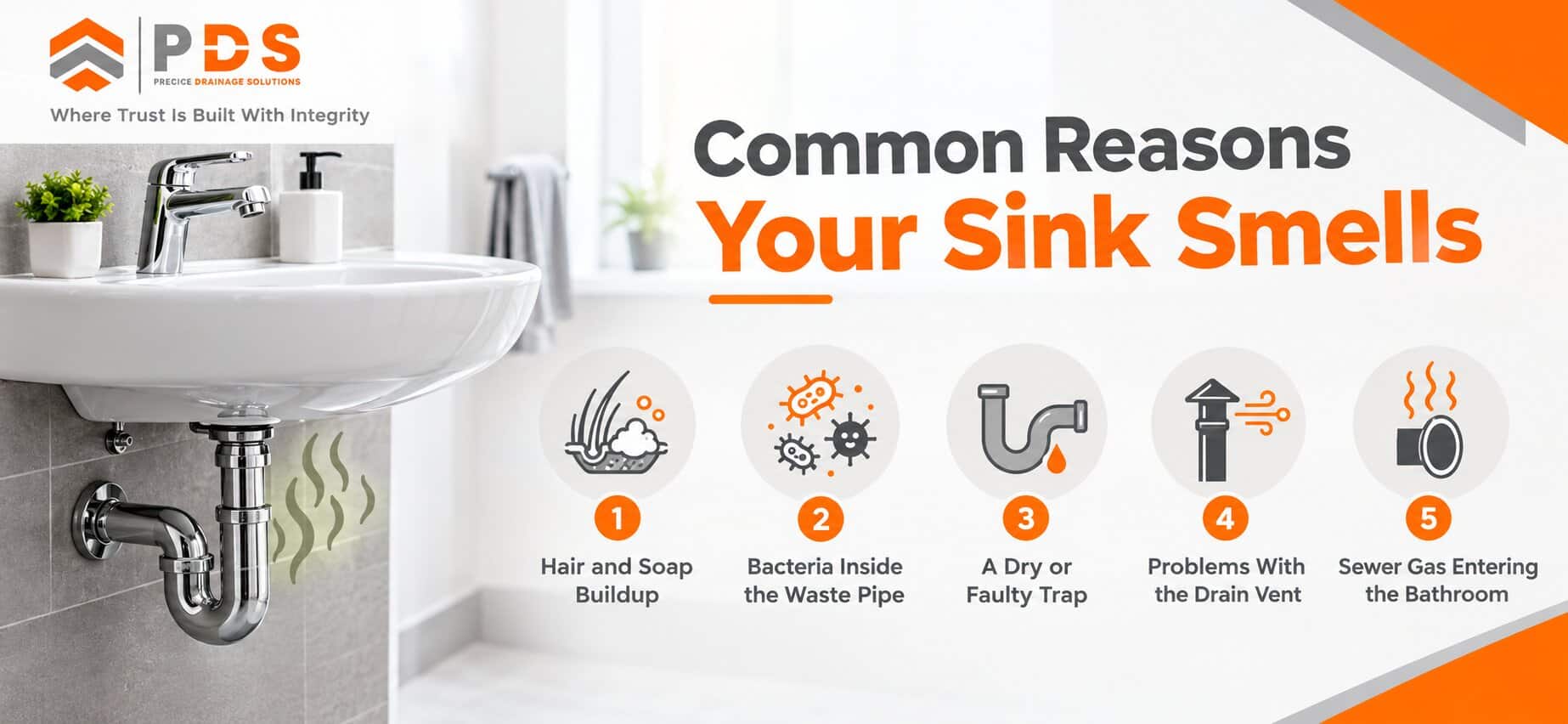
Several issues can create unpleasant smells around a bathroom basin. Understanding the likely cause makes it easier to choose the right solution.
1. Hair and Soap Buildup
Hair, soap residue, toothpaste and other materials can collect inside the waste pipe. Over time, this mixture can become sticky and trap additional debris.
As organic material breaks down, bacteria can grow around it. This can create a musty or rotten smell that rises through the plughole.
Regular cleaning can help prevent this buildup from becoming a larger drainage problem.
2. Bacteria Inside the Waste Pipe
Drains are naturally damp environments. When small amounts of dirt and organic matter remain inside the pipe, bacteria can multiply.
The resulting odour may become noticeable when the sink is used. Simply cleaning the surface of the basin will not remove bacteria deeper inside the pipe.
A proper drain-cleaning routine can help reduce this buildup.
3. A Dry or Faulty Trap
The trap beneath your sink holds a small amount of water. This water creates a barrier that helps stop sewer gases from entering your bathroom.
If the trap dries out, particularly in a sink that is rarely used, gases can travel back through the pipework.
A damaged or incorrectly fitted trap can cause a similar problem. In these cases, cleaning the basin alone will not solve the odour.
4. Problems With the Drain Vent
Drainage systems need proper ventilation to maintain air pressure and allow wastewater to flow correctly.
If a vent becomes blocked or damaged, pressure inside the system can change. This may contribute to slow drainage, bubbling sounds and unpleasant smells — similar to why drains gurgle after heavy rain.
Persistent bathroom smells may therefore point to a wider drainage or ventilation issue.
5. Sewer Gas Entering the Bathroom
A strong sewage-like odour should not be ignored. Sewer gases can enter through faulty traps, damaged seals, blocked vents or other plumbing problems.
If you are asking why does my bathroom smells like sewage, check whether the smell is strongest around a particular drain or plumbing connection.
A professional inspection may be needed when the source is not obvious.
How to Get Rid of Sink Odours?
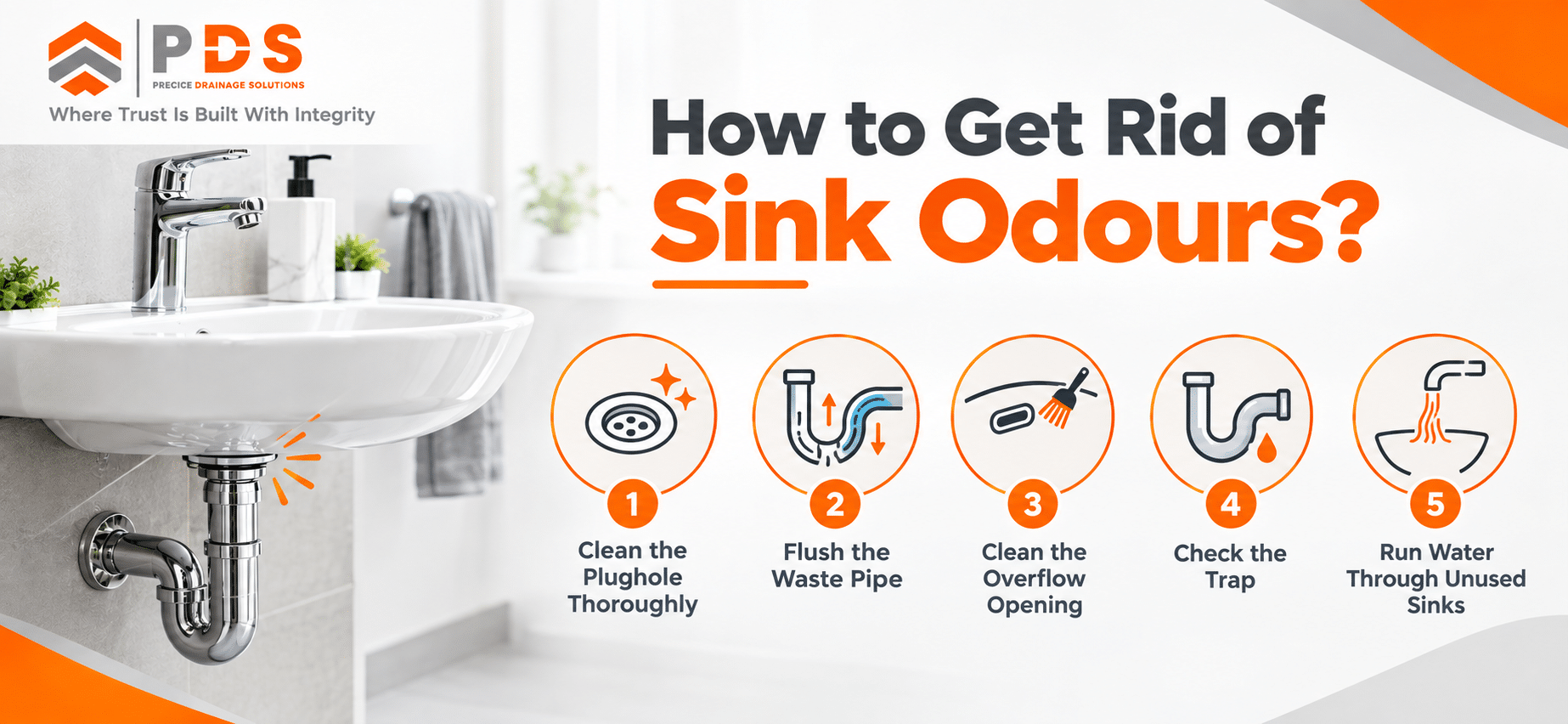
Once you have identified the likely cause, there are several practical steps you can take.
Clean the Plughole Thoroughly
Start by removing visible debris around the plughole. Hair and residue can often collect underneath the drain cover.
Use a suitable drain-cleaning method recommended for your plumbing system. Avoid mixing different chemical products, as this can create dangerous reactions.
Flush the Waste Pipe
Running warm water through the drain can help loosen some soap and residue. Do this regularly rather than waiting until a strong odour develops.
For stubborn buildup, a suitable biological or enzymatic drain cleaner may help break down organic material. Always follow the product instructions.
Clean the Overflow Opening
The overflow opening is easy to overlook. Water, toothpaste and other residue can collect inside it.
Use a suitable cleaning solution and a small brush to remove accessible buildup. Rinse the area afterwards.
Check the Trap
Look beneath the sink and check for leaks, damage or loose connections. A trap that is leaking or not holding water may allow unpleasant gases to enter the room.
If you are unsure how to inspect or remove the trap safely, it is better to have a qualified drainage professional handle it.
Run Water Through Unused Sinks
A rarely used basin can develop odours when the water inside its trap evaporates. A dry trap doesn’t just let smells through — it’s also one of the reasons drain flies start appearing in bathrooms. Running water through an unused sink periodically helps maintain the water barrier inside the trap.
What Not to Do When Your Sink Smells
Some quick fixes can make the situation worse. Avoid relying on harsh solutions without understanding the cause.
Keep these points in mind:
- Never mix different drain chemicals.
- Do not repeatedly use strong chemicals without checking the instructions.
- Avoid pushing objects deep into the drain.
- Do not ignore persistent sewage odours.
- Do not assume a clean basin means the pipework is clean.
- Do not ignore leaks beneath the sink.
If a smell keeps returning after cleaning, the issue may be deeper within the drainage system.
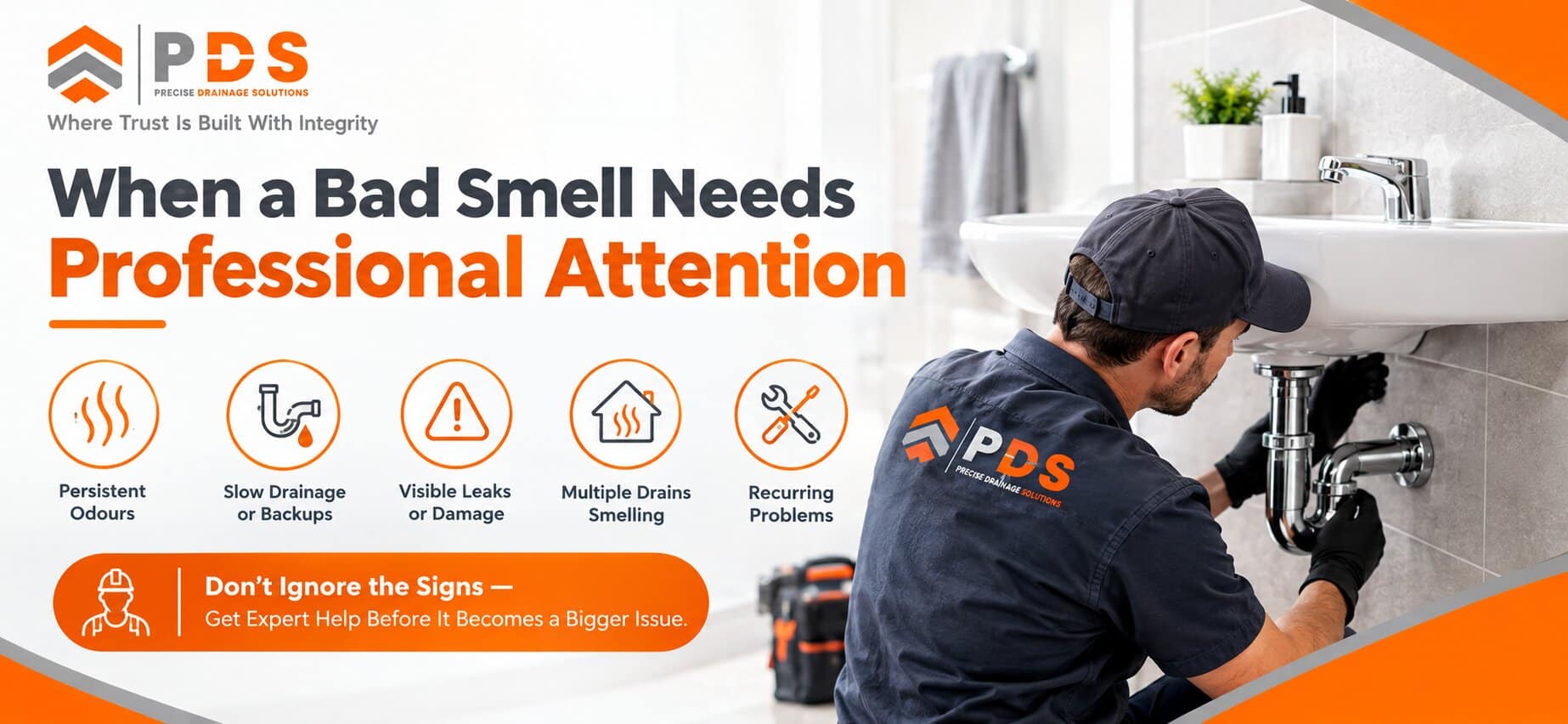
When a Bad Smell Needs Professional Attention
A temporary smell after a blocked or dirty drain may be relatively simple to deal with. However, recurring odours can indicate a plumbing problem that needs closer attention.
Professional help may be appropriate if you notice:
- A persistent sewage smell
- Slow or repeatedly blocked drainage
- Gurgling from the sink or nearby drains
- Water backing up through the basin
- Leaking or damaged pipework
- Odours returning soon after cleaning
- Several drains developing smells at the same time
A drainage specialist can inspect the pipework and identify whether buildup, damaged components, ventilation, or another issue causes the problem.
Could the Problem Be Coming From Another Drain?
Sometimes the sink is not actually the source of the smell. Nearby showers, baths, floor drains, or toilets can also release unpleasant odours.
For example, bathroom drain smells may become noticeable throughout the room because air moves between connected spaces.
Try checking each nearby drainage point rather than focusing only on the basin. This can help narrow down where the problem starts.
If there is a bad smell coming from bathroom drain areas that continues despite basic cleaning, professional drainage advice can help identify the underlying cause.
Keep Your Bathroom Drainage Fresh
A sink odour is often a sign that something is happening inside the drainage system. Decomposing organic waste, bacteria, trapped residue and sewer gases are among the most common causes.
For homeowners, the first step is to identify where the smell starts rather than simply covering it with air freshener. Cleaning accessible areas and maintaining regular water flow can help with minor issues.
However, persistent smells should be investigated, particularly when they occur alongside slow drainage, leaks or sewage-like odours.
Precise Drainage Solutions can help identify drainage issues and provide practical solutions when cleaning does not resolve the problem. Early attention can help prevent a minor drainage concern from becoming a more disruptive issue.
Frequently Asked Questions
1. Why does my bathroom sink smell even after cleaning?
The smell may be coming from inside the waste pipe, trap or overflow rather than the visible basin. Organic buildup and bacteria can remain hidden inside the plumbing.
2. Can a dry sink trap cause a bad smell?
Yes. A trap normally holds water that helps block sewer gases. If the water evaporates, unpleasant gases can travel through the drain.
3. How can I stop my bathroom sink from smelling?
Clean the plughole and overflow regularly, flush the waste pipe and run water through rarely used sinks. Persistent odours should be professionally investigated.
4. Is a sewage smell from a sink serious?
A persistent sewage smell can indicate a drainage or plumbing problem. Check the trap and surrounding pipework, and seek professional help if the smell continues.
5. When should I call a drainage professional?
Contact a professional when the odour keeps returning, several drains smell, drainage becomes slow, water backs up, or you notice leaks.