If your home suddenly develops a sewage smell, it should not be ignored. The odour can come from a dry trap, blocked drain, damaged pipe, or ventilation issue. Finding the source early can help prevent a small drainage problem from becoming a costly repair.
“Did you know? According to official UK government guidance on Nuisance smells: how councils deal with complaints, strong and ongoing outdoor smells can sometimes come from nearby sewage facilities, treatment plants, or agricultural activities.”
The good news is that many household drainage odours have identifiable causes. This guide explains what may be causing the smell, what you can safely check, and when professional drainage help is the better option.
Key Takeaways
- A sewage odour can have several possible causes.
- Dry traps are a common reason for smells from unused drains.
- Blockages can create odours as waste and bacteria build up.
- Damaged pipes and toilet seals may allow unpleasant gases to escape.
- Gurgling and slow drainage can indicate a deeper issue.
- Persistent smells should be investigated rather than masked.
- Professional drainage inspections can locate hidden problems.
- Regular maintenance can help reduce recurring drainage issues.
Where Is That Sewage Smell Coming From?
A sewage smell in a house can be caused by several parts of the drainage system. It does not always mean there is a major sewer problem.
Start by noticing where the odour is strongest. Check bathrooms, kitchens, utility rooms, toilets, and areas close to floor drains.
If the smell is strongest near one drain, the trap or pipework may be involved. If several rooms smell at once, the issue could be further along the drainage system.
A sewer smell may also become noticeable when water is not flowing correctly through the pipes. Slow drainage, bubbling sounds, and unpleasant odours can sometimes appear together.
Try to identify when the smell occurs. Does it happen after using the toilet? Is it worse after running the shower? Does it appear after heavy rain?
These details can help narrow down the cause before any repair work begins.
7 Common Causes of Sewage Odours in a Home
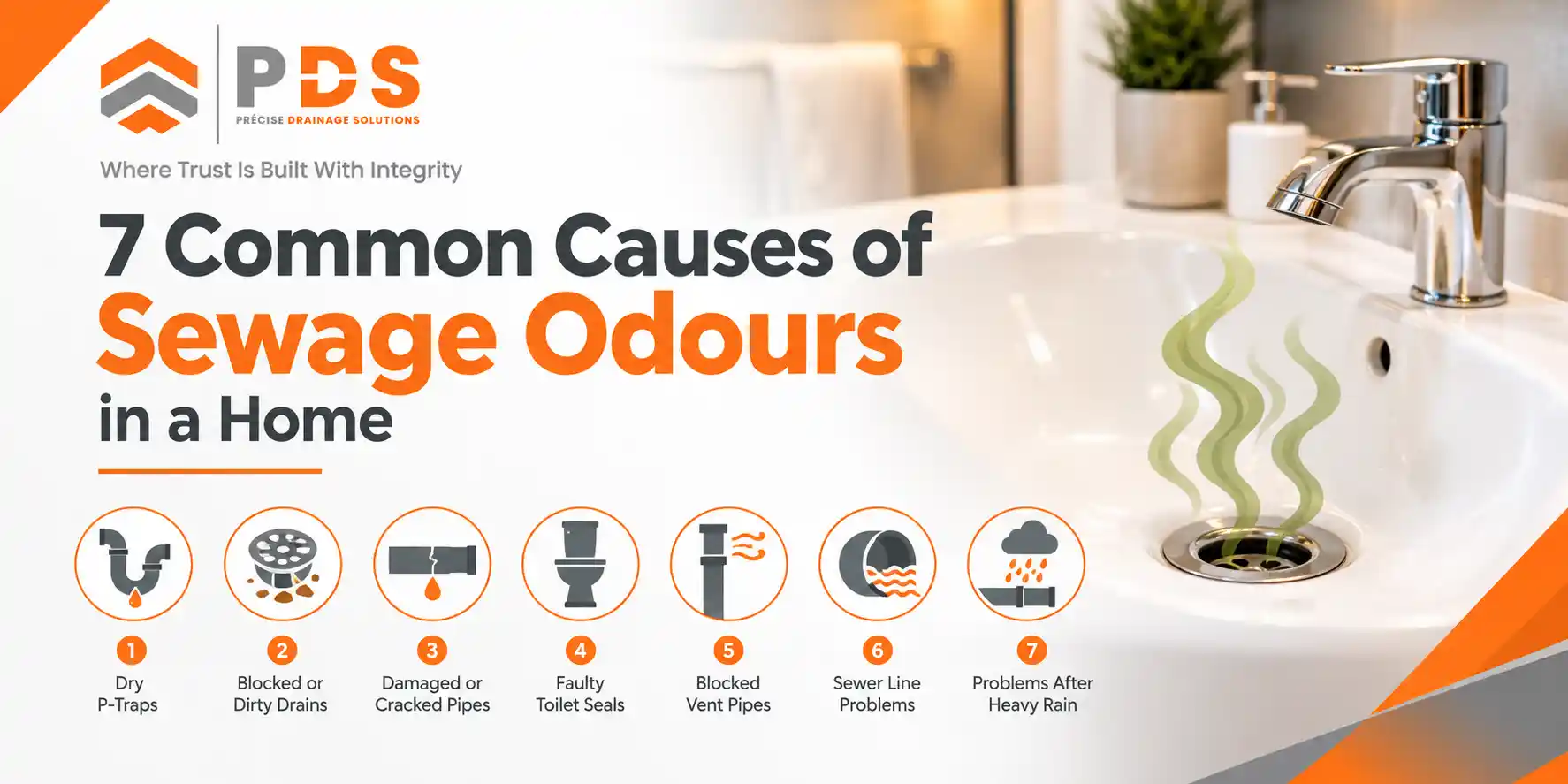
1. Dry P-Traps
A P-trap holds a small amount of water inside the pipe. This water acts as a barrier between your home and gases from the drainage system.
If a sink, shower, or floor drain is rarely used, the water can evaporate. Once the trap dries out, unpleasant gases can enter the room.
Pouring some water down an unused drain may restore the trap. If the smell returns quickly, there may be another issue that needs checking.
2. Blocked or Dirty Drains
Hair, soap, food waste, and other debris can build up inside drainage pipes. As the material collects, bacteria can grow and produce unpleasant odours.
This can lead to sewage smell from drains, particularly when water moves slowly through the pipe.
Regular drain cleaning can reduce build-up. However, a persistent smell alongside slow drainage may indicate a deeper blockage.
3. Damaged or Cracked Pipes
Drainage pipes can become damaged through age, ground movement, poor installation, or external pressure.
A cracked pipe may allow wastewater or gases to escape into areas where they should not be present.
If the odour is strong around walls, floors, cupboards or outside drainage points, professional inspection may be needed to locate the problem.
4. Faulty Toilet Seals
The seal around a toilet helps prevent water and drainage gases from escaping.
If the seal becomes damaged or loose, an unpleasant odour may develop around the base of the toilet.
Look for other warning signs too, such as damp flooring, movement around the toilet or water appearing after flushing.
Do not ignore these signs. A damaged seal can allow moisture to reach surrounding flooring and materials.
5. Blocked Vent Pipes
Drainage systems need proper ventilation to maintain pressure and allow gases to escape safely.
A blocked vent can affect how water moves through the system. It may also cause traps to lose water or create unpleasant odours indoors.
Signs can include gurgling drains, slow drainage and recurring smells despite cleaning.
6. Sewer Line Problems
A blockage or damage in the main sewer line can affect several drains throughout a property.
You may notice multiple fixtures draining slowly at the same time. Toilets may also bubble or water may back up through a low-level drain.
A sewer smell that affects several areas should be investigated rather than covered with air fresheners.
7. Problems After Heavy Rain
Heavy rainfall can place additional pressure on drainage networks. In some situations, outdoor drainage issues can contribute to unpleasant smells around a property.
How to Check the Problem Safely?
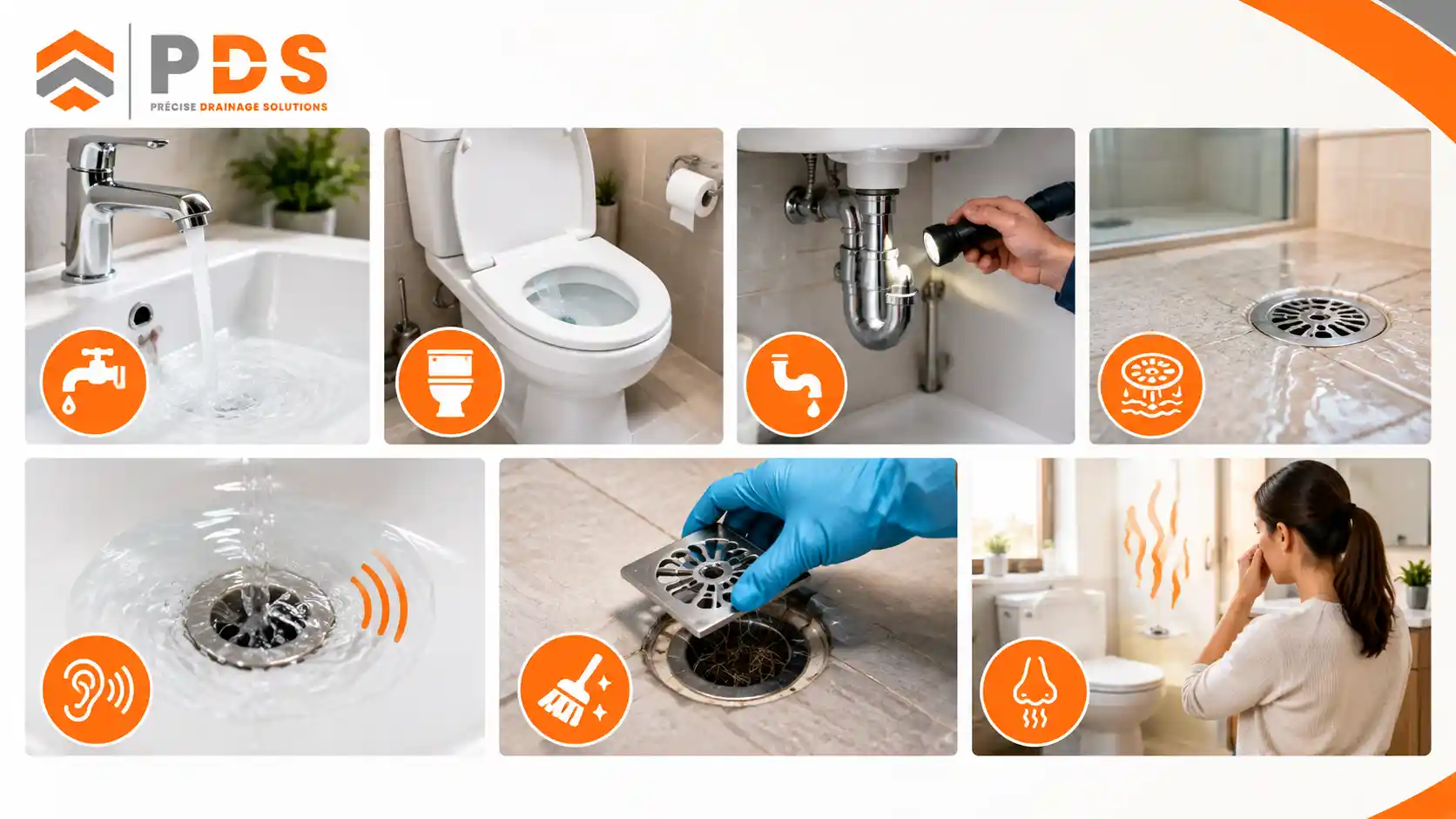
Before calling for professional help, there are a few simple checks you can make.
- Run water through rarely used sinks and floor drains.
- Check whether toilets flush and drain normally.
- Look for visible leaks under sinks and around toilets.
- Notice whether several drains are slow at the same time.
- Check for gurgling sounds when water drains away.
- Clean accessible drain covers and remove visible debris.
- Pay attention to when and where the odour becomes strongest.
Avoid pouring large amounts of harsh chemicals into drains. They may not solve the underlying problem and can create additional risks during later drainage work.
How to Get Rid of Persistent Drainage Odours?
Knowing how to get rid of sewage smell starts with finding its source. A dry trap may only need water restored, while a dirty drain may need thorough cleaning.
If the smell keeps returning, there may be a deeper issue. A drainage professional can check for blockages, damaged pipes or faulty connections.
CCTV drain inspections can help locate hidden problems without unnecessary digging. The right solution will depend on the cause of the odour.
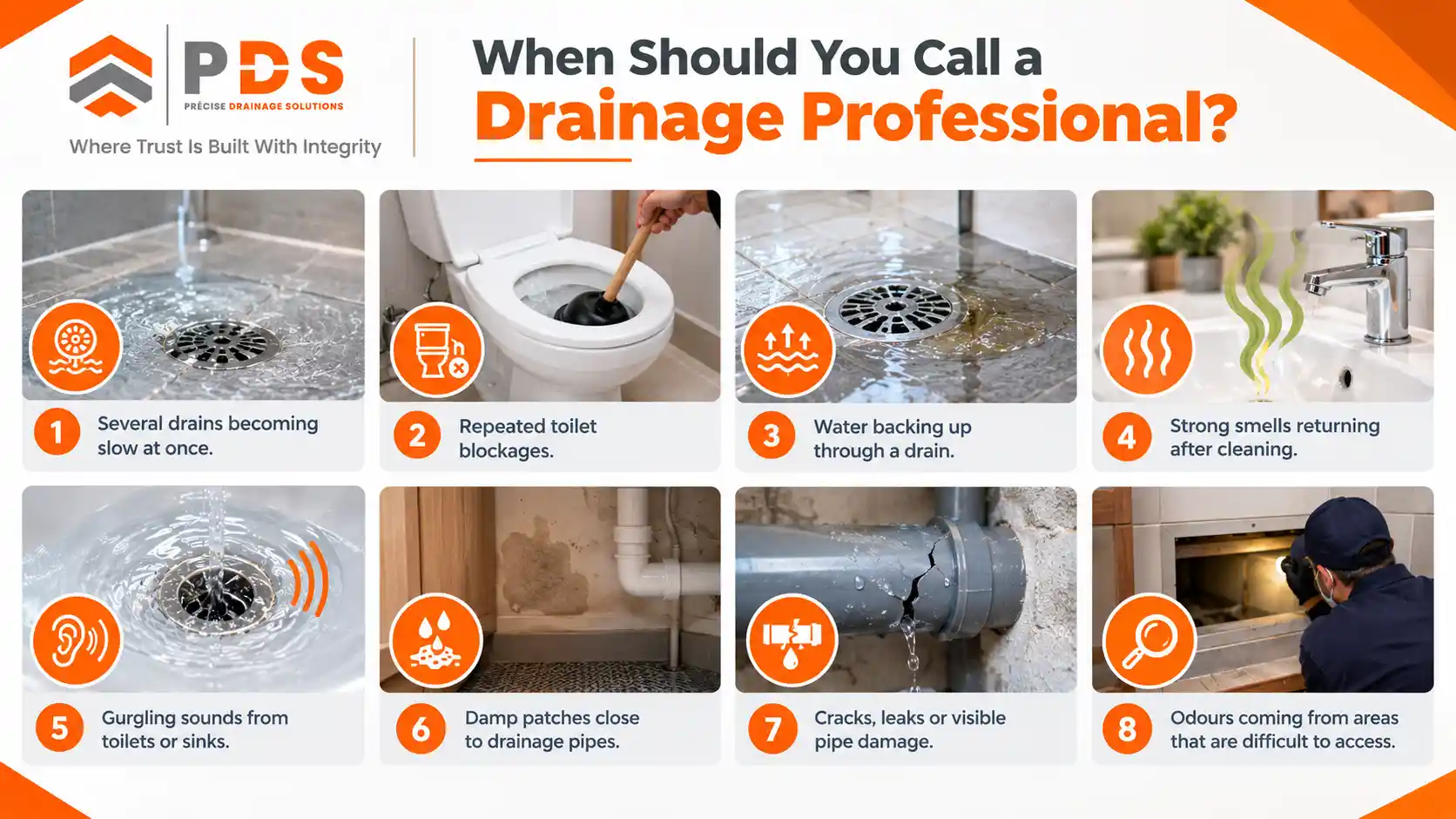
When Should You Call a Drainage Professional?
A persistent bad sewage smell should be taken seriously when it comes with other drainage problems.
Professional help is particularly useful if you notice:
- Several drains becoming slow at once.
- Repeated toilet blockages.
- Water backing up through a drain.
- Strong smells returning after cleaning.
- Gurgling sounds from toilets or sinks.
- Damp patches close to drainage pipes.
- Cracks, leaks or visible pipe damage.
- Odours coming from areas that are difficult to access.
These signs can indicate a problem deeper within the drainage system.
Simple Ways to Prevent Drainage Smells
Once the issue has been fixed, a few habits can help keep your drainage system in better condition.
Use rarely needed drains.
Run water through unused sinks, showers and floor drains regularly. This helps maintain the water barrier in their traps.
Keep waste out of drains.
Avoid washing grease, food scraps, coffee grounds and unsuitable materials down sinks. These can contribute to pipe build-up.
Watch for early warning signs.
Slow drainage and gurgling should not always be treated as minor inconveniences. They can appear before a more serious blockage develops.
Arrange regular checks
Older properties and drainage systems with a history of blockages may benefit from periodic professional inspections.
Act quickly after a recurring odour
A smell that repeatedly returns is worth investigating. Masking it with sprays does not address the source.
Prevent Drainage Smells Before They Start — Call Our Experts Today
What If the Smell Is Coming From Outside?
Not every odour around a property starts inside the drainage system.
Strong outdoor smells can sometimes come from nearby sewage facilities, treatment plants, agricultural activities or other external sources. UK government guidance explains that councils consider factors such as the source, frequency, duration and character of nuisance smells when assessing complaints.
If the smell is clearly coming from outside your property, note when it occurs and whether weather or wind direction affects it.
This information can help distinguish between a household drainage problem and an external source.
Get the Source Checked Before the Problem Grows
A recurring odour is often a warning that something within or around the drainage system needs attention. Acting early can help prevent blockages, leaks and more disruptive repairs.
If you have persistent drainage issues, Precise Drainage Solutions can help identify the likely cause and recommend an appropriate solution. Do not simply cover the smell with air fresheners. Finding and fixing the source is the more reliable approach.
Whether the problem is a dry trap, blocked pipe, damaged connection or another drainage fault, dealing with it properly can help keep your home cleaner, fresher and more comfortable. If you continue to notice a sewage smell, professional drainage advice can help determine what is happening and what needs to be done next.
Frequently Asked Questions
1. Why does my house smell like sewage?
The cause could be a dry trap, blocked drain, damaged pipe, faulty toilet seal or ventilation problem. Identifying where the smell is strongest can help narrow down the source.
2. Can a dry drain cause a sewage odour?
Yes. A dry trap loses its water barrier, which can allow drainage gases to enter the property. Running water through an unused drain may restore the seal.
3. Why does my bathroom smell worse after rain?
Heavy rain can place additional pressure on drainage systems. If the smell repeatedly appears after rainfall, check both internal drains and external drainage points.
4. When is a drainage smell a serious problem?
A recurring smell combined with slow drains, gurgling, backups, leaks or damp patches should be investigated promptly. These signs can indicate a deeper drainage problem.
5. Can professional drainage services find hidden causes?
Yes. Drainage professionals can use inspection methods such as CCTV surveys to examine pipework and identify blockages, cracks or other faults.