A soakaway and a septic tank serve different purposes in a property’s drainage system. A soakaway allows suitable water to drain into the surrounding soil, while a septic tank collects and partially treats household wastewater. Understanding soakaway vs septic tank can help homeowners choose the right system, prevent drainage problems and ensure their property meets the relevant UK requirements.
What Is a Soakaway?
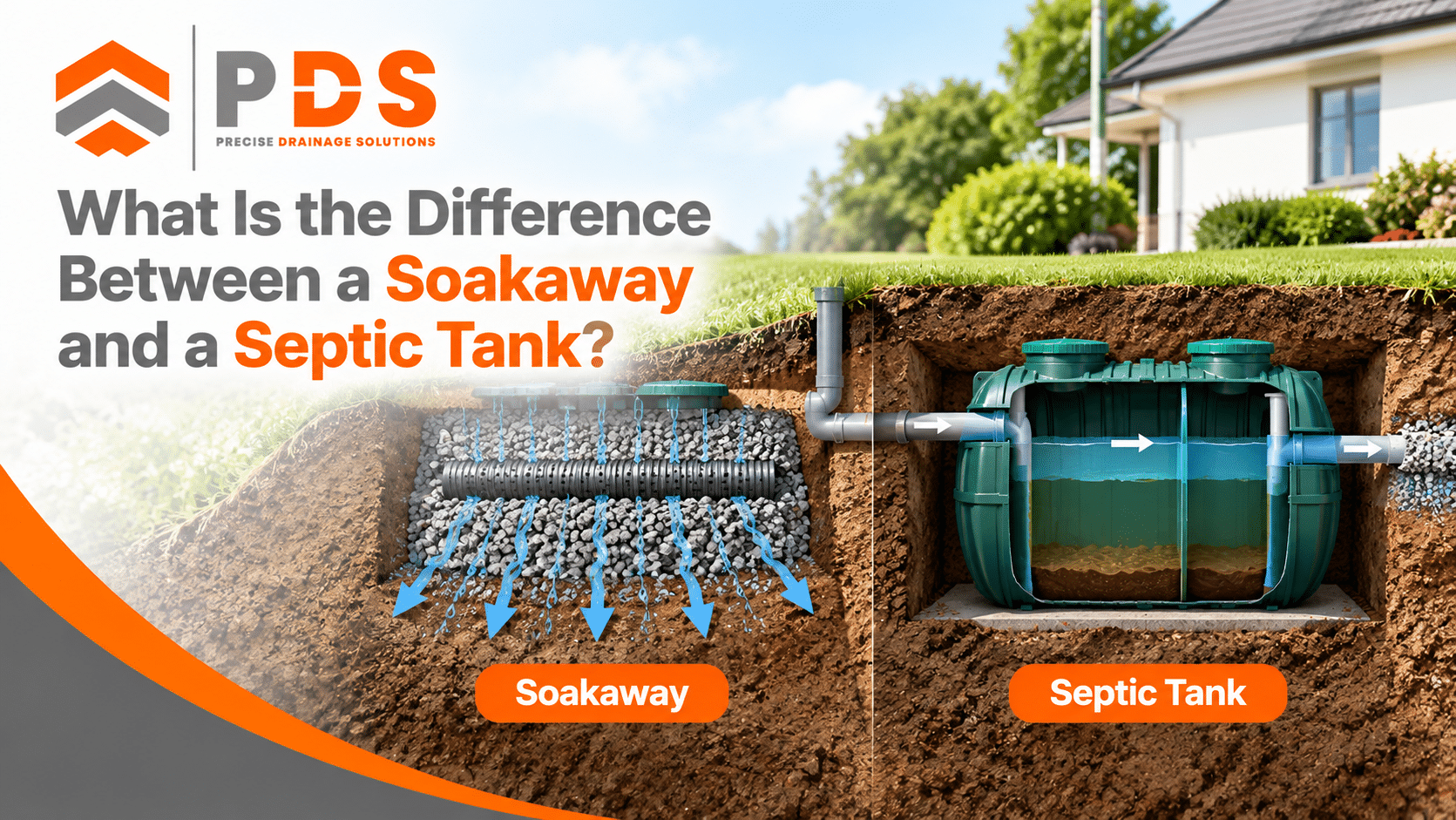
A soakaway is an underground structure that allows water to drain naturally into the surrounding soil. It usually collects rainwater from roofs, driveways and other hard surfaces. Some drainage arrangements also use a soakaway to disperse treated wastewater where permitted.
So, what does a soakaway do? It helps manage excess water by allowing it to soak gradually into the ground instead of collecting around your property or flowing directly into a nearby drain.
A typical soakaway contains a pit filled with suitable materials, such as clean stone or specially designed crates. These create space for water to collect before gradually filtering into the surrounding soil.
When Do You Need a Soakaway?
You may need a soakaway if your property has no suitable connection to a surface water drainage network or requires a way to manage rainwater on site.
Common situations include:
- Rainwater from roof gutters needs somewhere to drain.
- Water collects around your garden or driveway.
- Your property requires a suitable surface water drainage solution.
- A drainage design specifies a soakaway after checking ground conditions.
However, soakaways do not work equally well everywhere. Heavy clay soil may absorb water too slowly, while a high water table can affect performance. A site assessment can help establish whether the ground is suitable.
What Is a Septic Tank?
A septic tank is an underground tank that collects and partially treats wastewater from toilets, sinks, showers, baths, and other household plumbing. It is commonly used in properties that are not connected to the mains sewer.
Inside the tank, heavier waste settles at the bottom as sludge, while lighter materials form a layer of scum. Naturally occurring bacteria help break down some organic matter. The remaining liquid, known as effluent, then needs further treatment or disposal through an appropriate system.
A septic tank does not make wastewater safe to release anywhere. Its discharge arrangements must meet the relevant environmental requirements.
When Do You Need a Septic Tank?
A septic tank may be suitable when your property is not connected to a public sewer and needs an independent system for household wastewater.
You may need one if:
- You live in a rural home without mains sewer access.
- Your property needs on-site wastewater treatment.
- A suitable alternative treatment system is not appropriate.
- Ground conditions and environmental requirements allow a compliant installation.
Before installing a septic tank, check the available drainage options, the number of people using the property, and the requirements for treating and discharging wastewater.
Soakaway vs Septic Tank: What Are the Main Differences?
The main difference is their purpose. A soakaway manages water by allowing it to enter the ground, while a septic tank collects and treats household wastewater.
Although both may be installed underground, they are not interchangeable.
Feature | Soakaway | Septic tank |
Main purpose | Allows suitable water to drain into the ground | Collects and partially treats household wastewater |
Typical use | Rainwater drainage | Wastewater from toilets, bathrooms and kitchens |
How it works | Stores water temporarily before it infiltrates the soil | Separates solids from liquid and supports biological breakdown |
Maintenance | Needs checks for blockages and poor drainage | Requires inspection and periodic emptying |
Ground conditions | Soil must allow water to soak away effectively | Installation and discharge arrangements must suit the site |
Common location | Gardens, yards and suitable outdoor areas | Underground, with access for inspection and emptying |
Wondering whether you need a soakaway or a septic tank? Contact our drainage experts today!
Can a Property Have Both Systems?
Yes. A property may have both a soakaway and a septic tank because they can serve different drainage needs.
For example, a rural house might use a septic tank for household wastewater and a separate soakaway for rainwater from the roof. Keeping these systems separate helps prevent rainwater from overloading the wastewater treatment arrangements.
Some septic tank installations also use a purpose-designed drainage field to disperse treated effluent. This is not the same as a standard rainwater soakaway, and the correct arrangement depends on the site’s design and applicable rules.
How Does a Soakaway Work With a Septic Tank?
Understanding soakaway drainage helps show how these systems differ. A rainwater soakaway allows water to drain into the soil, while a septic tank collects and partially treats household wastewater.
Treated wastewater may pass into a properly designed drainage field for further treatment. A septic tank should not discharge untreated wastewater into an ordinary soakaway, as this can cause pollution and breach environmental rules.
When Do You Need a Soakaway for Wastewater?
If your property uses a septic tank, you may need a suitable drainage field or another compliant discharge arrangement for the effluent. Whether a soakaway-style arrangement is permitted depends on the system design and current requirements.
Before choosing a solution, arrange an assessment of the soil, groundwater levels, available space and nearby watercourses. These factors affect how wastewater can be safely managed.
What Should You Check Before Installing Either System?
Choosing between these systems involves more than comparing their costs. You need to understand your property’s drainage needs and the conditions on your land.
Check the following before making a decision:
- Water source: Establish whether you need to manage rainwater or household wastewater.
- Soil conditions: Check how quickly water moves through the ground.
- Available space: Ensure there is enough suitable land for the proposed installation.
- Groundwater levels: Consider whether the water table could affect drainage or cause pollution.
- Maintenance access: Allow space for inspections, cleaning and septic tank emptying.
- Existing drainage: Check whether the property already has a sewer connection or an established private system.
These checks can prevent poor drainage, unnecessary installation costs and problems with neighbouring land.
Need professional soakaway or septic tank installation? Call our drainage experts now!
What Are the UK Rules for Soakaways and Septic Tanks?
The rules depend on the type of system, its location and what it receives or discharges.
- For surface water, soakaway building regulations UK requirements include relevant building standards and site suitability. Building Regulations guidance covers drainage design, while planning requirements may also apply to particular projects.
- Septic tanks must meet the relevant environmental rules for wastewater treatment and discharge. In England, for example, septic tanks must not discharge directly into a watercourse; a suitable drainage field or another permitted arrangement may be required.
- Rules can differ across England, Wales, Scotland and Northern Ireland. Before starting work, check the guidance for your location and seek advice from the relevant building control body or environmental regulator.
How Can You Choose the Right System for Your Home?
If you are asking, ” Do I need a soakaway or septic tank, start by identifying the water you need to manage.
Question | Best fit | Why |
Do you need to manage rainwater drainage? | Soakaway | Suitable where the soil and site conditions allow rainwater to disperse safely. |
Do you need on-site treatment for household wastewater? | Septic tank | Appropriate where a suitable sewer connection is unavailable and treated effluent can be discharged correctly. |
Could you need both? | Both systems | One manages water drainage, while the other treats wastewater; some properties may require both. |
The septic tank vs soakaway system comparison highlights their different purposes. A soakaway drains water, while a septic tank treats wastewater. Some properties need both.
In England, septic tank effluent must not enter a rainwater soakaway or watercourse. Ask a drainage professional about suitable options.
Get the Right Drainage Solution for Your Property
Choosing the right drainage arrangement helps protect your home, garden and surrounding environment. Understanding soakaway vs septic tank is a useful first step, but the best option depends on your property’s needs and ground conditions.
If you need advice on an existing system or a new installation, contact Precise Drainage Solutions for practical guidance on finding a suitable drainage solution.
Key Takeaways:
- A soakaway allows suitable water to drain into the surrounding soil.
- A septic tank collects and partially treats household wastewater.
- A property can use both systems for separate drainage purposes.
- Soil type, groundwater levels, and available space affect system suitability.
- Septic tanks need compliant effluent disposal and regular maintenance.
- Check local building and environmental requirements before installation.
Frequently Asked Questions
1. Is a soakaway the same as a septic tank?
No. A soakaway allows suitable water to enter the ground, while a septic tank collects and partially treats household wastewater. They serve different purposes.
2. Can a septic tank drain into a soakaway?
A septic tank should not discharge untreated wastewater into an ordinary soakaway. Treated effluent needs a suitable, compliant disposal arrangement, such as an appropriately designed drainage field where permitted.
3. How long does a soakaway last?
A well-designed soakaway can last for many years, but its lifespan depends on the materials, installation quality, soil conditions, and maintenance. Blockages and poor infiltration can reduce its performance.
4. Does a septic tank need regular emptying?
Yes. Septic tanks need periodic emptying to remove accumulated sludge. The required frequency depends on tank size, household use,e and the amount of waste collected. Follow professional advice and the manufacturer’s guidance.
5. How do I know whether my property needs a soakaway or septic tank?
Check whether you need to manage rainwater or treat household wastewater. Soil conditions, sewer access, available space and environmental rules will also affect your options. A professional assessment can help identify a suitable system.