Slow-draining sinks, recurring blockages and chalky deposits can indicate that your pipes need attention. Hard water is a common cause, as it leaves mineral deposits that gradually narrow the space water flows through. Knowing the right drain descaling frequency helps homeowners keep their drainage systems working properly and avoid unnecessary repairs. However, there is no single schedule that suits every property.
The right timing depends on water hardness, pipe condition, daily usage and previous drainage problems.
What Is Drain Descaling and Why Does It Matter?
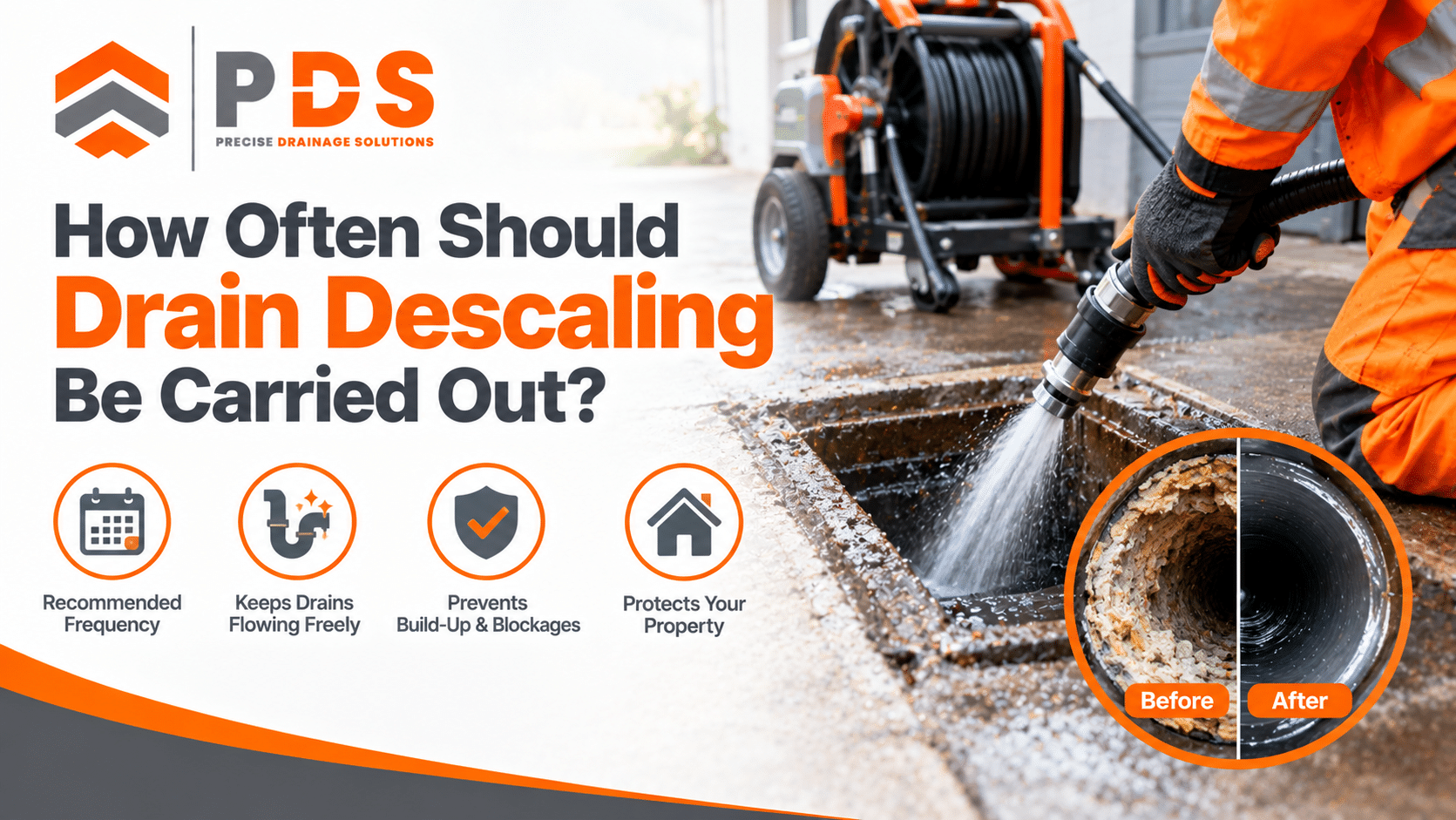
Drain descaling is the process of removing hardened mineral deposits from inside drainage pipes. These deposits often form in hard water areas and can gradually build up on pipe walls, restricting water flow and allowing waste to collect.
Regular descaling, when needed, helps maintain smooth water flow, reduce recurring blockages and prevent heavy deposits from causing further problems. However, not every drain needs descaling on a fixed schedule. It is best carried out when inspections reveal scale buildup or when a drainage system has a history of related issues.
How Often Should Drain Descaling Be Carried Out?
The ideal schedule depends on how quickly deposits form and whether your pipes have experienced problems before. A property in a hard water area may need more frequent inspections than one where mineral buildup is less common.
As a general maintenance guide, consider the following intervals. These are starting points rather than fixed industry rules.
- Every 1–2 years: Consider an inspection for drains with a known history of heavy limescale or recurring restrictions.
- Every 2–3 years: Review drainage conditions in properties with moderate scaling concerns, particularly if previous inspections have identified deposits.
- Every 3–5 years: A routine inspection may be sufficient for well-maintained systems with little evidence of scaling, although the need for descaling should depend on the findings.
These timeframes are only general guides. A professional inspection can confirm whether descaling is needed. Consider water hardness, pipe material, system age, drainage layout and previous blockages when planning maintenance.
Which Signs Suggest Your Pipes Need Descaling?
Your drainage system may show warning signs when scale begins to restrict the internal pipe diameter. These symptoms do not always mean limescale is the cause, but they are worth investigating.
Common signs your pipes need descaling include:
- Slow drainage: Water takes longer than usual to leave sinks, baths or showers.
- Recurring blockages: The same drain becomes blocked again shortly after cleaning.
- Unusual gurgling: Air struggles to move through a restricted drainage system.
- Persistent deposits: Chalky or crusty material appears around accessible outlets and fittings.
- Repeated drainage problems: Standard cleaning offers only temporary relief.
Pay attention to whether one fixture or several are affected. A single slow sink may have a local blockage, while problems across multiple fixtures could point to a restriction further along the drainage system.
Do not assume that every blockage needs descaling. Grease, hair, wipes, tree roots and damaged pipes can cause similar symptoms. A suitable inspection helps establish the cause before treatment begins.
What Causes Limescale Buildup in Drains?
Limescale buildup in drains occurs when minerals in hard water, particularly calcium and magnesium compounds, accumulate on internal surfaces. As water passes through the system, deposits can gradually harden and become more difficult to remove.
Several factors can influence how quickly this happens.
- Hard water: Higher mineral content can increase the likelihood of scale formation.
- Frequent water use: Busy households and commercial premises move more water through their drainage systems.
- Pipe condition: Existing rough surfaces, corrosion or damage may encourage deposits and other material to collect.
- Limited maintenance: Early restrictions may go unnoticed until water flow becomes noticeably slower.
Kitchen and bathroom drains can also collect grease, soap residue and other waste. These materials are not the same as limescale, although they can combine with deposits and contribute to restricted flow.
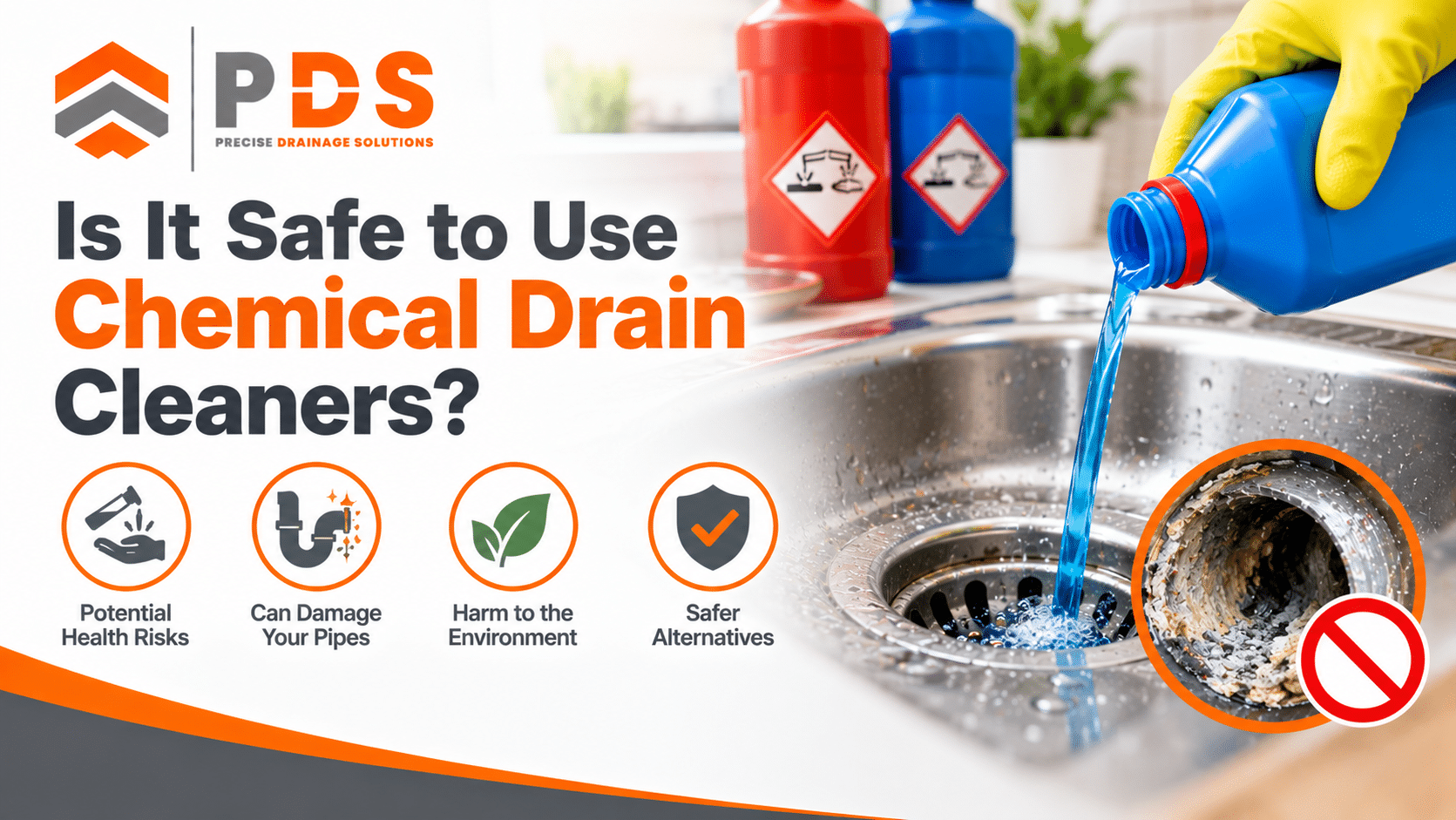
Avoid pouring strong chemicals into drains in an attempt to remove hardened scale. Some products may damage unsuitable pipe materials or create hazards when mixed with other cleaners.
Wondering how often your drains need descaling? Contact our drainage experts today!
What Is the Difference Between Descaling and Jetting?
Understanding the descaling vs jetting difference helps you choose the right drainage treatment.
Drain descaling removes hardened mineral deposits from inside pipes, often using specialist mechanical equipment. High-pressure water jetting uses controlled water pressure to clear suitable blockages and remove loose waste, grease and debris.
Both methods may be used together, depending on the problem. The right approach depends on the pipe’s material, condition and the type of blockage. A professional inspection helps ensure the safest and most effective treatment.
How Often Should Commercial Pipes Be Descaled?
Commercial drainage systems may need closer monitoring because they often handle higher volumes of water and waste. Restaurants, hotels, food preparation facilities and busy public buildings can experience different drainage pressures from ordinary homes.
When deciding how often to descale commercial pipes, consider:
- Business activity: Food-related premises may face additional grease and residue problems.
- Daily usage: High occupancy and continuous operation can increase the demand on drainage systems.
- Previous maintenance records: Repeated restrictions may justify more frequent inspections.
- Pipe condition: Older or damaged systems may need a tailored maintenance plan.
There is no fixed descaling schedule for every business. Sites with recurring scale problems may need annual inspections, while others may require less frequent checks. Planned maintenance helps identify issues early and reduces disruption to daily operations.
Need professional drain descaling? Call our drainage experts now!
How Can You Reduce the Need for Frequent Descaling?
Although you cannot always prevent mineral deposits from forming, sensible maintenance can help keep drainage systems in better condition.
Try these practical steps:
- Remove grease correctly: Let cooking fat cool and dispose of it in the bin rather than pouring it down the sink.
- Use drain strainers: Catch hair, food scraps and other solid waste before it enters the pipes.
- Avoid flushing unsuitable items: Put wipes, sanitary products and similar waste in the bin.
- Act on early warning signs: Arrange an inspection if slow drainage keeps returning.
- Keep maintenance records: Note previous blockages, cleaning visits and professional recommendations.
These habits reduce the amount of waste entering your drains, although they cannot stop limescale from forming where water hardness is the main cause.
If you live in a hard water area, ask a drainage professional whether periodic inspections would be useful for your property. Avoid using aggressive descaling products unless they are suitable for your particular drainage system.
Keep Your Drains Working Properly
A sensible maintenance plan can help prevent recurring restrictions and keep your drainage system working as expected. The right drain descaling frequency depends on your property’s water supply, pipe condition and drainage history, so avoid following a fixed schedule without considering these factors.
If you have noticed persistent slow drainage or repeated blockages, Precise Drainage Solutions can help assess the problem and recommend suitable maintenance. Contact our team to discuss your drainage concerns and find a practical way to keep your pipes in good condition.
Key Takeaways:
- Descaling frequency depends on water hardness, pipe condition and previous drainage problems.
- Suggested inspection intervals are guides, not fixed requirements for every property.
- Slow drainage and recurring blockages may indicate scale or another underlying issue.
- Descaling removes hardened deposits, while jetting mainly clears suitable blockages and loose waste.
- Commercial premises should follow a maintenance plan based on usage and drainage risks.
- Professional inspections help identify the cause of restrictions and prevent unnecessary treatment.
Frequently Asked Questions
1. Can drain descaling be carried out too often?
Yes. Unnecessary treatment can add expense and may place unsuitable pipes at risk if the wrong equipment is used. Arrange descaling when inspections or recurring problems indicate that it is needed.
2. Does every slow drain need descaling?
No. Slow drainage can result from hair, grease, food waste, foreign objects or damaged pipes. An inspection helps determine whether mineral deposits are responsible.
3. Can I remove limescale from drains myself?
Minor deposits around accessible fittings may be manageable with suitable cleaning methods. Hardened scale inside pipes usually requires specialist assessment and equipment. Avoid harsh chemicals that may damage pipework.
4. Does hard water mean I need annual descaling?
Not necessarily. Hard water increases the potential for mineral deposits, but it does not mean every drain needs yearly treatment. Your maintenance schedule should reflect the actual level of scaling and pipe condition.
5. How can I tell if my drains need professional attention?
Recurring blockages, persistent slow drainage, unusual gurgling or repeated cleaning with little improvement are good reasons to arrange an inspection. Seek help promptly if several fixtures are affected or wastewater backs up.