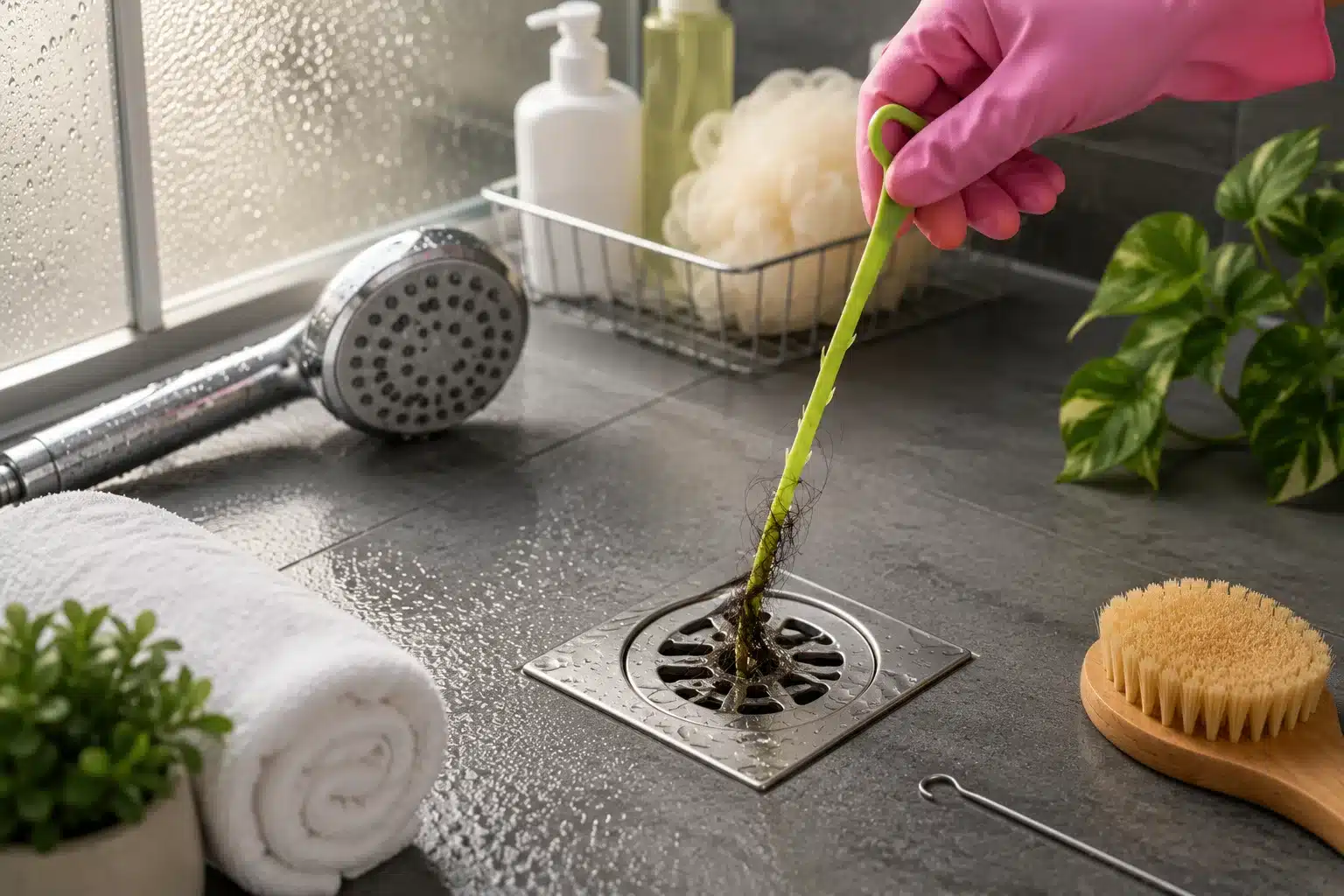
Standing water in your shower isn’t just an annoyance. It’s often an early sign of a developing blockage. Over time hair, soap scum and everyday gunk build up inside the pipe, constricting the water flow. Homeowners should act on these warning signs promptly to prevent bigger drainage issues at Precise Drainage Solutions. If you’re looking to unblock shower drain problems before they worsen, understanding the cause is the first step in restoring proper drainage.
Did you know? According to the UK government’s guidance on the maintenance of private drains, homeowners are generally responsible for drains that are within the boundary of their property, so regular maintenance is the best way to avoid unnecessary drainage problems.
Rather than waiting for water to stop draining altogether, simple maintenance and early intervention can help keep your bathroom drainage system operating efficiently throughout the year.
Key Takeaways
- The most common causes for a clogged shower drain are hair and soap scum.
- Regular cleaning helps to avoid recurring drainage problems.
- Minor clogs can become big plumbing problems if not handled early.
- Avoid overuse of chemical cleaners, as they may not fix the root cause.
- If you keep getting blocked drains, a professional inspection is well worth the money.
Why do shower drains become blocked so often?
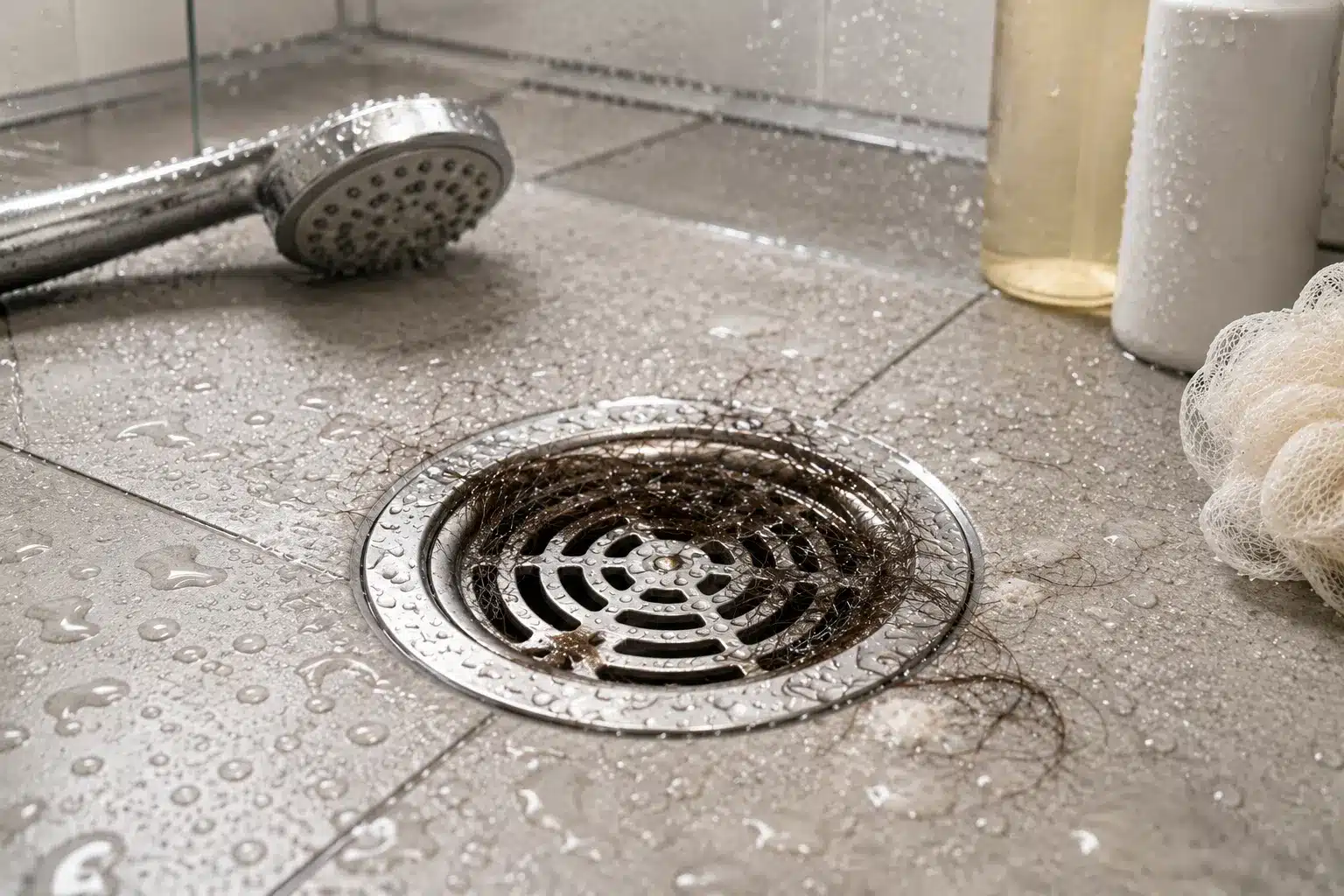
Shower drains are more likely to catch hair, soap, shampoo and other everyday debris than kitchen drains. These materials slowly stick to each other, and the inside diameter of the pipe gets smaller until water starts draining more slowly.
Some of the most common causes include:
- Hair accumulation
- Soap scum
- Shampoo and conditioner residue
- Hard water mineral deposits
- Dirt and body oils
- Small foreign objects entering the drain
Since these blockages build up over time, many homeowners don’t realise there is a problem until standing water begins showing up during showers.
What are the first warning signs of a blockage?
Early signs often appear long before the drain is completely blocked.
It becomes a great deal easier to solve the problem and decreases the likelihood of major drainage issues arising if you catch the signs early.
Look for signs such as:
- Water draining more slowly than usual
- Pooling water around your feet
- Unpleasant odours from the drain
- Gurgling sounds after showering
- Water backing up unexpectedly
Book an expert drain inspection today and stop blockages before they escalate.
What's the safest way to clear a shower drain?
Many homeowners search for how to unclog a shower drain when water begins draining slowly. The safest approach usually involves removing accessible debris before considering stronger cleaning methods.
Helpful steps include:
- Remove the drain cover.
- Carefully extract visible hair and debris.
- Rinse the drain with hot (not boiling) water where appropriate.
- Clean the drain cover thoroughly before replacing it.
- Monitor drainage performance over the following days.
If the blockage remains after basic cleaning, it may be located deeper within the pipework.
Should you rely on chemical drain cleaners?
Chemical products may help to dissolve some surface build-up, but they are not always effective against compacted hair clogs or more serious obstructions. Improper use can also cause damage to specific types of pipework over time.
Homeowners searching for how to unblock a shower drain should remember that cleaning the physical obstruction is generally more effective than relying solely on chemical treatments.
Repeated chemical use can often lead to the need for professional investigation of the problem.
Choose expert drain care for fast, safe, and long-lasting blockage removal.
How can you stop shower drains from blocking again?
Preventative maintenance is often the easiest solution.
Simple habits include:
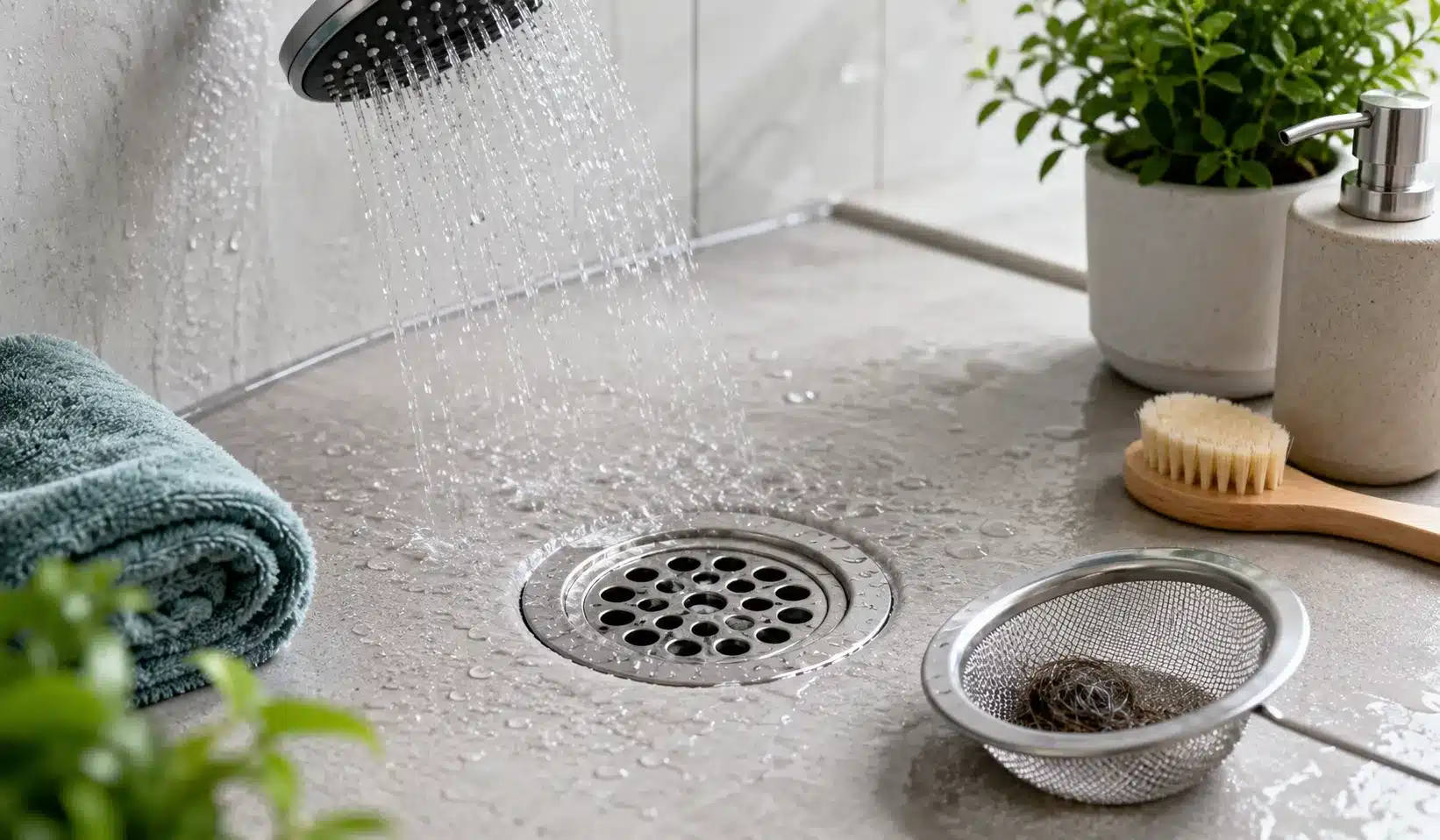
- Remove loose hair after every shower.
- Install a quality hair catcher.
- Clean drain covers regularly.
- Flush the drain periodically with warm water.
- Arrange professional maintenance if recurring issues develop.
Using a suitable bathroom drain unblocker occasionally may help remove minor residue, but routine cleaning remains the most effective long-term prevention strategy.
Could the problem be affecting more than one drain?
If your shower drain is slow and you also notice a blocked bathroom sink, the problem may affect more than one fixture. Slow-draining appliances can sometimes signal restrictions further down the property’s drainage system.
In these cases, repeated DIY cleaning may not fix the underlying cause. Professional drainage inspections can help determine whether the problem is a localised blockage or something larger in the pipework.
Early diagnosis often prevents more extensive repairs later.
When is it time to call a drainage specialist?
Routine maintenance can often clear small clogs of hair, but stubborn clogs will need the attention of a professional.
Professional drainage services may be appropriate when:
- The drain repeatedly blocks.
- Water backs up despite cleaning.
- Bad odours persist.
- Several bathroom fixtures drain slowly.
- DIY methods no longer improve drainage.
Specialist equipment can safely locate and remove deeper blockages and help prevent re-occurring drainage problems.
If you’re thinking, ‘How do I get rid of sink flies?” remember that successful control relies on maintaining the drainage system itself rather than focusing only on the insects you can see.
Regular maintenance provides long-term protection and helps prevent recurring drainage issues which create ideal breeding conditions.
Restore Fast-Flowing Drains with Expert Drain Care
A slow-draining shower is often the first sign that your drainage system needs attention. attention. By removing hair build-up early, maintaining clean drains, and addressing recurring problems promptly, homeowners can avoid more disruptive and expensive drainage issues.
Precise Drainage Solutions provides professional drainage services focused on accurate diagnosis, effective blockage removal, and dependable long-term solutions. If your shower drain continues to clog or your bathroom drainage isn’t performing as it should, now is the ideal time to arrange a professional assessment and restore reliable water flow with confidence.
Frequently Asked Questions
1.What causes shower drains to block most often?
Hair combined with soap residue forms the most common obstruction, gradually restricting water flow until drainage becomes noticeably slower.
2. Can chemical drain cleaners remove hair clogs?
Some products may reduce residue, but compacted hair often requires physical removal or professional equipment to fully restore drainage.
3. How often should I clean my shower drain?
Removing visible hair weekly and cleaning the drain cover regularly helps prevent build-up and reduces the likelihood of recurring blockages.
4. Why does my shower drain keep blocking?
Recurring blockages may indicate deeper pipe obstructions, accumulated debris, or underlying drainage issues requiring professional assessment.
5. When should I call a drainage specialist?
If repeated cleaning fails, water backs up frequently, or multiple bathroom drains become slow, professional inspection is recommended.