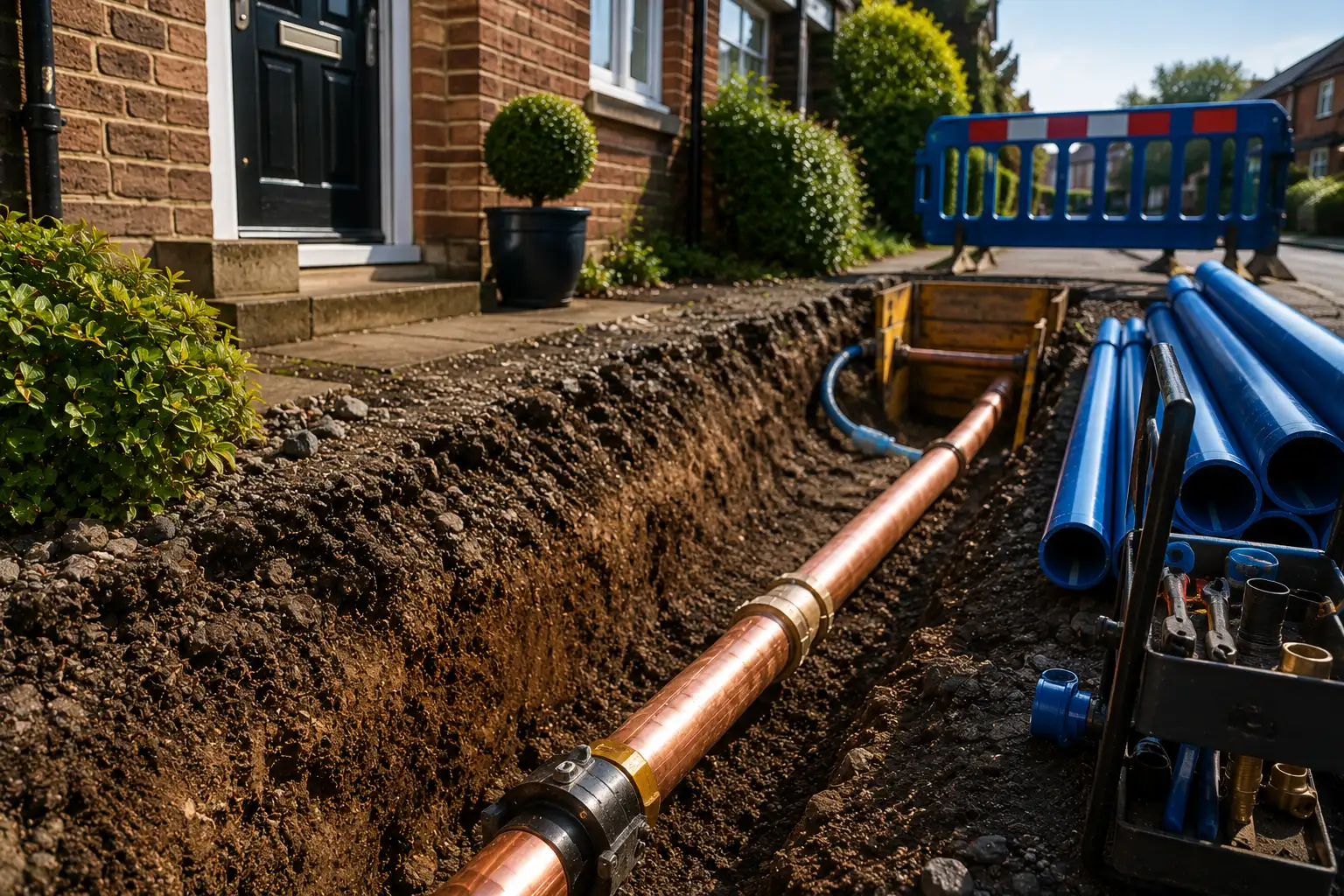
A broken or ageing water supply pipe can cause low water pressure and unexpected leaks and repairs, which can be costly if you do not attend to them. Every property is different, but knowing the factors that affect mains water pipe replacement costs can help homeowners plan ahead and make informed decisions.
Did you know? According to the Ofwat guidelines, as a homeowner, you are typically responsible for maintaining and repairing the private supply pipe that carries water from the boundary into your home, as well as all internal plumbing.
Rather than focusing solely on the initial cost, it’s important to consider the long-term reliability, efficiency, and lifespan of a professionally installed replacement water main. At Precise Drainage Solutions we encourage customers to explore water supply problems early to ensure the right solution is recommended based on the condition of the existing pipework.
Key Takeaways
- The total cost will depend on the length of the pipe, depth, access and ground conditions.
- Early detection of a broken water main can help to prevent leaks and water waste.
- Modern installation techniques can mean less disruption to your property.
- Professional evaluations assist in identifying the best alternative solution.
- Choosing an experienced contractor is a good bet for long-lasting results.
What actually affects the cost of replacing a water main?
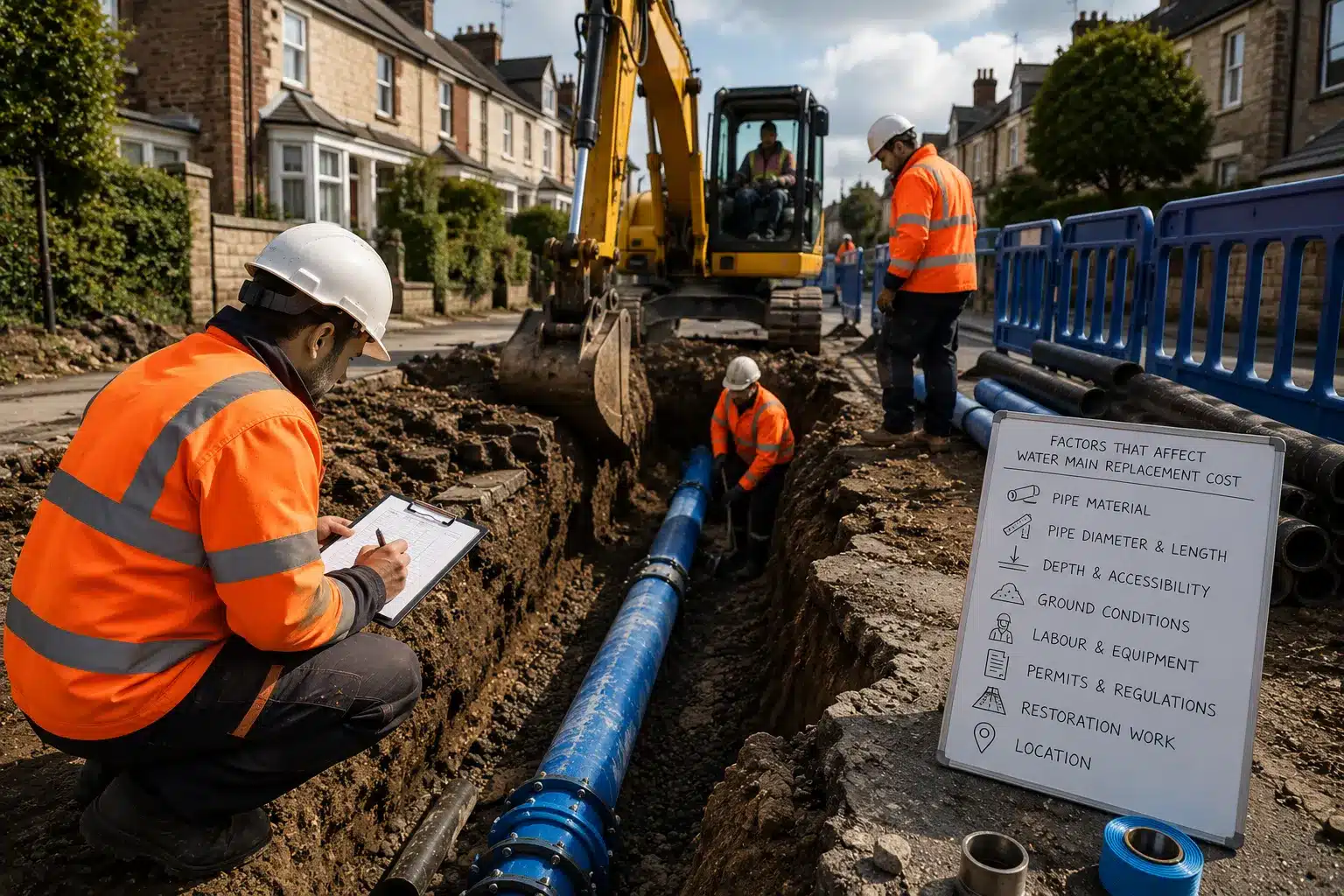
There are no set prices because every property has its own installation challenges. The whole project cost is determined by a number of practical factors. Average online quotes aren’t likely to be the most precise. Professional site evaluations are more dependable.
These commonly include:
- Total length of the supply pipe
- Pipe depth below ground
- Ground conditions and excavation requirements
- Existing pipe material
- Ease of access around the property
- Surface reinstatement after installation
- Whether specialist trenchless techniques are suitable
Is replacing a water main always the best solution?
Not at all. Sometimes a repair can fix it and it will work fine But frequent leaks, ageing materials, poor water pressure or deteriorating pipes make replacement the more practical long-term investment.
Many homeowners searching for how much does it costs to replace a water main are often surprised that delaying replacement can eventually result in higher repair costs if repeated leaks occur.
A professional inspection can help you decide whether repair or replacement is the better long-term option.
Can modern installation methods reduce disruption?
Traditional excavation is not always needed. Specialist installation techniques may be able to minimise excavation and replace the affected water supply pipe depending on the property’s layout and underground conditions.
Potential benefits include:
- Less disruption to gardens and driveways
- Reduced excavation
- Faster installation in suitable locations
- Lower reinstatement requirements
- Cleaner overall working areas
Following a professional assessment, the most appropriate installation method depends entirely on site-specific conditions.
Should homeowners attempt the work themselves?
Many people ask, ‘can I replace my own water main after discovering leaks or ageing pipework? ‘ While some minor plumbing work can be carried out by an experienced homeowner, replacing a buried water supply pipe will usually require technical planning, excavation, some regulatory requirements and safe reconnection to the existing water network.
A professional installation will also ensure that your new supply works efficiently and helps reduce the risk of any future problems occurring due to a poor installation.
Need Expert Help? Contact Precise Drainage Solutions Today.
What does the replacement process usually involve?
Homeowners researching how to replace a main water line often discover that careful planning is just as important as the physical installation itself.
Each project is slightly different, but there are several key stages in the general process that help to minimise disruption while achieving a reliable installation.
Typical stages include:
- Initial site inspection
- Assessment of the existing supply pipe
- Planning the replacement route
- Excavation or trenchless installation where appropriate
- Installation of the new water supply pipe
- Pressure testing
- Final reinstatement of affected surfaces
When should an older lead supply pipe be replaced?
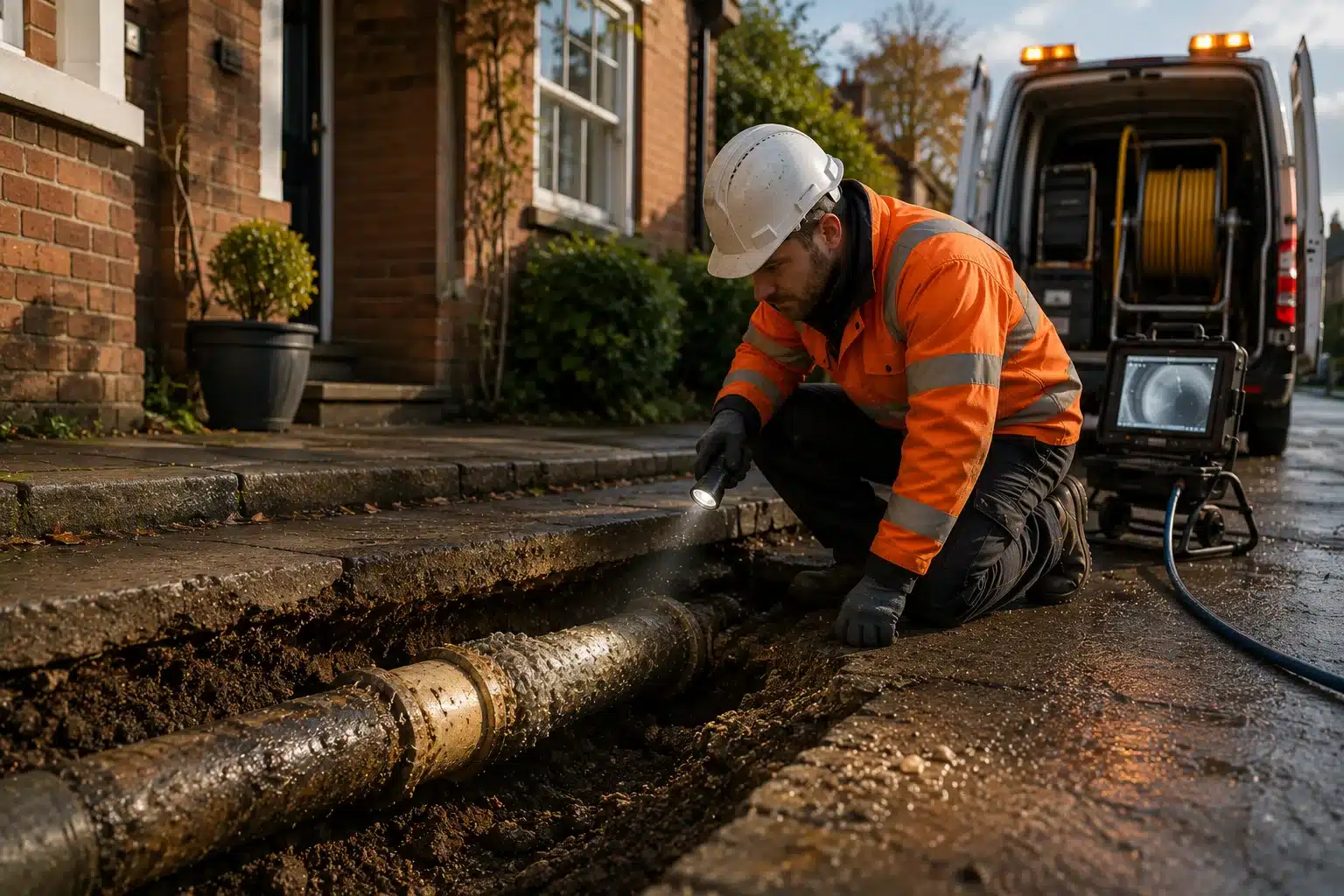
Many older properties in the UK still have lead in parts of their water supply pipes. While not all homes have lead pipework, replacing older materials during planned improvement works can increase the general reliability of the water supply.
Homeowners frequently search for how to replace lead pipe to mains water when renovating older properties or upgrading ageing infrastructure. A professional assessment identifies the existing pipe material before recommending suitable replacement options.
Upgrade Your Water Supply with Precise Drainage Solutions
Investing in the replacement of an old or damaged water main provides long term reliability for your property and reduces the risk of recurring leaks and unexpected repair costs. A complete assessment should be made before every installation to recommend the most suitable solution for your property’s specific needs.
Precise Drainage Solutions provides professional water infrastructure services with an emphasis on proper planning, quality workmanship and reliable results. If you are thinking about mains water pipe replacement, now is the perfect time to get a professional assessment done and be sure that your property’s water supply is set up for years to come.
Get Expert Water Supply Solutions from Precise Drainage Solutions
Frequently Asked Questions
1. How long does water main replacement usually take?
Most residential projects are completed within a short timeframe, although duration depends on pipe length, access conditions, excavation requirements, and the chosen installation method.
2. Will my garden or driveway always need extensive excavation?
Not always. Suitable ground conditions may allow alternative installation methods that reduce excavation, helping to minimise disruption while still achieving a reliable replacement.
3. How do I know my water main needs replacing?
Persistent leaks, poor water pressure, recurring repairs, discoloured water, or ageing pipe materials often indicate that professional assessment is worth considering.
4. Can replacing an old water main improve water pressure?
If reduced pressure results from deteriorated or restricted supply pipework, replacing the affected section may help restore more consistent water flow.
5. Is replacing a lead water pipe worthwhile?
Replacing ageing lead pipework can improve the reliability of your private water supply while supporting future maintenance and property improvement plans.