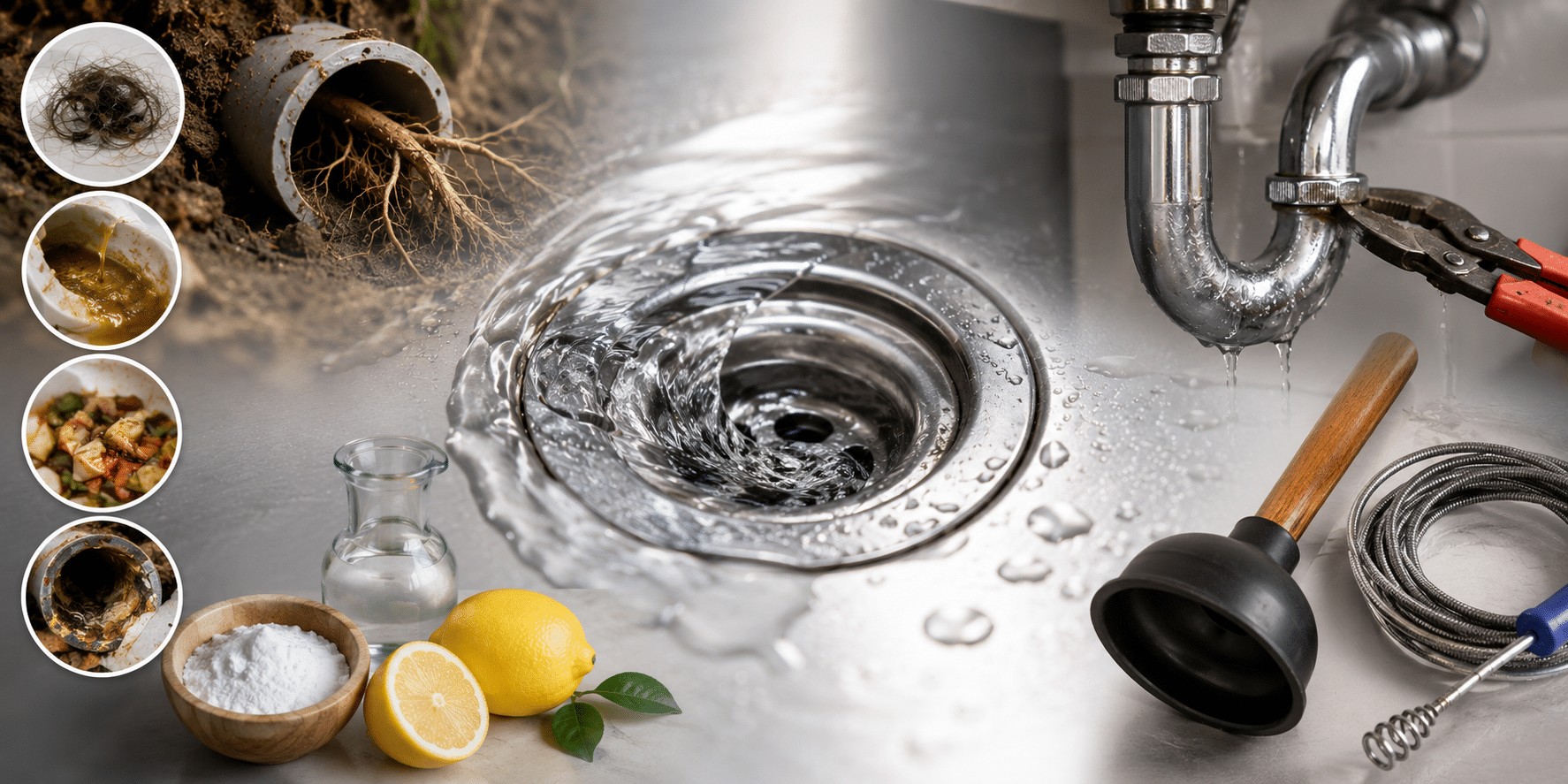
A slow draining drain almost always means something’s blocking the flow inside your pipe. It won’t fix itself. Left alone, it gets worse. It’s usually trapped hair, grease, soap scum, or debris narrowing the pipe. Hot water, a plunger, or a drain snake often sorts it. Still slow? The pipe may need a proper look.
“Did you know? According to the Gov.uk, wet wipes contribute to 94% of sewer blockages, which can lead to damage to properties and can result in sewage-related litter entering the environment.”
That is a huge number. A slow-draining drain is often an early warning that a bigger blockage is coming. Deal with it now, and you can avoid extra costs, messy repairs, and a ruined weekend.
Key Takeaways
- A slow drain is often the indication of a minor obstruction that has been formed by hair, cooking oils, soap scum, dirt tree roots, or limescale deposits.
- Minor clogs are usually cleared with simple fixes like pouring in boiling water, using a plunger, a drain snake, or simply cleaning out an U-bend.
- Having several slowly draining fixtures might be a sign of a serious blockage under the surface or a damaged main drain. In that case, it will be necessary to hire a professional.
- If you are constantly having blockages, your drain is foul smelling, emitting gurgling sounds, or water is backing up, the right choice would be to reach out to a drainage specialist.
- The best way to prevent slow draining of pipes is by using drain traps, avoiding grease pouring, regularly cleaning drains and keeping an eye on pipework for damages.
What Is a Slow Draining Drain?
Pretty much what it sounds like. Water sits in the sink, bath, or shower tray instead of disappearing. Your pipe is telling you something’s stuck inside it. Ignore it, and a partial clog turns into a full blockage within weeks.
What Causes Slow Drains?
Let’s look at the most common slow drain causes and why they can turn into bigger plumbing problems if you ignore them.
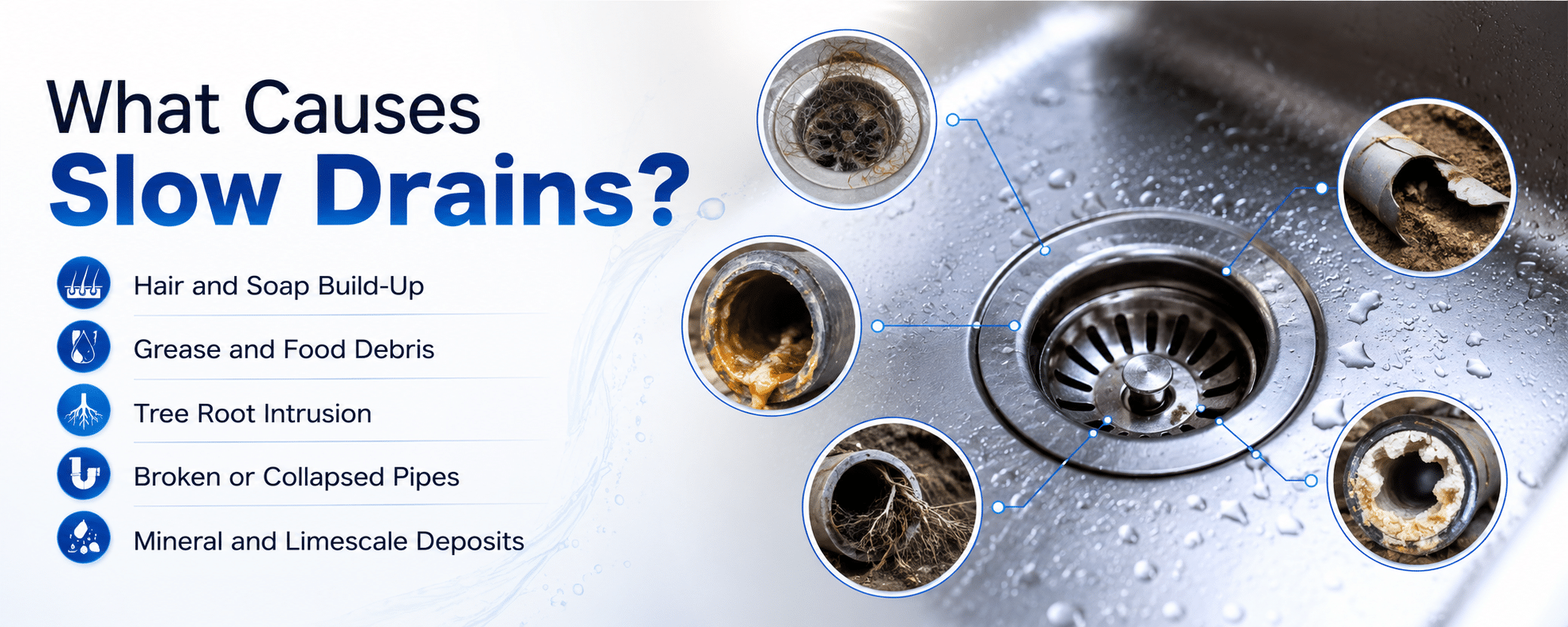
1. Hair and Soap Build-Up
Hair tangles with soap scum and forms a sticky mass. It clings to the pipe wall like glue. Bit by bit, it shrinks the space water has to move through. This is one of the most common reasons behind a slow draining sink, especially in bathrooms.
2. Grease and Food Debris
Cooking fat cools down and hardens the moment it hits the pipe. It then traps food scraps, coffee grounds, and rice as they pass by. Honestly, this is one of the biggest reasons behind why is my drain draining slowly in kitchens — check out our guide on common kitchen drain blockage mistakes for more on this.
3. Tree Root Intrusion
Roots go looking for moisture, and they’ll find their way through the tiniest crack. Once inside, they grow and choke the flow. It’s a common headache in older homes with clay pipework.
4. Broken or Collapsed Pipes
Cracked, misaligned, or crushed pipes can’t move water properly. Soil and debris creep in through the damage and pile up fast. A CCTV drain survey is really the only way to confirm this.
5. Mineral and Limescale Deposits
Hard water leaves mineral deposits along the pipe wall. Over time, these narrow the passage, a bit like plaque in an artery. Hard-water areas see this often.
Slow Draining Sink vs Slow Draining Drain
A slow draining sink usually points to something local, like the trap under the basin. A slow draining drain further down the system tends to signal a bigger problem, think roots or a collapsed pipe.
Issue | Slow Draining Sink | Slow Draining Drain |
Location | Under the sink or nearby pipework | Main drain line or gully |
Common Cause | Hair, soap, food debris | Roots, collapsed pipe, heavy blockage |
Fix Difficulty | Usually DIY | Often needs a professional |
Warning Signs | One fixture drains slowly | Multiple fixtures drain slowly together |
If every sink, bath, and toilet in the house runs slow at once, don’t guess. Call a professional.
How to Fix a Slow Drain
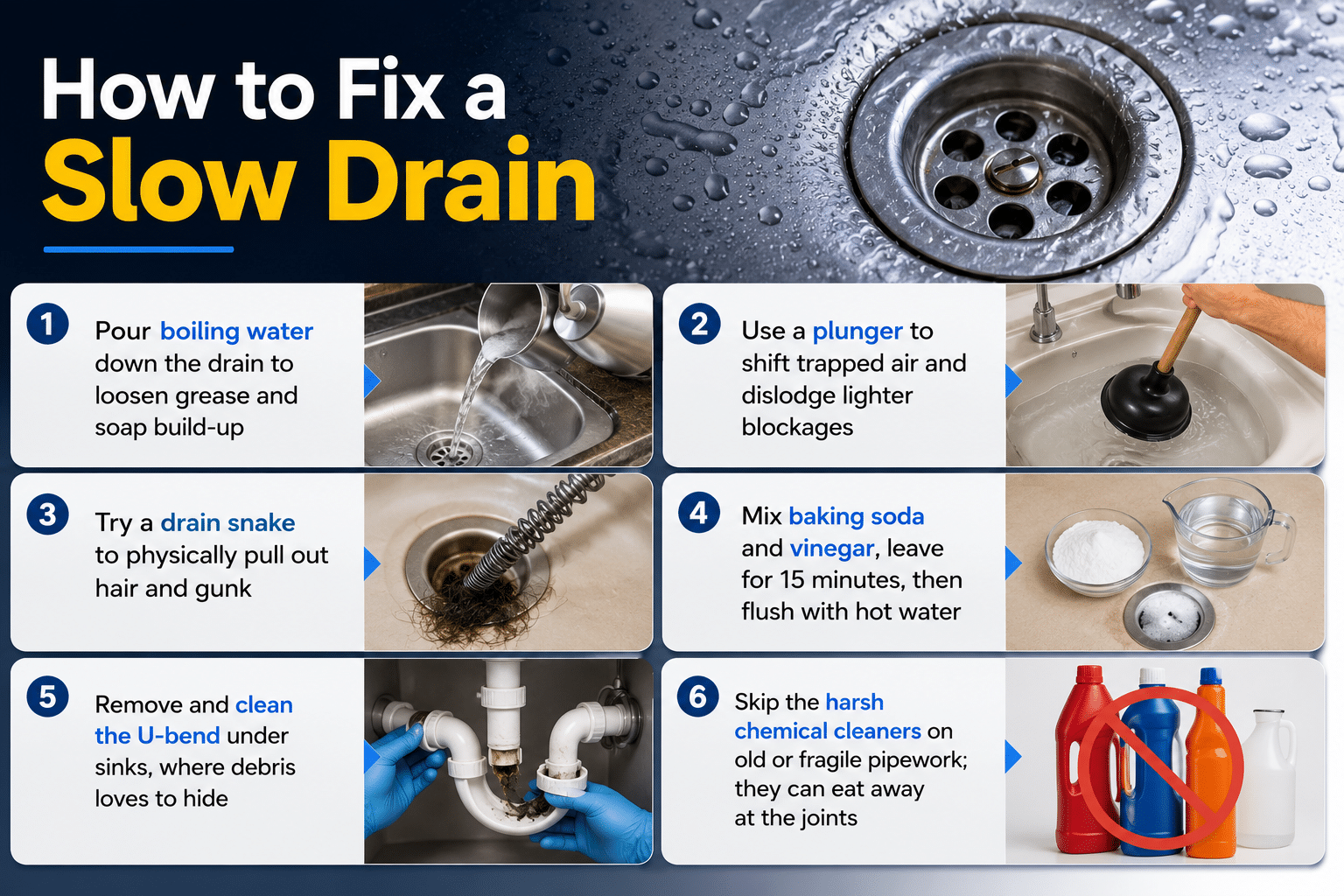
Wondering how to fix a slow drain before you pick up the phone? Give these a go first.
- Pour boiling water down the drain to loosen grease and soap build-up
- Use a plunger to shift trapped air and dislodge lighter blockages
- Try a drain snake to physically pull out hair and gunk
- Mix baking soda and vinegar, leave for 15 minutes, then flush with hot water
- Remove and clean the U-bend under sinks, where debris loves to hide
- Skip the harsh chemical cleaners on old or fragile pipework; they can eat away at the joints
Work through these one by one. Most slow draining sink issues clear up within the first couple of steps. Still slow after all that? The blockage likely sits further down the line. That needs proper equipment, not more guesswork.
When to Call a Professional
Some jobs really do need more than a plunger and a bit of patience. Bring in a professional drainage company if you spot:
- Water backing up from more than one fixture
- A bad smell drifting up from the drain
- Gurgling sounds after you flush or drain water
- The same spot blocking up again and again
- Standing water in the garden or near a manhole
A drain survey is genuinely worth it for recurring blockages, bad smells, or suspected pipe damage. Professionals use CCTV cameras to see exactly what’s going on inside.
Struggling with a drain that just won’t behave, no matter what you throw at it? Don’t let a small clog spiral into a costly repair bill.
How to Prevent Slow Drains
Prevention beats an emergency call-out fee, every single time. Build these small habits into your routine:
- Fit a drain guard over plugholes to catch hair and food scraps before they get in
- Never pour grease down the sink; let it cool and bin it instead
- Run hot water through your drains weekly to stop build-up before it starts
- Book a yearly CCTV survey to catch problems while they’re still small
- Clear garden gullies of leaves and debris each autumn
Little habits like these keep your slow draining drain worries down to almost nothing.
Don't Let a Slow Drain Ruin Your Day!
A slow draining drain is a warning, not just a minor annoyance. Catch it early, and you sidestep a burst pipe, a flooded bathroom, or an eye-watering emergency call-out. Try the DIY fixes first. Still coming back? Time to bring in the experts.
Precise Drainage specialises in fast, accurate CCTV drain surveys and expert drain clearance across the UK. Get in touch with Precise Drainage today, and get your drains flowing freely again.
Frequently Asked Questions
1. Why is my drain draining slowly even after I've plunged it?
A plunger only clears blockages near the surface. Deeper clogs, root intrusion, or damaged pipes usually need a drain snake or a professional camera survey to get to the real cause.
2. What causes slow drains in older houses?
Older homes often run on clay pipework, which cracks over time and lets tree roots creep in. Limescale build-up and ageing joints add to the problem, slowing the flow further.
3. How to fix a slow drain in a bathroom sink?
Start by removing the U-bend and clearing out trapped hair and soap scum. Follow with a hot water flush. Still slow? Try a drain snake before you call a plumber.
4. Is a slow-draining sink a sign of a bigger problem?
Sometimes, yes. One slow sink is usually a local issue. Several fixtures draining slowly together often point to a blockage further down the main line, which needs professional attention.
5. How much does it cost to fix a slow drain in the UK?
Costs vary depending on severity, but they typically range from £50 to £300. More complex surveys or repairs can push that figure higher.