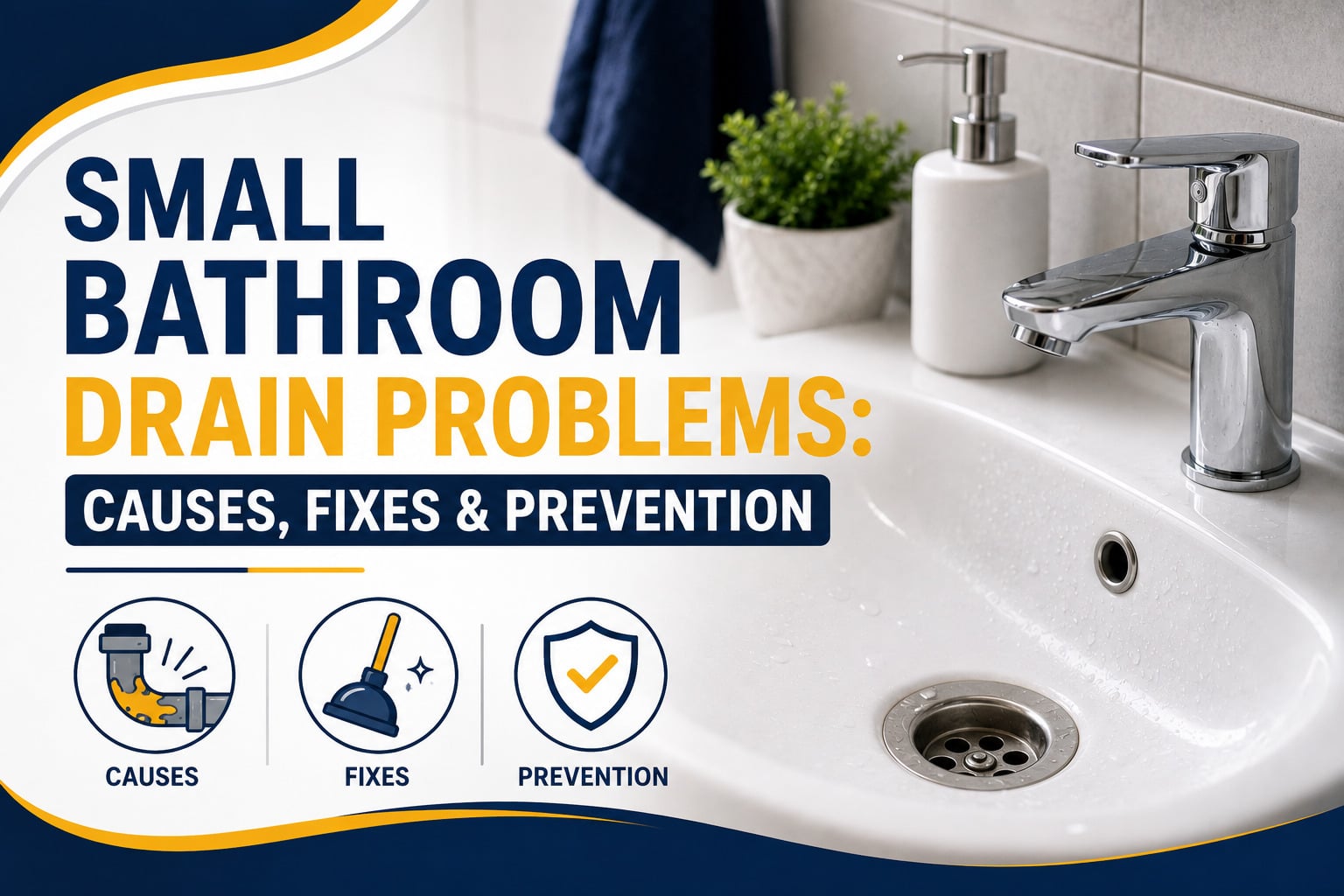
Small bathroom drain problems are usually easier to fix when you catch them early. This guide explains the common causes, simple fixes, and prevention steps that can help keep your drains flowing properly.
“Did You Know? According to official UK water sector data, wet wipes cause around 93% to 94% of clogged sewers in the UK, costing households and water companies about £200 million each year to clear.”
A slow or blocked bathroom sink drain can start with something as simple as hair, soap residue, toothpaste, or dirt. If ignored, the problem can become worse and affect other parts of your plumbing system. Knowing what causes these issues makes it easier to act before a minor blockage turns into an expensive repair.
Key Takeaways
- Small drain problems often begin with hair, soap, dirt, and product residue.
- Slow drainage is an early warning sign of a developing blockage.
- Regular cleaning can help prevent minor build-up.
- A plunger can be useful for simple blockages.
- Repeated problems may point to a deeper drainage issue.
- Gurgling after rainfall should be monitored, especially when combined with other symptoms.
- Professional help is advisable when basic cleaning does not solve the problem.
What Causes Small Bathroom Drain Problems?
Bathroom drains deal with more than water. Every day, they collect small amounts of hair, soap, skincare products, toothpaste, and other residue.
Over time, these materials can stick to the inside of the pipe. Water then has less space to pass through, causing slower drainage.
Here are some of the most common causes:
- Hair collecting around the plug or inside the pipe
- Soap and shampoo residue building up
- Toothpaste and personal care products entering the drain
- Dirt and grime sticking to pipe walls
- Small objects accidentally falling into the basin
- Poor pipe design or damaged drainage pipes
- A blockage further down the plumbing system
If your bathroom sink clogged unexpectedly, start by checking the plughole and the visible part of the drain. A small blockage near the surface can often be cleared without professional help.
How to Clean a Bathroom Sink Drain Safely?
Learning how to clean bathroom sink drain areas regularly can prevent many minor blockages. You do not need complicated equipment for basic maintenance.
Start by removing the plug or drain cover. Pull out any visible hair or debris using gloves or a suitable drain-cleaning tool.
Next, flush the drain with hot water. This can help loosen soap and oily residue.
For light build-up, you can also try a mixture of baking soda followed by vinegar. Allow it to work for a short period before flushing the drain with hot water.
Avoid repeatedly using strong chemical drain cleaners. They may damage some pipe materials and can create hazardous fumes when mixed with other products.
If the bathroom sink is clogged because of a deeper obstruction, these simple methods may not be enough. In that case, the blockage needs to be investigated further.
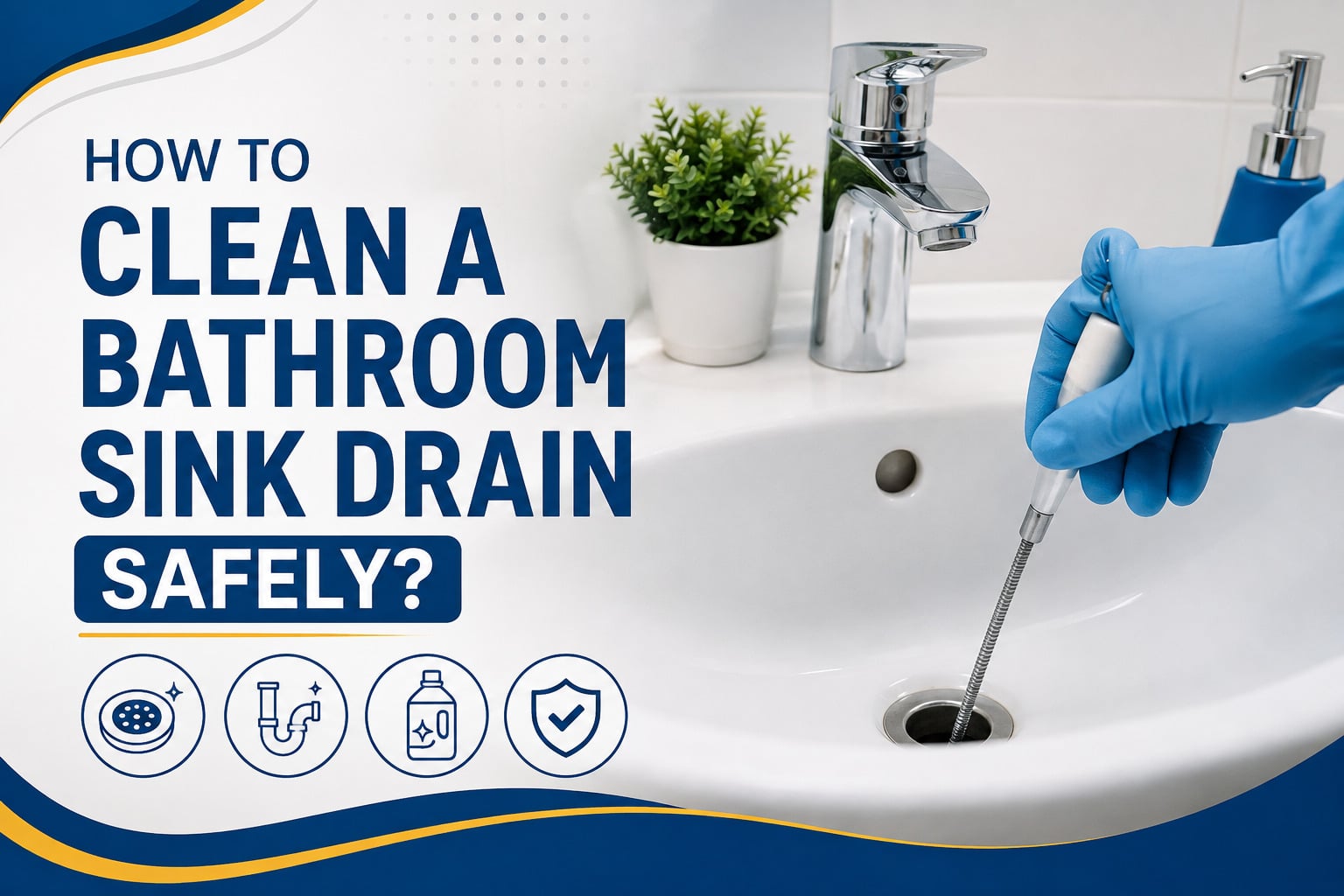
Why Is Your Sink Draining Slowly?
One of the earliest warning signs is a bathroom sink draining slowly. You may notice that water takes longer than usual to disappear after washing your hands or brushing your teeth.
This usually indicates that something is restricting the flow.
If you are wondering why your bathroom sink is draining slowly, look for a few clues:
- Water takes several seconds to disappear.
- The water level rises while the tap is running.
- You notice an unpleasant smell.
- The drain makes unusual sounds.
- The problem keeps returning after cleaning.
A slow drain should not always be treated as a minor inconvenience. It can be an early sign of a developing blockage.
Try These Simple Fixes First

For a minor blockage, you can try a few straightforward methods before calling a professional.
1. Remove Visible Debris
Take off the plug or drain cover and check for hair and other material. Remove anything that you can safely reach.
2. Use a Plunger
Place enough water in the basin to cover the rubber part of the plunger. Create a firm seal over the drain and pump several times.
The pressure can help loosen material trapped inside the pipe.
3. Flush With Hot Water
Slowly pour hot water down the drain. This may help break down soap and other residue.
4. Clean the Trap
The U-shaped trap underneath the basin can collect debris. If you are comfortable doing so, place a container underneath it before removing and cleaning it.
Knowing how to fix a clogged bathroom sink can help with small blockages, but do not force tools into the pipe if you are unsure about what you are doing.
When a Clogged Sink Needs More Attention
Sometimes the problem is not located directly below the basin. A blockage deeper inside the drainage system can cause repeated problems.
A clogged sink bathroom problem may also be linked to a wider drainage issue when several fixtures begin draining slowly at the same time.
Watch for signs such as:
- Repeated blockages
- Strong drain odours
- Water backing up
- Several slow drains in the same area
- Gurgling or bubbling sounds
- Leaks around pipe connections
These signs suggest that simply cleaning the plughole may not solve the underlying problem.
What About Gurgling After Rain?
Weather can sometimes affect drainage performance, particularly where outdoor and household drainage systems are connected.
If you notice drain gurgling after heavy rain, it may indicate that the drainage system is under additional pressure or that water is struggling to move through part of the system.
A single noise does not always mean there is a serious problem. However, repeated gurgling, slow drainage, bad smells, or water backing up should be investigated.
Keeping an eye on when the sound occurs can also help identify whether the issue is linked to rainfall or an internal blockage.
How to Fix a Bathroom Sink That Drains Slowly
If basic cleaning does not improve the problem, it is worth taking a closer look at the drainage system.
To understand how to fix a bathroom sink that drains slowly, first determine whether the restriction is close to the basin or further along the pipe.
Check the plug, drain cover, and trap where accessible. If these areas are clear but the water remains slow, the blockage may be deeper.
At this stage, avoid repeatedly pouring chemicals down the drain. Professional drain equipment may be needed to locate and clear the obstruction safely.
When Should You Call a Professional?
A minor blockage can often be handled at home. But some situations call for professional assistance.
Consider contacting a plumber for clogged bathroom sink problems when:
- The blockage keeps coming back.
- Water does not drain after basic cleaning.
- More than one drain is affected.
- There is standing water or sewage backup.
- You notice leaks or damaged pipes.
- You hear persistent gurgling sounds.
- You suspect the blockage is deep in the system.
A professional can identify the location and likely cause of the problem instead of simply treating the visible symptoms.
Prevent Small Drain Problems From Coming Back
Prevention is usually easier than dealing with a fully blocked drain.
Make these habits part of your bathroom routine:
- Clean the plughole regularly.
- Use a drain cover to catch hair.
- Remove visible debris before it enters the pipe.
- Avoid pouring thick products down the drain.
- Do not flush wipes or unsuitable items down the toilet.
- Rinse the basin after using toothpaste or personal care products.
- Pay attention to changes in drainage speed.
- Deal with unusual smells or sounds early.
These simple steps can reduce the amount of material entering your pipes.
Keep Your Bathroom Drains Flowing
Small drain problems are easier to handle when you act early. Regular cleaning and quick attention to slow drainage, bad smells, or unusual sounds can help prevent bigger blockages.
If your bathroom sink drain is still causing trouble, contact Precise Drainage Solutions for professional help. Get the problem checked before a small blockage turns into a costly repair.
Frequently Asked Questions
1. Why does my bathroom sink drain slowly?
Hair, soap residue, toothpaste, dirt, and other materials can restrict the pipe. A blockage deeper in the drainage system can also cause slow flow.
2. Can I unblock a bathroom sink myself?
Yes, minor blockages can often be cleared by removing visible debris, using a plunger, and flushing the drain with hot water. Deeper or recurring blockages may require professional help.
3. How often should I clean my bathroom drain?
A quick clean every few weeks can help prevent build-up. If your household produces a lot of hair or uses many bathroom products, more frequent cleaning may be useful.
4. Why does my sink make a gurgling sound?
Gurgling can happen when air is moving through the drainage system because water flow is restricted. If it happens repeatedly, the drain should be checked.
5. When is a slow drain a serious problem?
If slow drainage keeps returning, affects several fixtures, causes bad smells, produces gurgling noises, or leads to water backing up, it may indicate a deeper drainage problem.