
A blocked drain can quickly turn into a frustrating problem, causing slow water flow, bad smells, and overflowing wastewater. But what if ordinary cleaning is not enough to clear the blockage? High-pressure drain jetting uses powerful water streams to remove stubborn waste and restore normal drainage.
Did you know? Grease, soap residue, and silt can build up inside pipes over time, restricting water flow even before a complete blockage develops.
Understanding this method can help you know when it is needed.
What Is High-Pressure Drain Jetting?
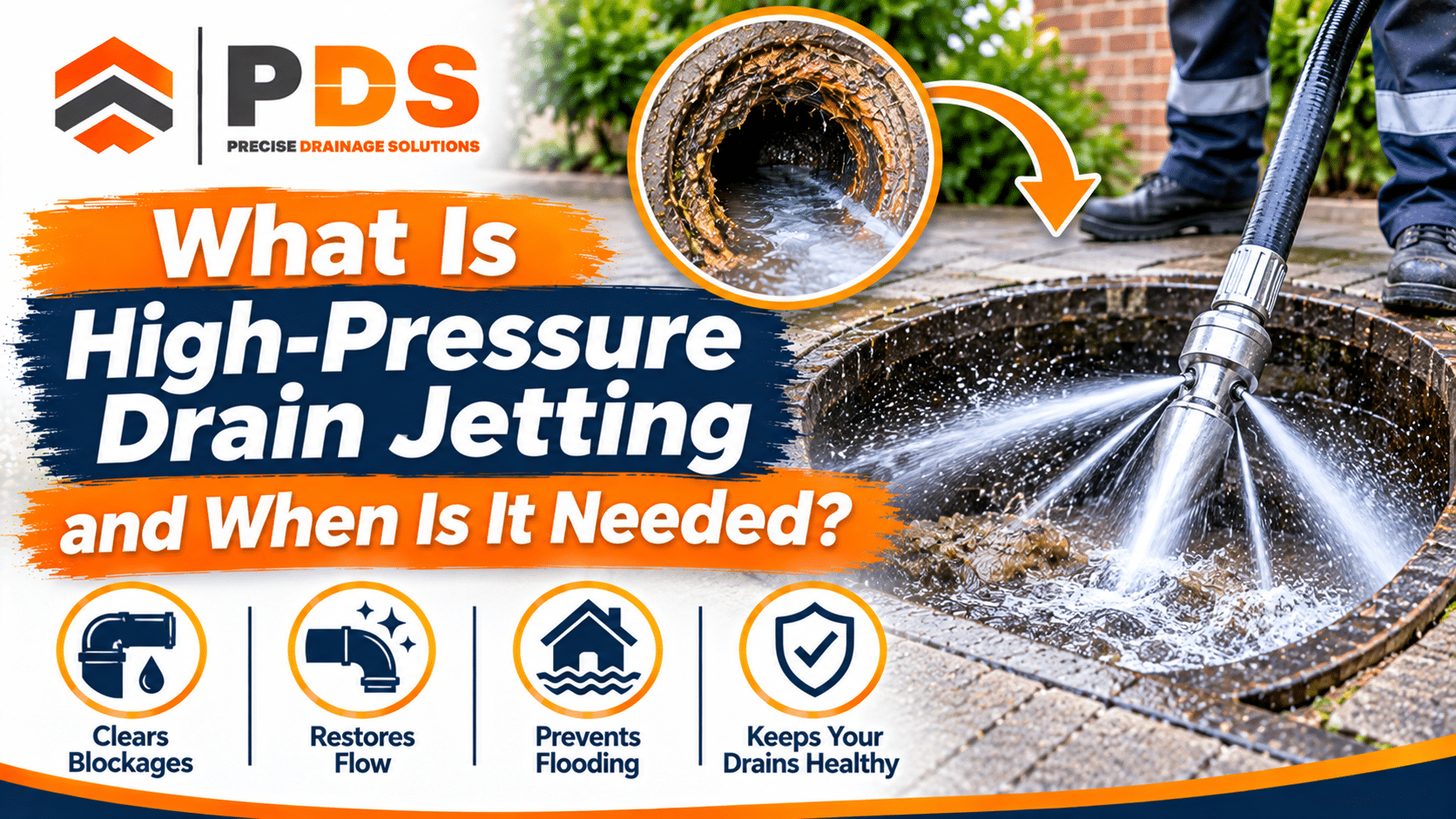
High-pressure drain jetting is a drain cleaning method that uses water released at high pressure to remove blockages and clean the inside of pipes. It is also known as high-pressure water jetting and is commonly used for domestic and commercial drainage systems.
A specialist uses a jetting machine connected to a hose and a specially designed nozzle. The nozzle releases powerful water jets that break down accumulated waste and wash it through the drainage system.
Unlike basic cleaning methods, jetting does not simply push a blockage further into the pipe. It helps remove the material and clean the pipe walls.
Before starting, a drainage specialist may carry out a drain inspection to understand the condition of the pipes and identify the cause of the blockage.
How Does the Drain Jetting Process Work?
The drain jetting process involves a series of controlled steps to clear the blockage safely and effectively.
Here is how it usually works:
- Initial assessment: The specialist checks the affected drain and identifies possible blockages.
- Equipment setup: A suitable jetting machine, hose, and nozzle are selected according to the pipe condition.
- Water pressure application: The hose is carefully inserted into the drain, and pressurised water is released through the nozzle.
- Blockage removal: The water breaks down grease, silt, soap deposits and other accumulated waste.
- Final cleaning: Dislodged debris is flushed through the drainage system to improve water flow.
The water pressure and nozzle type are adjusted according to the blockage and pipe condition. This helps achieve effective cleaning without putting unnecessary stress on the drainage system.
When Is High-Pressure Drain Jetting Needed?
Not every blocked drain requires jetting. However, it can be useful when ordinary cleaning methods fail to remove the blockage or when waste has built up inside the pipes.
Here are some common situations where this method may be needed.
1. When Grease and Fat Build Up Inside Pipes
Kitchen drains often collect cooking oil, fats and food waste. Over time, these materials stick to the pipe walls and form thick deposits.
Removing grease from drains with high-pressure water can break down these deposits and wash them away. This helps restore normal water flow and reduces the risk of repeated blockages.
2. When Stubborn Blockages Keep Returning
Some blockages are difficult to clear with basic plungers or drain rods. Wet wipes, soap residue, accumulated waste and other materials can create stubborn obstructions.
Jetting is useful for clearing stubborn drain blockages because the water reaches further into the pipe and removes deposits from its internal surface.
If the same drain keeps blocking, professional cleaning can also help identify whether the problem is caused by recurring debris or an underlying pipe issue.
3. When Drains Become Slow or Smelly
Slow drainage and unpleasant smells can indicate a build-up of waste inside the pipes. Even if water is still flowing, deposits may be restricting the drainage system.
Jetting can remove the accumulated material and help reduce odours caused by trapped waste. However, if smells continue after cleaning, further investigation may be necessary.
4. When Outdoor Drains Collect Silt and Debris
Outdoor drains can collect mud, leaves, sand and other debris, particularly after heavy rainfall.
Over time, this material can restrict water movement and cause outside drains to overflow.
High-pressure cleaning can flush away loose debris and accumulated silt, helping rainwater and wastewater move through the system more freely.
Wondering if your drains need high-pressure jetting? Contact our drainage experts today!
What Are the Benefits of Professional Drain Jetting?
Compared with basic drain cleaning methods, jetting offers several benefits for dealing with different types of blockages.
Some of its main advantages include:
- Thorough pipe cleaning: It removes waste from pipe walls instead of only creating a small opening through the blockage.
- Effective grease removal: Powerful water streams help break down stubborn grease and fat deposits.
- Better water flow: Removing accumulated debris helps wastewater move through the drainage system.
- Reduced recurring blockages: Cleaning the internal pipe surface can reduce the build-up that contributes to repeated problems.
- No harsh chemicals: It uses water rather than relying on chemical drain cleaners.
- Versatile cleaning: It can be used for many domestic and commercial drainage problems.
For homeowners dealing with repeated blockages, professional drain jetting can provide a more thorough cleaning solution than basic DIY methods.
Drain Jetting vs Traditional Drain Rodding: What Is the Difference?
Drain rodding and jetting are both used to clear blocked pipes, but they work differently.
Traditional drain rodding involves inserting flexible rods into the pipe to break up or move an obstruction. It can be useful for accessible blockages and relatively simple drainage problems.
Jetting uses pressurised water to break down waste and clean the pipe walls. This makes it particularly useful for grease, silt and widespread deposits.
The main differences include:
Drain Rodding | High-Pressure Jetting |
Uses flexible rods to break up blockages. | Uses pressurised water to remove waste. |
Works well for some localised obstructions. | Helps clean larger sections of pipe. |
May leave deposits on pipe walls. | Removes accumulated material from pipe surfaces. |
Requires physical contact with the blockage. | Uses water pressure to break down deposits. |
Neither method is suitable for every situation. The right choice depends on the type of blockage, pipe condition and accessibility.
Need Professional High-Pressure Drain Jetting? Call Our Drainage Experts Today!
When Is High-Pressure Jetting Not Suitable?
Although jetting is effective, it should not be used without considering the condition of the drainage system.
High-pressure water can put additional stress on pipes that are already weak or damaged. In some situations, using it may make an existing problem worse.
It may not be suitable when:
- Pipes are severely cracked, broken or collapsed.
- Older or fragile pipes cannot safely withstand the required pressure.
- Pipe joints are loose or badly damaged.
- The blockage is caused by a major structural defect.
- The drainage system has already suffered significant deterioration.
In these situations, a specialist may recommend another approach. A CCTV drain survey can help identify cracks, root intrusion, displaced joints and other hidden problems.
Depending on the findings, drain repair or drain relining may be more appropriate than further cleaning.
Why Should You Get a Professional Inspection Before Jetting?
A professional inspection helps identify the blockage and check the condition of your pipes before jetting. A drainage specialist can assess the problem and choose the right water pressure and nozzle.
They may also recommend hydro jetting, depending on the cleaning requirements. This method can effectively remove accumulated waste from pipes. However, if the pipes are old, fragile or damaged, repairs may be needed first to prevent further damage and ensure safe cleaning.
Get the Right Solution for Your Blocked Drains
High-pressure cleaning can remove grease, silt and stubborn blockages, but the right method depends on your pipe condition. If you notice slow drainage, unpleasant smells or recurring blockages, high-pressure drain jetting may help restore normal water flow. Contact Precise Drainage Solutions for professional advice and reliable drainage services.
Key Takeaways:
- High-pressure jetting uses pressurised water to remove waste and clean drain pipes.
- It is useful for removing grease, silt, soap deposits and stubborn blockages.
- It can provide more thorough cleaning than traditional drain rodding.
- Severely damaged or fragile pipes may not be suitable for jetting.
- A professional inspection helps determine the safest and most effective cleaning method.
Frequently Asked Questions
1. How long does high-pressure drain jetting take?
Most straightforward jobs can be completed within an hour, although complex blockages and larger drainage systems may take longer.
2. Can drain jetting remove tree roots?
Jetting may remove some smaller root growth, but established roots often require specialist removal and further pipe assessment.
3. Is high-pressure drain jetting safe for all pipes?
No. Severely damaged, fragile or deteriorated pipes may not withstand the pressure. A professional inspection is recommended first.
4. How often should drains be cleaned using jetting?
There is no fixed schedule. It depends on pipe usage, drainage conditions and the history of blockages.
5. Is drain jetting better than traditional rodding?
Jetting provides more thorough cleaning by removing deposits from pipe walls. Rodding can still be effective for simple, localised blockages.