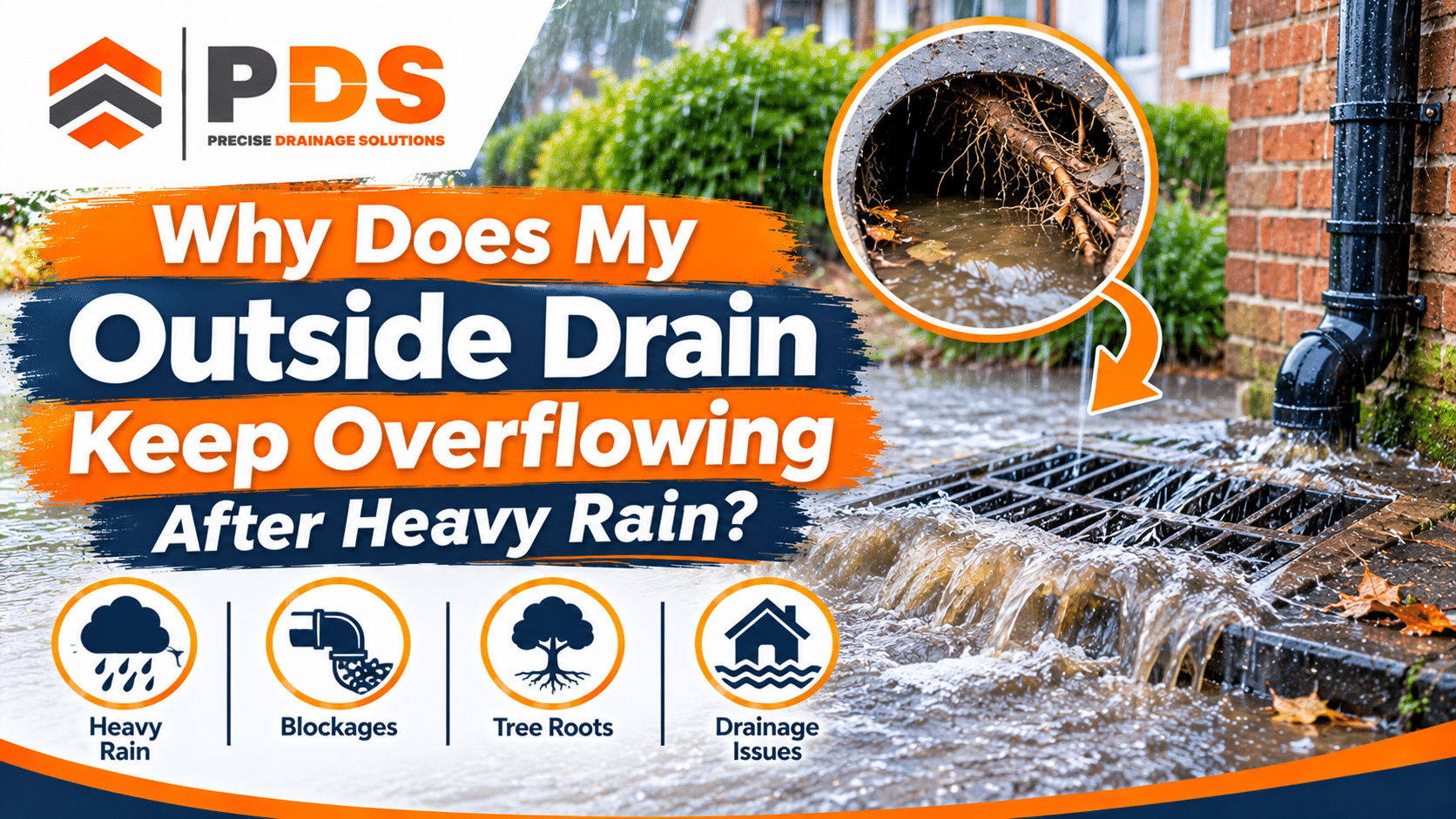

Heavy rainfall can put pressure on your property’s drainage system, especially when water cannot flow away quickly enough. If you notice an outside drain overflowing after heavy rain, it may indicate a blockage, a damaged pipe or a problem with surface water drainage. Although some temporary pooling can happen during intense rainfall, repeated overflowing should not be ignored.
- Did you know? According to official UK government data, 4.6 million properties in England are at risk of surface water flooding when drainage systems become overwhelmed. This shows how easily heavy rainfall can affect drainage systems and nearby properties.
Why Does Heavy Rain Cause Outside Drains to Overflow?
Outside drains carry rainwater and wastewater away from your property. However, heavy rainfall can expose existing drainage problems. When too much water enters the system at once, pipes may struggle to handle the increased flow, causing an outside drain to overflow after heavy rain.
Leaves, mud, silt, tree roots and other debris can restrict water flow. Damaged pipes, loose joints and sewer blockages can also cause water to back up. Identifying the actual cause is important because simply clearing a blockage may not solve every drainage problem.
Common Reasons Your Outside Drain Keeps Overflowing
If your drain overflows whenever it rains heavily, an underlying blockage or drainage issue may be responsible.
1. Leaves and Garden Debris
Leaves, grass, twigs and garden waste can collect around drain covers and restrict water flow. A blocked outside drain after rain may cause water to collect around your garden, driveway or property entrance. Clearing visible debris may help, but professional outside drain unblocking may be needed if the problem continues.
2. Mud and Silt Build-Up
Heavy rain can wash soil, sand and silt from gardens and driveways into outside drains. These materials settle inside pipes, reducing the space available for water to flow. Regular cleaning helps prevent excessive build-up and recurring blockages.
3. Tree Roots Entering Underground Pipes
Tree roots naturally grow towards moisture and can enter underground pipes through small cracks or loose joints. As they spread, they can trap debris and restrict water flow. Heavy rainfall makes this problem more noticeable, so a professional inspection may be needed to determine whether cleaning or repairs are required.
4. Cracked or Collapsed Drainage Pipes
Not every overflowing drain is caused by a blockage. Underground pipes can become damaged through ground movement, ageing materials or external pressure.
Different types of pipe damage can affect drainage in several ways:
Pipe problem | How it affects drainage |
Cracks | Allow water to escape or soil to enter |
Collapsed sections | Restrict or completely stop water flow |
Loose joints | Allow roots and debris to enter |
Misaligned pipes | Interrupt the normal flow of water |
In these situations, suitable drain repair may be needed to restore the pipe’s condition and prevent recurring problems.
Is It a Blocked Drain or a Surface Water Problem?
It is important to understand the difference between a physical blockage and a drainage system struggling with excess rainfall.
Both can cause flooding, but the warning signs and solutions may differ.
Signs of a blocked drain | Signs of surface water overload |
Slow water drainage | Water collects across outdoor areas |
Unpleasant drain smells | Several nearby areas become flooded |
Gurgling sounds | Water builds up during intense rainfall |
Water backing up from one drain | Drainage struggles despite no obvious blockage |
A blocked drain usually has a physical obstruction that prevents water from flowing freely.
In comparison, surface water problems occur when rainfall collects faster than the drainage system can remove it. These surface water drainage issues can affect several properties in the same area.
An external drain overflowing because of excess rainfall may therefore need a different solution from one affected by leaves, silt or other debris.
Identifying the difference helps homeowners avoid unnecessary cleaning when the actual problem involves drainage capacity or the wider sewer network.
Wondering why your outside drain keeps overflowing after heavy rain? Contact our drainage experts today!
Warning Signs That Your Outside Drain Needs Attention
An overflowing drain is an obvious warning sign, but other symptoms can appear before the problem becomes severe.
Watch out for these signs:
- Standing water: Water remains around the drain long after rainfall has stopped.
- Unpleasant smells: Persistent foul odours may indicate trapped waste or stagnant water.
- Slow drainage: Water takes longer than usual to disappear from the drain.
- Gurgling sounds: Air trapped inside pipes may create unusual noises.
- Repeated overflowing: The same drain backs up during every period of heavy rainfall.
- Water near foundations: Persistent pooling close to your property may increase the risk of dampness or water damage.
If you notice several of these signs together, arrange a professional inspection before the problem becomes more serious.
What Can You Safely Check Before Calling a Drainage Specialist?
Before arranging professional help, you can carry out a few simple checks. Start by inspecting the drain cover for leaves, grass or other visible debris.
If it is safe, clear loose rubbish from around the opening and check whether the water level drops as rainfall slows. Also, look for standing water around your property and watch for repeated overflowing, unpleasant smells or slow drainage.
Important: Never put your hands inside a drain or attempt to remove deep blockages yourself. Avoid strong chemical cleaners, as they may damage pipes. If wastewater is overflowing, keep children and pets away from the affected area.
Need Help with an Outside Drain Overflowing After Heavy Rain? Call Our Drainage Experts Today!
How Can You Prevent Outside Drains from Overflowing Again?
Although heavy rainfall cannot be controlled, regular maintenance can reduce the risk of drainage problems.
Here are some simple maintenance steps homeowners can follow:
- Clear leaves regularly: Remove garden waste, especially during autumn.
- Keep drain openings accessible: Avoid covering outside drains with soil, plants or stored items.
- Watch what enters the drain: Prevent rubbish, grease and other unsuitable waste from entering the system.
- Monitor nearby trees: Check root growth where trees are close to underground drainage pipes.
- Arrange periodic inspections: Professional checks can identify developing problems before they cause an overflow.
Good maintenance is particularly important if your property has experienced recurring rainwater drainage problems during previous wet seasons.
Get Your Outside Drain Checked Before the Next Heavy Downpour
Repeated overflowing may indicate a blockage, damaged pipe or drainage problem that needs attention. Understanding why your outside drain keeps overflowing after heavy rain can help prevent further damage.
Precise Drainage Solutions can help identify the cause and recommend suitable repairs or cleaning. Contact the team today to get your outside drain checked before the next heavy downpour.
Key Takeaways:
- Heavy rainfall can expose existing drainage problems and overwhelm drainage systems.
- Leaves, mud, silt, tree roots and damaged pipes are common causes of overflowing drains.
- Blocked drains and surface water overload require different solutions.
- Repeated overflowing, foul smells and standing water are important warning signs.
- Professional inspections can identify hidden problems and help prevent further damage.
- Heavy rainfall can expose existing drainage problems and overwhelm drainage systems.
Frequently Asked Questions
Why does my outside drain only overflow when it rains heavily?
Heavy rainfall increases water entering the drainage system. Existing blockages or limited drainage capacity can prevent water from flowing away quickly.
Can leaves and mud cause an outside drain to overflow?
Yes. Leaves, mud and silt can collect inside drains and pipes, restricting water flow and causing water to back up during rainfall.
Should I unblock an overflowing outside drain myself?
You can remove visible surface debris safely, but avoid entering drains or handling wastewater. Contact a professional for deeper blockages.
How do I know if my outside drain has a damaged pipe?
Repeated blockages, persistent bad smells, slow drainage and unexplained wet patches may indicate pipe damage. A CCTV inspection can help confirm the problem.
How can I stop my outside drain from overflowing again?
Keep drain openings clear, remove garden debris regularly and arrange professional inspections to identify blockages or pipe damage early.