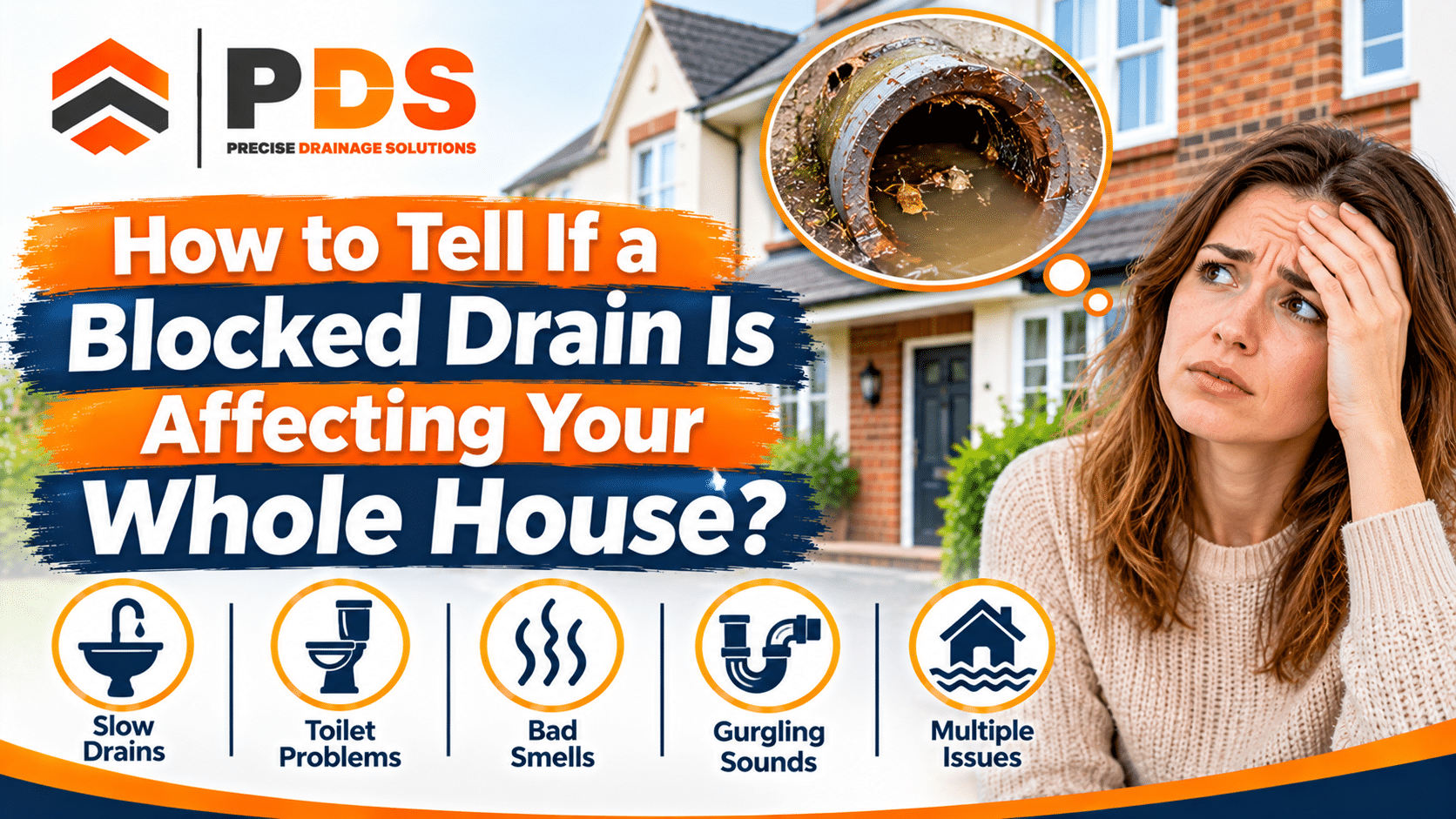

A blocked drain does not always affect just one sink or toilet. Sometimes, the problem lies deeper in the main drainage pipe and can disrupt several parts of your home. Recognising the signs of a blocked main drain early can help you understand whether the issue is isolated or affecting your entire drainage system.
Did you know? A blockage in a shared drainage pipe can cause wastewater to struggle to leave multiple fixtures, leading to slow drainage, unpleasant smells and even sewage backing up into your home.
Check Whether Multiple Drains Are Draining Slowly
One of the first things to check is whether several drains are taking longer than usual to empty. A blockage in a single sink usually affects only that fixture. However, a problem in the main drainage pipe can affect sinks, baths, showers and toilets throughout the house.
These blocked main drain symptoms may become noticeable when water takes longer to disappear from different fixtures. You may also notice that flushing one toilet affects how quickly water drains from a nearby bath or shower.
If several fixtures show similar problems, the blockage may be further down the drainage system. Arranging professional sewer unblocking can help identify and clear the obstruction before it causes further disruption.
Look for Gurgling Sounds in Different Fixtures
Unusual bubbling or gurgling sounds can indicate that air is trapped in your drainage system. When wastewater struggles to pass through a blocked pipe, air may move back through the water in nearby traps.
You might hear these sounds when:
- Flushing the toilet.
- Emptying water from the kitchen sink.
- Running the shower or bath.
- Using the washing machine.
Occasional noises do not always indicate a major problem. However, repeated gurgling drains across different rooms may suggest a blockage in a shared or main drainage pipe.
Pay attention to when the sounds occur and which fixtures are affected. This information can help a drainage specialist understand where the problem may be developing.
Notice If Toilets Bubble or Water Levels Change
Toilets can provide useful clues about problems deeper in your drainage system. If the main drain is restricted, wastewater may struggle to flow away properly. This can cause unusual changes in toilet water levels.
Look out for:
- Bubbles appearing in the toilet bowl after flushing.
- Water rising higher than normal before slowly dropping.
- Toilet water levels changing without any obvious reason.
- A toilet making bubbling sounds when another fixture drains.
These can be important main sewer blockage signs, particularly when they happen alongside problems in other bathrooms or kitchens.
Do not keep flushing a toilet if the water is rising or close to overflowing. Further flushing could cause wastewater to spill onto the floor.
Wondering if a blocked drain is affecting your whole house? Contact our drainage experts today!
Pay Attention to Unpleasant Smells Around Your Home
A healthy drainage system should carry wastewater away without allowing foul smells into your home. When a pipe becomes blocked, trapped waste can cause unpleasant odours around different drains.
You may notice sewage-like smells near kitchen sinks, bathroom drains, showers, toilets or outside drain covers. If the smell comes from one fixture, it may indicate a local blockage. However, odours around several drains could point to a wider drainage problem.
If the smell keeps returning, arrange a professional inspection to identify and resolve the cause.
Watch for Water Backing Up in Other Fixtures
Water backing up into another fixture is a stronger warning that something may be wrong with your drainage system.
For example, you might flush the toilet and notice water bubbling in the shower drain. Alternatively, running the washing machine could cause water to rise in a nearby sink or floor drain.
This happens because wastewater cannot move freely through the restricted pipe. As water continues entering the system, it may find another outlet through which to escape.
When Multiple drains blocked in house conditions appear alongside wastewater backing up, the problem may involve the main drainage line rather than separate fixture blockages.
Stop using affected fixtures if wastewater starts backing up. Contact a drainage specialist promptly to prevent further flooding and potential contamination.
Understand the Difference Between a Local and Main Drain Blockage
Not every drainage issue affects the whole property. Understanding the difference can help you decide how urgently professional assistance is needed.
Here are some common differences:
Local drain blockage | Main drain blockage |
Usually affects one sink, toilet or shower. | Can affect several fixtures. |
Often caused by hair, soap or food waste. | May involve grease, wipes, debris or tree roots. |
Other fixtures usually work normally. | Several fixtures may drain slowly. |
Problems remain limited to one area. | Problems may appear across different rooms. |
Often improves after clearing the affected drain. | May require inspection and professional clearance. |
If only one sink is draining slowly, the problem may be limited to its waste pipe. However, when several fixtures show similar symptoms, you may be dealing with whole house drainage problems.
Recurring issues also deserve attention. Recurring household drain blockages can indicate a deeper obstruction, damaged pipework or another underlying drainage issue.
Need Help with a Blocked Drain Affecting Your Whole House? Call Our Drainage Experts Today!
Know When to Arrange a CCTV Drain Survey
Sometimes, the signs are clear, but the exact location and cause of a blockage are not. This is when a CCTV drain survey can be useful.
A specialist uses a small camera attached to a flexible cable to inspect the inside of your drainage pipes. The camera provides a clear view of the pipe’s condition without unnecessary excavation.
A CCTV inspection can help identify:
- Tree roots growing into drainage pipes.
- Grease, wipes and other accumulated waste.
- Cracked, collapsed or damaged pipes.
- Pipe misalignment and joint problems.
- Repeated obstructions in the same section.
This inspection is particularly helpful when several fixtures are affected, or previous clearance work has not solved the problem.
Once the cause is identified, the specialist can recommend suitable drain repair work or professional clearance.
What Should You Do If Your Whole House Is Affected?
If you suspect a main drain blockage, taking a few sensible steps can help limit the damage while waiting for professional assistance.
- Reduce water usage: Avoid unnecessary flushing, washing machine cycles and running taps.
- Stop using affected fixtures: This can help prevent further wastewater backing up.
- Check outside drains: Look for visible standing water, overflowing covers or unusual smells.
- Avoid chemical cleaners: Strong products may not clear a deeper blockage and can create additional risks.
- Contact a specialist: Professional drain unblocking can address the obstruction safely and help prevent recurring problems.
If sewage is entering your home, keep people and pets away from the affected area. Avoid direct contact with wastewater and arrange urgent professional assistance.
Get Professional Help Before the Problem Spreads
A drainage issue affecting several fixtures should never be ignored. Recognising the signs of a blocked main drain early can help you arrange the right solution before wastewater backs up or damages your property.
At Precise Drainage Solutions, professional drainage inspections and clearance services can help identify the cause of your problem and recommend suitable repairs. Contact our team if you are experiencing persistent drainage issues and need reliable support.
Key Takeaways:
- A main drain blockage can affect several sinks, toilets, baths and showers.
- Slow drainage across multiple fixtures is an important warning sign.
- Gurgling sounds, bubbling toilets and unpleasant smells may indicate a wider problem.
- Wastewater backing up into other fixtures requires prompt attention.
- A CCTV survey can help locate hidden blockages and damaged pipes.
- Early professional assistance can help prevent further drainage problems and property damage.
Frequently Asked Questions
1. How do I know if my main drain is blocked?
If several sinks, toilets or showers drain slowly, produce unusual sounds or experience wastewater backups, your main drain may be blocked.
2. Can a blocked main drain affect every bathroom?
Yes. A blockage in a shared drainage pipe can restrict wastewater flow from multiple bathrooms and other connected fixtures.
3. Why does my toilet bubble when I use the sink?
This can happen when trapped air moves through connected pipes because wastewater cannot flow freely past a blockage.
4. Can I clear a main drain blockage myself?
Minor surface debris may be removed safely, but deeper blockages need professional equipment and inspection to avoid damaging pipework.
5. When should I arrange a CCTV drain survey?
Consider a survey when several fixtures are affected, blockages keep returning, or the cause of a drainage problem is unclear.