

Drain flies are one of the most frustrating household pests. They’re tiny but reproduce fast and tend to return even after you’ve eliminated the visible bugs. The answer to the problem is treating the cause rather than the symptoms. Good drains are far less likely to attract pests, so here at Precise Drainage Solutions we advise homeowners to look out for ongoing drainage problems. If you’ve been searching for how to get rid of drain flies, the first step toward a lasting solution is to understand why they appear.
Did you know? According to the UK Health Security Agency (UKHSA), maintaining good hygiene and eliminating breeding sites is one of the most effective ways to reduce nuisance insects in and around the home.
Rather than relying on sprays or temporary treatments, maintaining clean and functioning drains eliminates the breeding ground for drain flies. Regular maintenance and timely professional help when needed can greatly reduce the likelihood of repeat infestations for homeowners.
Key Takeaways
- Drain flies are typically an indication of organic debris buildup in the drain.
- Better to clean the source of the infestation than to treat the flies alone.
- Keep drains clean and well-maintained to avoid drain flies from returning.
- If you keep finding them, it could be a sign of a drainage problem.
- Professional drainage inspections can find hidden problems before they worsen.
What exactly are drain flies?
Drain flies are also called moth flies or filter flies. They are small insects that you often see around sinks, floor drains, shower stalls, and utility rooms. They breed in moist areas where there is a build-up of organic matter in pipework.
Unlike fruit flies, they are attracted to the slimy biofilm that forms inside neglected drains, which is the perfect habitat for their larvae. They are usually not a health hazard, but can be a nuisance in large numbers and indicate that the drains need attention.
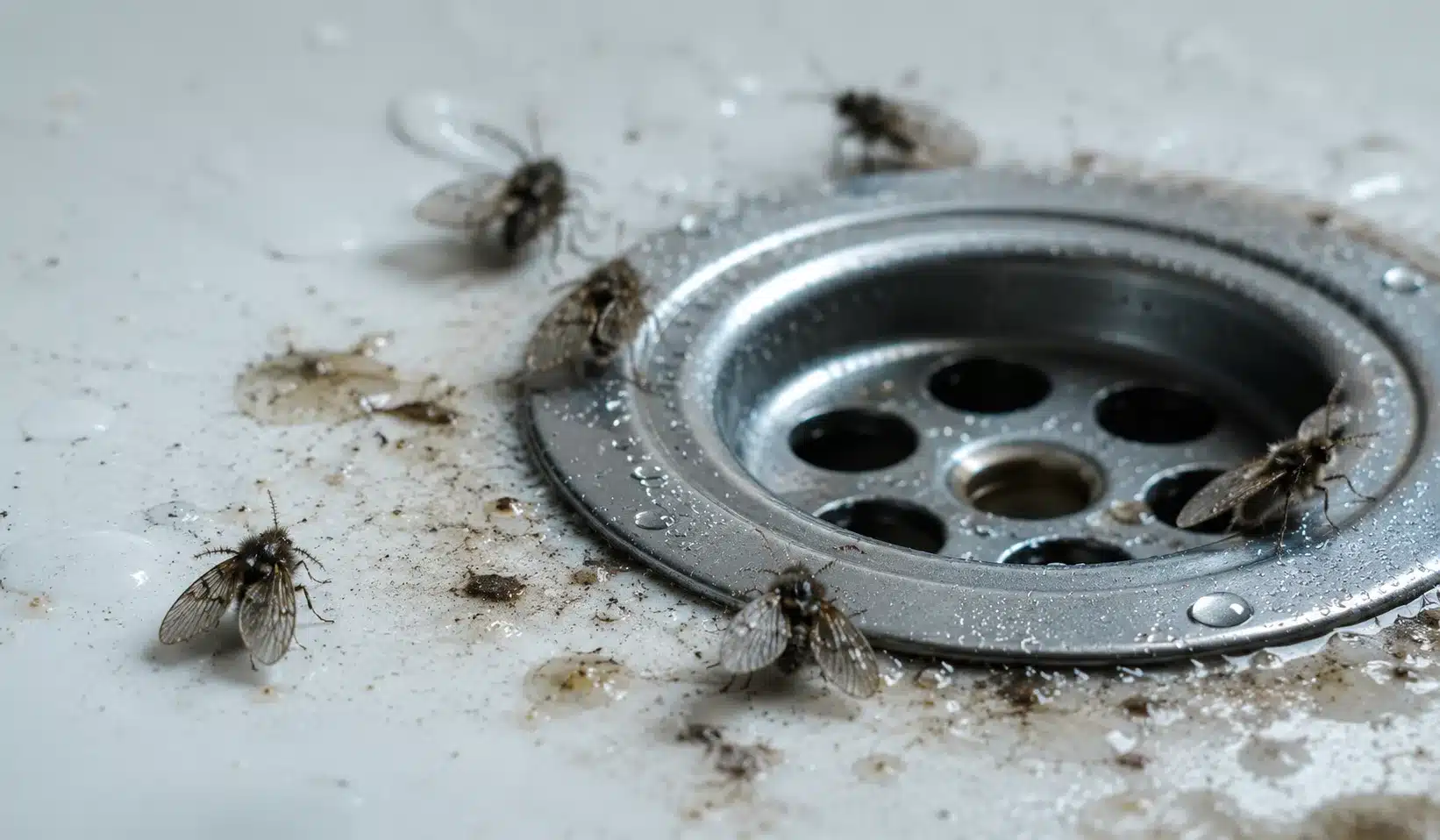
Why do they keep appearing inside your home?
Drain flies rarely appear without an underlying cause. They breed where moisture and organic debris remain undisturbed. Identifying the breeding location is far more effective than repeatedly treating adult insects.
Common reasons for breeding include:
- Build-up inside sink waste pipes
- Dirty floor drains
- Infrequently used drains
- Standing water
- Organic residue trapped inside pipework
- Poorly maintained drainage systems
Stop Recurring Drain Flies—Schedule a Professional Inspection Now.
What's the best way to remove drain flies?
The most successful drain flies removal approach focuses on cleaning the breeding site rather than simply eliminating flying insects. Removing the breeding environment interrupts the insects’ life cycle and helps prevent further infestations.
Practical steps include:
- Remove visible debris around drain openings.
- Clean pipe interiors to remove organic build-up.
- Flush drains regularly with appropriate cleaning methods.
- Keep infrequently used drains moist by running water periodically.
- Check for standing water around drainage points.
Why sprays alone rarely solve the problem
Many homeowners look online for how to kill drain flies, but killing adult flies without removing their breeding site only provides temporary relief.
Adult flies are generally only a small percentage of an infestation. The eggs and larvae are protected by the organic film that lines the drain until the time is right for the next generation to emerge.
Long-term control is dependent on the removal of the organic matter in which the insects breed rather than the repeated application of insect sprays.This is also why drain flies keep coming back after cleaning if the underlying buildup isn’t fully cleared.
How can you stop drain flies from returning?
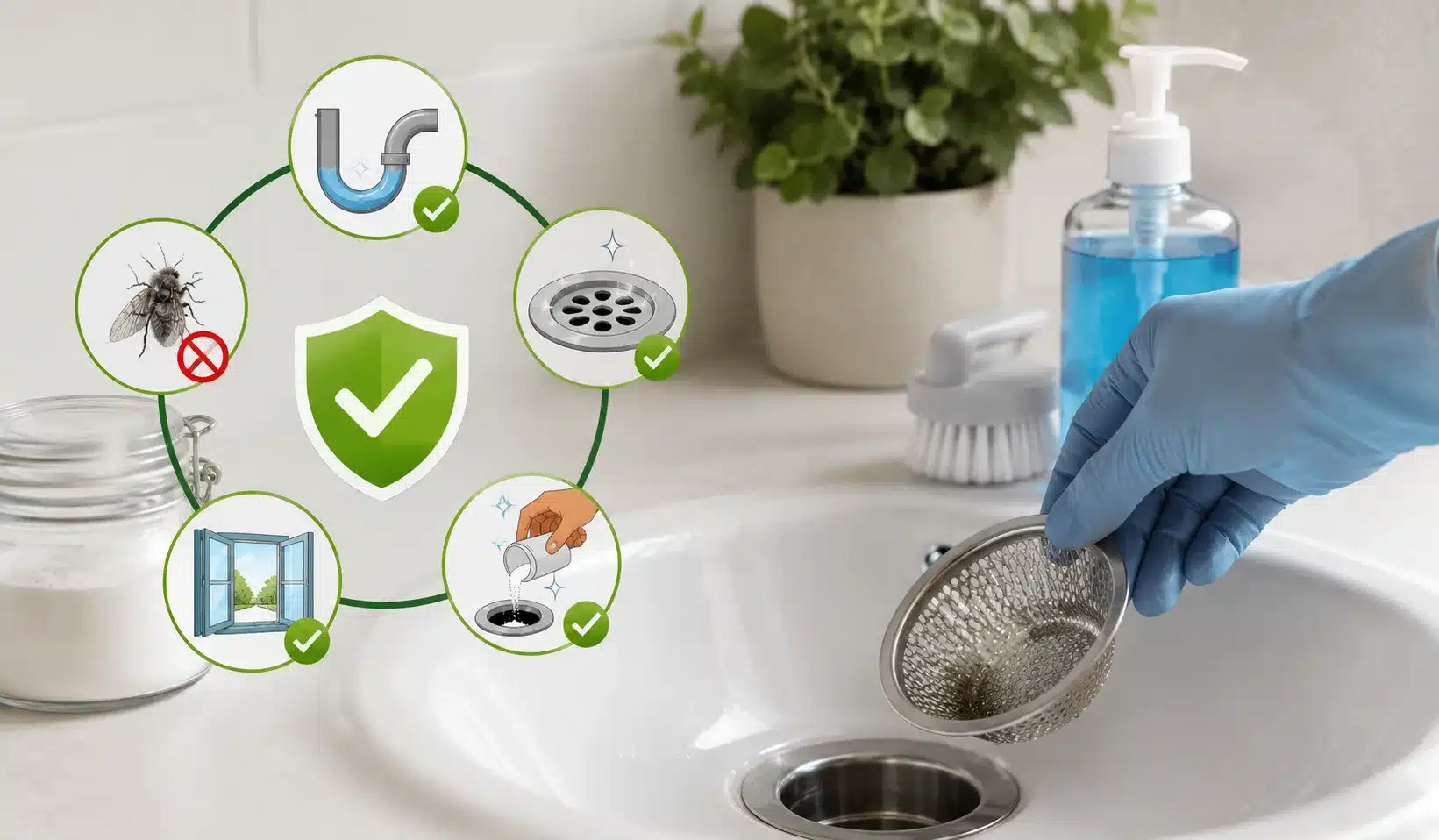
Prevention is far easier than repeated treatment. Good drainage hygiene reduces many of the conditions that attract pests.
Homeowners trying to get rid of sewer flies find cleaning the drains works a lot better than just using chemical treatments.
Helpful habits include:
- Clean drain covers regularly.
- Avoid allowing grease and food waste to enter sinks.
- Flush little-used drains regularly.
- Remove standing water where possible.
- Arrange professional drain maintenance if problems repeatedly occur.
When should you call a drainage professional?
If drain flies keep returning after a thorough cleaning, the problem might be bigger than just surface debris.
Professional drainage surveys can detect:
- Hidden organic build-up
- Partial blockages
- Damaged pipework
- Standing water inside drainage systems
- Poor drainage performance
Persistent infestations can sometimes be indicative of conditions that require specialist equipment to properly diagnose and resolve, such as a CCTV drain survey
Why healthy drains help create a healthier home
If your drains are clean, then your living environment is cleaner. Good drainage cuts down on moisture, bad smells and organic build-up which breeds nuisance insects.
If you’re thinking, ‘How do I get rid of sink flies?” remember that successful control relies on maintaining the drainage system itself rather than focusing only on the insects you can see.
Regular maintenance provides long-term protection and helps prevent recurring drainage issues which create ideal breeding conditions.
Schedule Expert Drain Care for a Cleaner, Pest-Free Property.
Enjoy Pest-Free Drains with Expert Help
Drain flies are usually a symptom of a drainage problem, not the problem itself. If the homeowner removes organic matter, keeps drains clear and deals quickly with any recurring drainage problems, the likelihood of future infestations can be greatly reduced.
At Precise Drainage Solutions, we are specialists at providing professional drainage services, locating the source of drainage problems and providing effective and lasting solutions. If you keep getting drain flies, or your drains aren’t working properly, now is the time to call in a professional inspection and get your drainage system back to being cleaner and healthier.
Frequently Asked Questions
1. Are drain flies harmful to people?
Drain flies are generally considered nuisance insects, but their presence often indicates organic build-up inside drains that should be cleaned promptly.
2. Why do drain flies keep returning after treatment?
Adult flies may disappear temporarily, but eggs and larvae remain inside drain biofilm unless the breeding material is completely removed.
3. How long does it take to eliminate drain flies?
With thorough cleaning and removal of breeding sites, most infestations reduce significantly within several days, although severe cases may require professional attention.
4. Can blocked drains attract drain flies?
Yes. Organic debris trapped inside slow-moving or partially blocked drains creates ideal breeding conditions for drain flies and similar nuisance insects.
5. When should I contact a drainage specialist?
If drain flies repeatedly return despite cleaning, or you notice slow drainage and unpleasant odours, professional inspection is recommended.




