
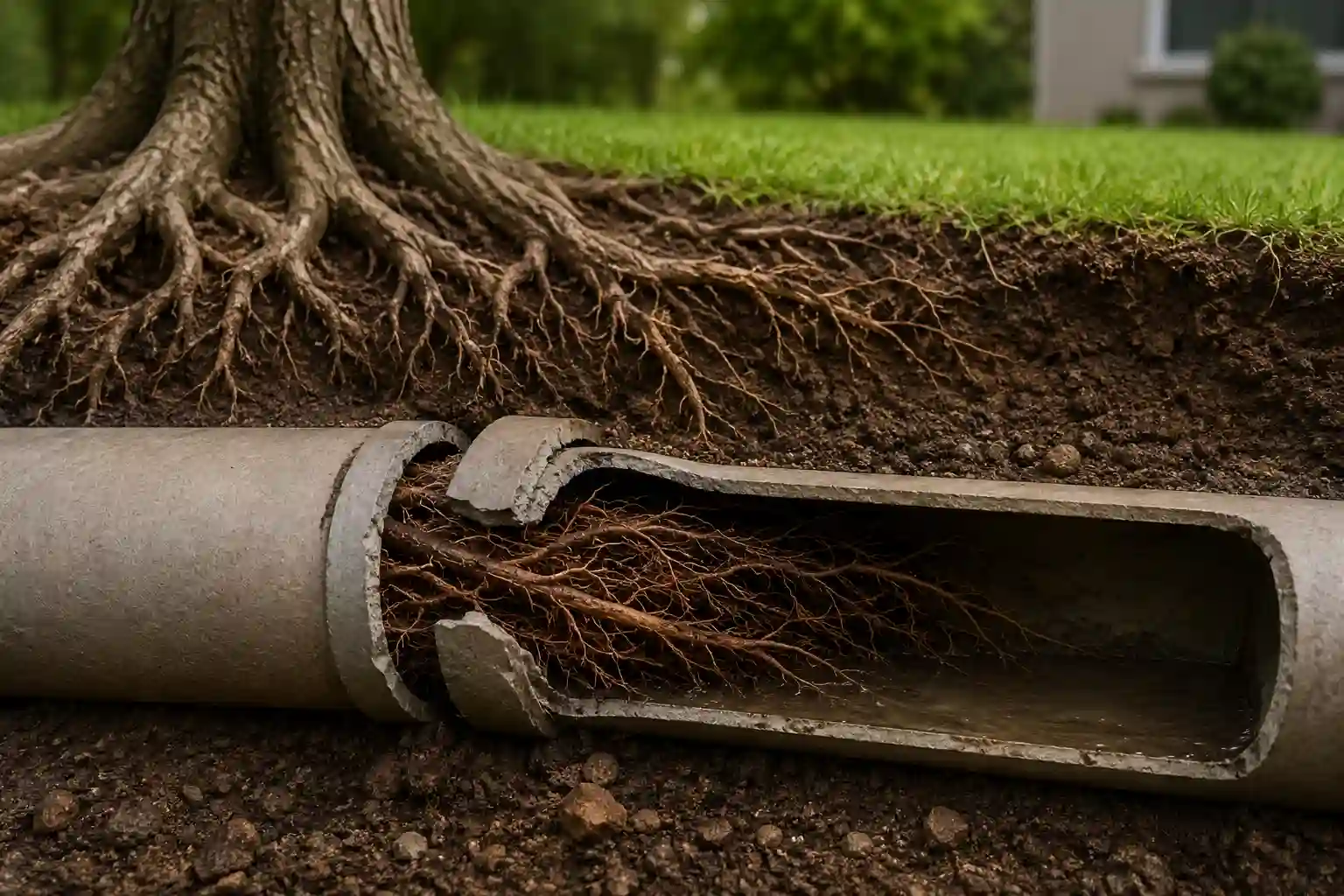
Tree roots in drain pipes can cause slow drainage, repeated blockages, unpleasant smells, and damage to underground pipework. The problem often starts when roots find moisture escaping through a small crack, loose joint, or damaged section.
Early action can make the problem easier to manage and may help prevent costly repairs later. This guide explains the main warning signs, common causes, effective removal methods, and practical repair options so you can understand the issue and choose the right next step.
Key Takeaways
- Roots usually enter pipes through cracks, gaps, or damaged joints.
- Slow drains can be an early warning of underground root growth.
- Repeated blockages may indicate a deeper drainage problem.
- CCTV inspections can locate roots and identify pipe damage.
- Water jetting can clear many root-related blockages.
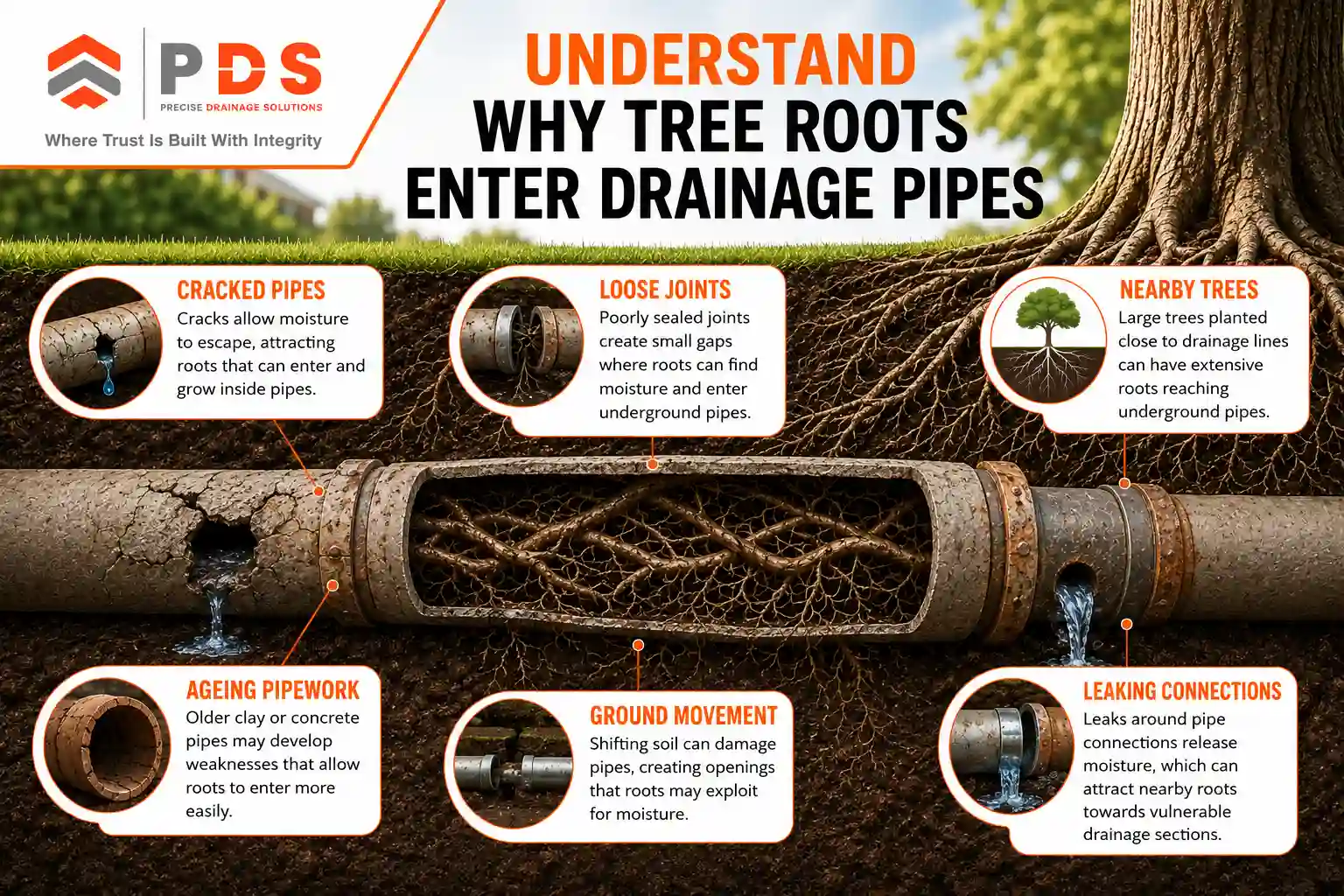
Understand Why Tree Roots Enter Drainage Pipes
Roots seek moisture and nutrients, making leaking or damaged drainage pipes attractive growth points.
Understanding tree roots drainage problems early can simplify repairs and prevent expensive damage. Knowing how to get rid of tree roots in drain pipes also depends on root growth and pipe condition.
Cracked Pipes: Cracks allow moisture to escape, attracting roots that can enter and grow inside pipes.
Loose Joints: Poorly sealed joints create small gaps where roots can find moisture and enter underground pipes.
Ageing Pipework: Older clay or concrete pipes may develop weaknesses that allow roots to enter more easily.
Ground Movement: Shifting soil can damage pipes, creating openings that roots may exploit for moisture.
Nearby Trees: Large trees planted close to drainage lines can have extensive roots reaching underground pipes.
Leaking Connections: Leaks around pipe connections release moisture, which can attract nearby roots towards vulnerable drainage sections.
Healthy pipes are generally less vulnerable. Roots usually exploit existing cracks, gaps, leaks, or structural weaknesses.
Look for Early Warning Signs
Root-related drainage problems often develop slowly. Knowing the signs of tree roots in drain pipes can help you arrange an inspection before the problem becomes serious.
Watch for:
- Slow-draining sinks or showers
- Toilets that flush slowly or back up
- Gurgling sounds from drains
- Frequent blockages
- Unpleasant drain smells
- Water backing up during heavy use
- Wet or unusually green garden patches
- Several drains becoming slow at once
One slow drain may indicate a simple blockage, but repeated issues across fixtures can point to a deeper drainage problem.
Look for These Early Warning Signs — Call a Drainage Expert Now!
Check Where the Problem Is Coming From
Nearby trees can provide clues, especially large trees with roots near drainage pipes. However, proximity alone does not confirm the cause. Professional inspection can identify tree roots causing blocked drains, cracks, displaced joints, or collapsed pipes.
CCTV drain inspections can detect root growth, blockages, cracks, and other pipe defects without unnecessary excavation.
Know How Roots Affect Drainage Pipes
Roots can grow thicker over time, trapping toilet paper, grease, soil, and other materials that restrict water flow.
Roots can also contribute to pipe cracks and deterioration. Therefore, tree roots in sewer pipes should not be ignored when blockages return.
Damaged pipes may leak into surrounding soil, providing moisture that can worsen root growth.
Know How Tree Roots Affect Your Drainage Pipes — Call an Expert Now!
Choose the Right Root Removal Method
The best method depends on the severity of the blockage and the condition of the pipe. A professional should normally inspect the drainage system before choosing a repair.
Several methods may be suitable:
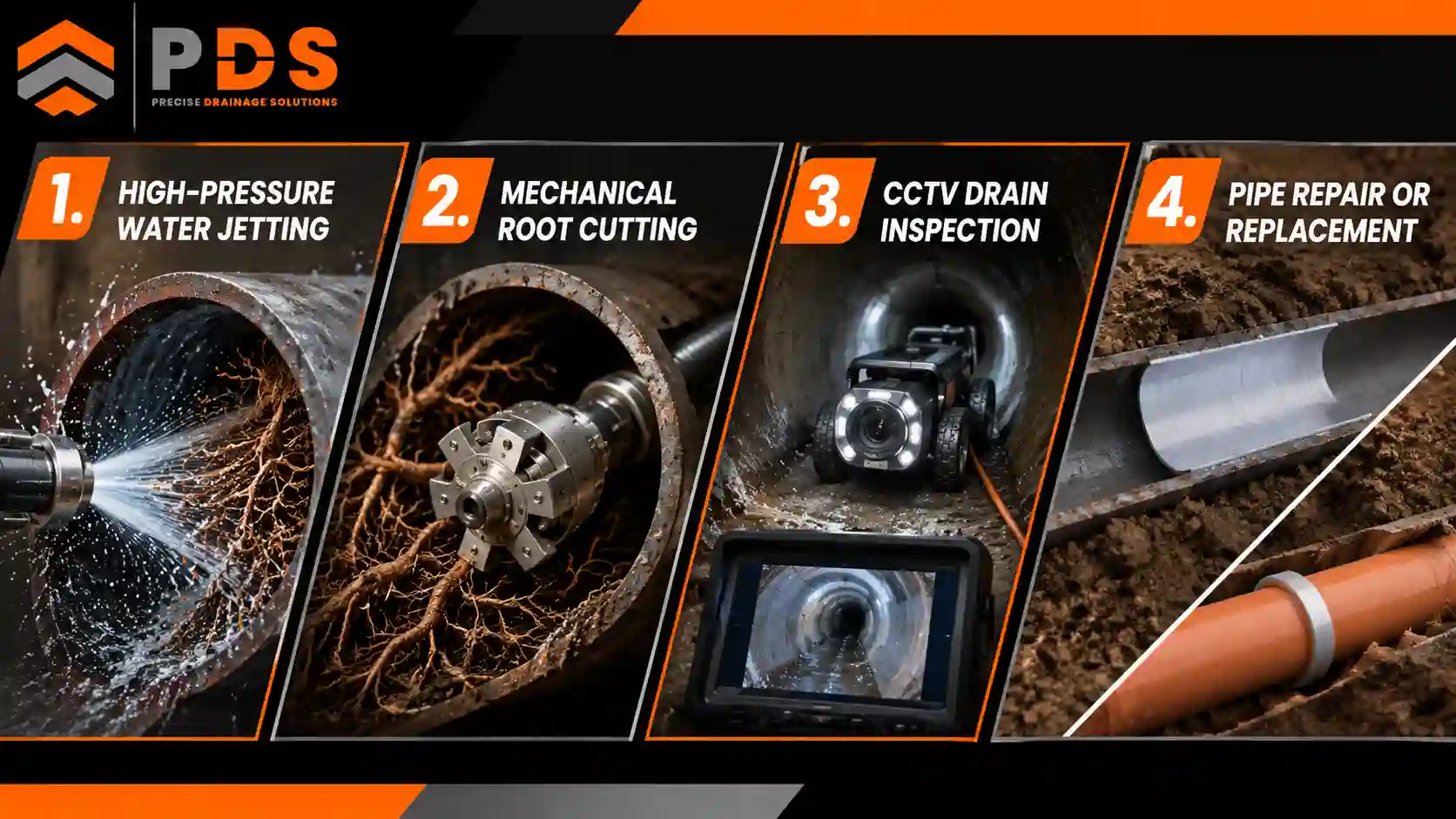
High-Pressure Water Jetting
High-pressure water jetting uses a powerful stream of water to cut through root growth and clear accumulated debris.
It can restore water flow and clean the internal surface of the pipe. This method is often useful when the pipe remains structurally sound.
Mechanical Root Cutting
Specialised cutting equipment can remove larger root growth from inside the pipe.
The cutting head breaks through the roots and clears the passage. This approach may be useful when roots have formed a dense blockage.
CCTV Drain Inspection
A CCTV inspection helps identify where roots have entered and how extensive the damage is.
It also allows the drainage specialist to check whether cracks, displaced joints, or other defects are present.
Pipe Repair or Replacement
Removing the roots alone may not solve the underlying problem. If the pipe has cracks or damaged joints, those entry points may need to be repaired.
Depending on the condition of the pipe, local repairs, relining, or replacement may be considered.
Understand How to Remove Roots Safely
Many property owners search for how to remove tree roots from drain pipes because recurring blockages can be frustrating. However, simply clearing the visible blockage may only provide temporary relief.
The roots usually need to be removed without causing additional damage to the pipe. Aggressive DIY methods can make cracks or weak joints worse.
Professional equipment allows specialists to identify the cause and choose a suitable removal method. It also helps determine whether further repair work is necessary.
Chemical root treatments may sometimes be suggested, but they should not be treated as a complete solution. If roots are entering through damaged pipework, the structural problem still needs attention.
Prevent Future Root-Related Problems
Once roots have been removed, prevention becomes important. Regular inspections can help identify developing problems before they cause major blockages.
Good maintenance practices include:
- Arrange inspections for older drainage systems
- Keep large trees under appropriate observation
- Avoid planting trees directly over drainage routes
- Deal with slow drains before they become blocked
- Check drainage after repeated blockages
- Repair damaged pipes promptly
- Keep records of previous drainage repairs
Proper tree root drainage management focuses on both the immediate blockage and the condition of the pipe itself.
Tree pruning may reduce some root activity, but it does not always prevent roots from reaching a leaking or damaged pipe. Professional advice is useful when trees and underground drainage are located close together.
Take Action Before the Damage Grows
Early action can reduce the risk of extensive drainage repairs. A professional inspection can determine whether roots are simply blocking the pipe or whether they have entered through damaged sections.
If tree roots in drain pipes are causing repeated problems, removing the roots should be considered alongside checking the pipe’s overall condition. This approach helps address the immediate blockage while identifying potential causes.
Do not wait for a complete blockage before arranging an inspection. Slow drainage and repeated backups can be useful early warnings.
Frequently Asked Questions
1. Can tree roots completely block a drain pipe?
Yes. Roots can grow into dense masses that restrict water flow and trap waste. Over time, this can lead to severe blockages and backups.
2. What are the most common causes of root intrusion?
Cracks, leaking joints, ageing pipes, and damaged sections are common entry points. Roots are attracted to moisture escaping from these weak areas.
3. How can I tell whether roots are causing my blockage?
Repeated blockages, slow drainage, gurgling, and multiple affected fixtures can indicate root intrusion. A CCTV inspection can confirm the cause.
4. Will removing the roots permanently solve the problem?
Not always. If roots entered through a crack or damaged joint, the pipe may need additional repair to prevent the issue from returning.
5. How often should drainage pipes be inspected?
There is no single schedule for every property. Older systems, properties with large nearby trees, and homes with recurring blockages may benefit from more frequent inspections.




